
Terpene Storage & Shelf Life: The Operator SOP That Prevents Profile Drift
Terpenes are volatile and reactive. If a profile smells perfect one month and sharp or flat the next, storage and handling is usually the first place to look. This guide breaks down terpene storage and shelf life the operator way: unopened vs opened, what degrades terpenes, and a simple SOP that keeps SKUs repeatable. Terpene storage isn’t a “set it and forget it” process. Proper terpene storage directly impacts shelf life and profile stability.
Storage Checklist (fast win)
If you only implement one system, implement this. It prevents drift without adding lab complexity.
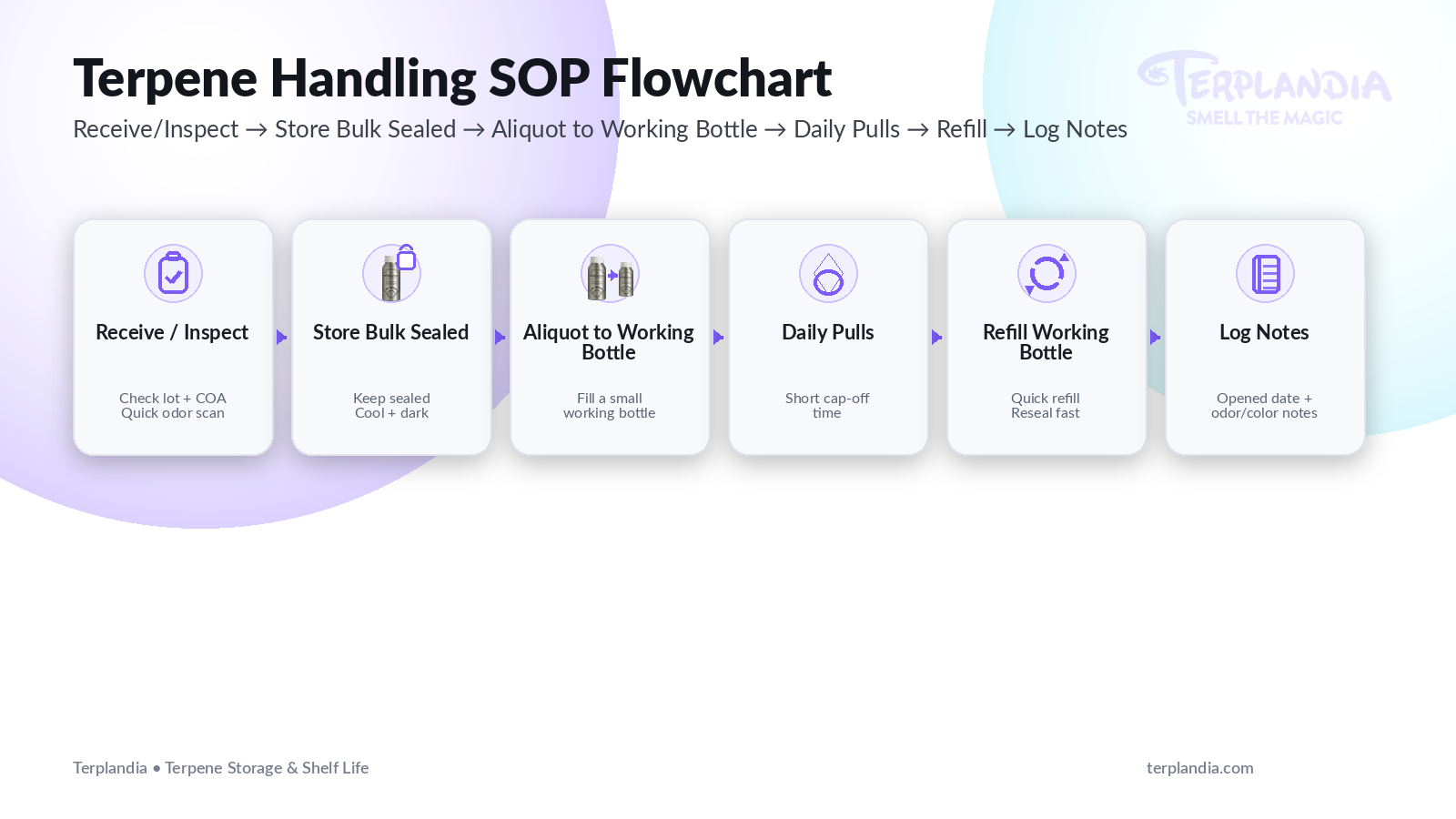
- Keep cap-off time short
- Reduce headspace
- Aliquot into smaller bottles
- Cool + consistent beats random
- Avoid hot zones & windows
- No temperature rollercoasters
- Dedicated syringes/pipettes
- Dedicated transfer tools
- Dedicated handling area
What Actually Causes Terpenes to Degrade
Most terpene shelf life issues trace back to four drivers: oxygen, light/heat, headspace + repeated opening, and contamination. Fix those and you reduce drift fast.
1) Oxygen: oxidation (the biggest driver)
Oxygen exposure slowly changes terpene composition. Research on limonene oxidation shows that exposure to air can significantly alter terpene chemistry over time. You might not notice immediately—until a batch starts showing:
- “Sharper” top notes that weren’t there before
- Duller mid-notes (“missing body”)
- A generic, flattened aroma
Oxidation is a major cause of profile drift. Full breakdown here: Why Profiles Drift (Oxidation + Missing Minors).
2) Light + heat: they speed up the clock
Heat accelerates chemical change and increases volatility. Light (especially UV) can also push reactions and degrade sensitive compounds, as demonstrated in research on citrus oil degradation under light and oxygen exposure. Translation: bad storage turns “months” into “weeks.”
- Don’t store near windows, heat sources, or hot processing areas
- Avoid temperature cycling; stability matters as much as absolute temperature
3) Headspace + repeated opening: you’re exchanging air every time
Every opening swaps headspace: oxygen goes in, volatiles leave. If one bottle is opened repeatedly for small pulls, it “ages” faster than a sealed container.
4) Plastic contact + cross-contamination: small mistakes, big sensory impact
Terpenes can interact with some plastics and they carry odor between tools easily. The common pitfalls:
- Non-dedicated pipettes/syringes across profiles
- Containers not intended for aggressive aromatics
- Caps/liners that don’t seal well (slow oxygen ingress)
Shelf Life Isn’t One Number
Ask three suppliers for “shelf life” and you’ll often get one generic answer. In practice it depends on: packaging, storage conditions, and handling discipline.
- Container + liner
- Seal integrity
- Headspace management
- Cool & dark
- Stable temperature
- No light exposure
- Opening frequency
- Dedicated tools
- Clean transfer habits
Unopened vs opened: treat them like different products
A sealed bottle stored correctly behaves very differently than a working bottle opened daily. If you want consistent flavor, your SOP must separate those roles.
Best-Practice Storage Setup (Simple, Scalable)
You don’t need a lab. You need a system your team can run the same way every time.
1) Container selection
- Amber glass for light protection Safety data sheets for terpenes such as limonene commonly recommend storing tightly sealed containers in cool, shaded environments.
- Tight-sealing closures (no “loose cap” culture)
- Liners designed for strong aromatics (example: PTFE-faced)
Treat packaging as part of supplier qualification: How to Choose a Terpene Supplier.
2) Temperature: stable and cool beats “random”
- Pick a temperature you can keep consistent
- Keep away from hot zones and direct light
- Consistency matters more than chasing extremes
3) Headspace management
- Right-size containers for throughput (avoid huge bottles holding small amounts)
- Aliquot into smaller bottles so headspace stays low
- Optional: inert gas headspace purge (same principle: less oxygen exposure = slower drift)
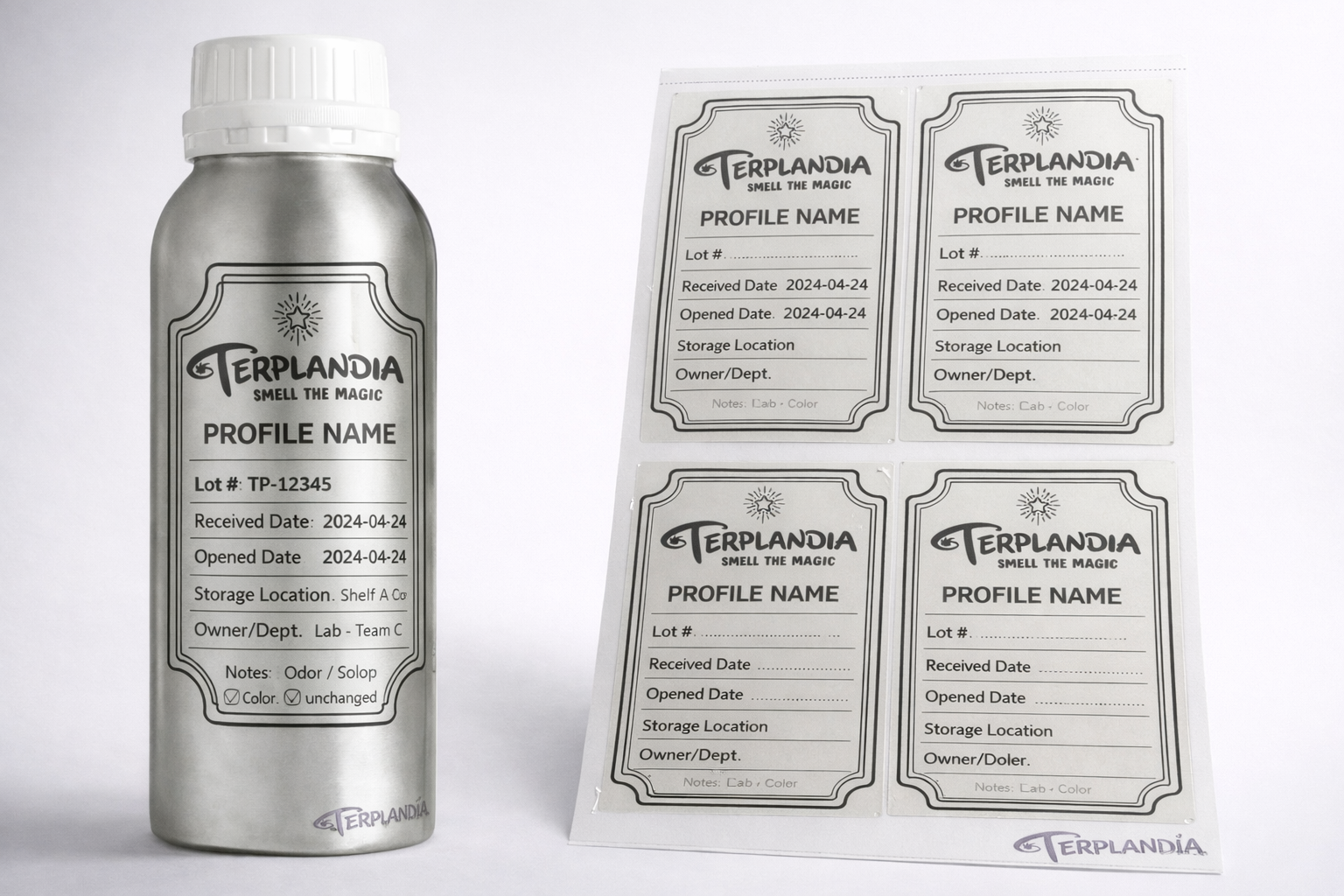
4) Labeling + FIFO
Minimum label fields:
- Lot number
- Received date
- Opened date
- Storage location
- Owner/department
- Quick notes (odor/color flags)
Handling SOP That Prevents Drift
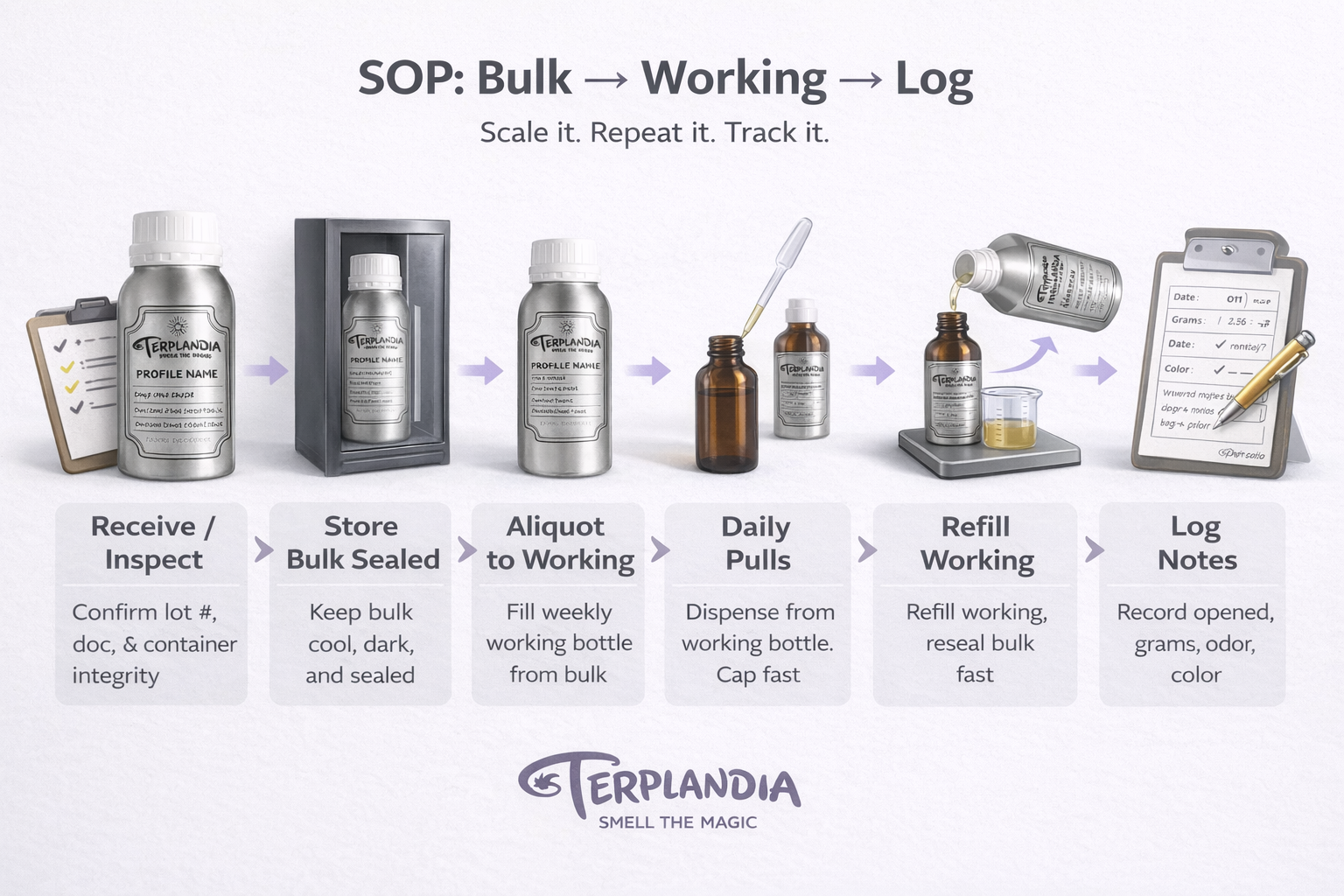
This is where most teams leak repeatability. The goal is simple: reduce oxygen exposure, reduce variability, prevent contamination, and keep records.
Bulk → Working Bottle → Log (numbered steps)
Dedicated tools (no exceptions)
- Dedicated syringes/pipettes
- Dedicated funnels if you transfer
- Dedicated wipes/handling area
Cross-contamination is subtle and brutal: it doesn’t show up as “bad,” it shows up as “why doesn’t this taste like last time?”
Cold storage rule
If you store cold, keep bottles sealed until they reach stable temperature. Don’t open cold containers.
How to Tell When a Batch Has Drifted
You’re not diagnosing chemistry—you’re protecting SKU repeatability. Use sensory + visual tells, then decide: replace, re-test, or quarantine.
- Citrus goes “cleaner/sharper”
- Pine gets harsh/solvent-like
- Sweetness drops; aroma feels hollow
- Base notes dominate earlier than expected
- Darkening over time
- Haze or particulates
- Viscosity change
- Working bottle drifting → replace from sealed bulk
- Sealed bulk drifting → request re-test from an ISO/IEC 17025-accredited lab and investigate handling or packaging variables.
- High-value SKUs → periodic verification on retained samples

This ties directly into buying strategy: A Practical Guide to Buying Real Terpenes.
Want terpenes that arrive with clean documentation and predictable handling guidance?
The easiest way to reduce drift is to start with material you can actually control: consistent packaging, clear lot documentation, and repeatable handling guidance.
FAQs
Should terpenes be refrigerated?
Many operators use cooler storage for long holds, but stability is the priority. If you store cold, keep bottles sealed until they return to stable temperature before opening.
Can you freeze terpenes?
Freezing can reduce reaction rates, but it introduces handling risks (condensation, repeated freeze-thaw). If you go this route, keep containers tightly sealed and minimize cycling.
How long do terpenes last after opening?
There isn’t one universal number. The practical answer: the more often it’s opened and the more headspace it has, the faster it drifts. Use a working bottle system to extend usable life.
What’s the best container for terpenes—glass or plastic?
For long-term storage and minimal interaction risk, many teams prefer amber glass with a tight seal and an appropriate liner designed for strong aromatics.
Next reads: Why Profiles Drift (Oxidation + Missing Minors) • How to Choose a Terpene Supplier • A Practical Guide to Buying Real Terpenes