
For a cannabis brand, terpene sourcing is not just a flavor decision. It affects sensory identity, product positioning, documentation, repeatability, buyer trust, and how the finished product feels in the market. That is why the CDT vs BDT terpenes difference matters so much when teams are developing vapes, carts, concentrates, infused products, or strain-specific flavor systems.
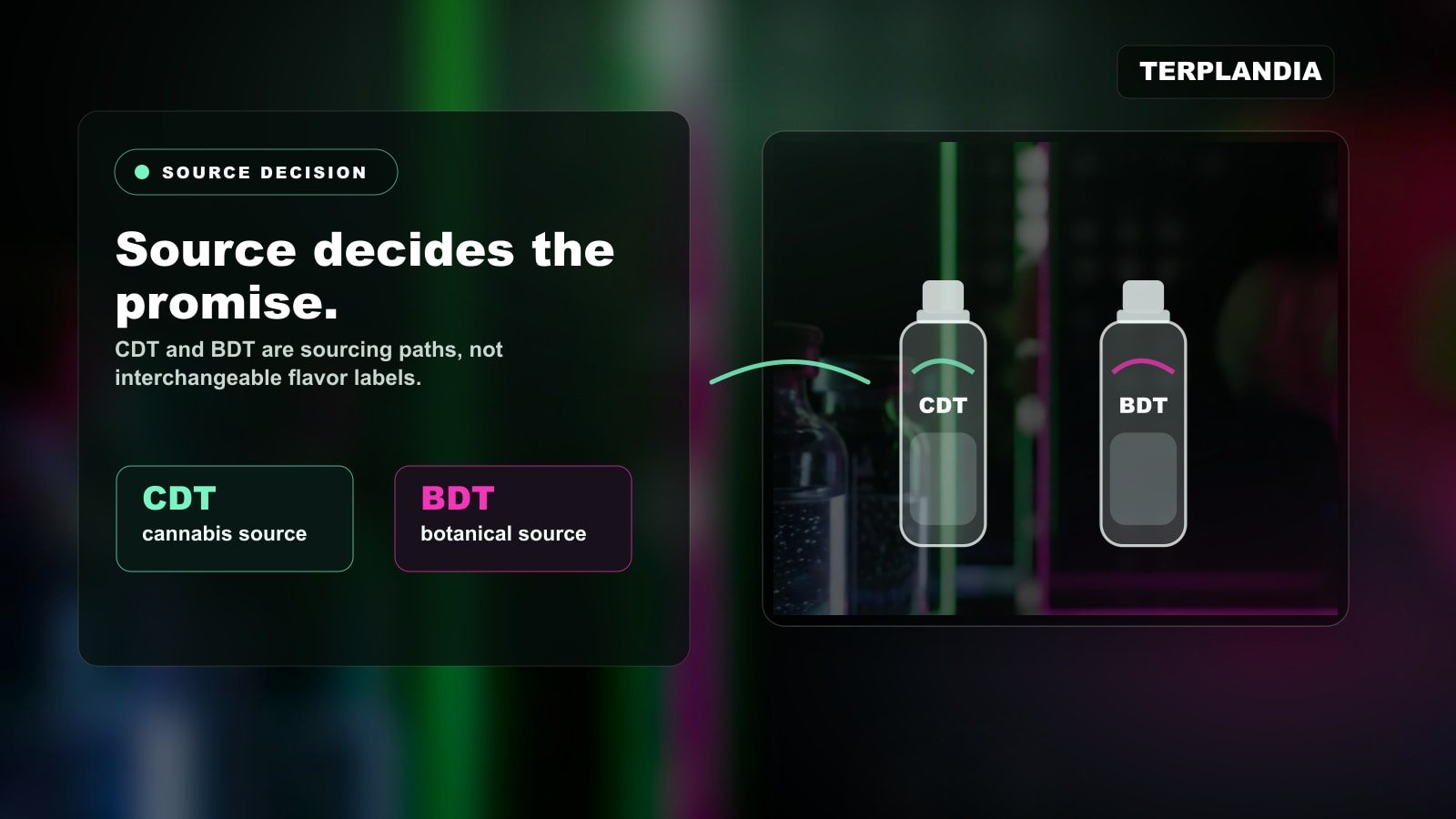
CDT usually means cannabis-derived terpenes. BDT usually means botanical-derived terpenes. Both can be natural aromatic ingredients, and both can be useful in the right product architecture. The question is not whether one acronym is automatically good and the other is automatically bad. The better question is: which source supports the product promise your brand is making?
This guide compares CDT and BDT terpenes from a B2B formulation point of view: source material, aroma fidelity, consistency, documentation, cost, supply chain behavior, and buyer questions to ask before placing a commercial order.
What CDT Terpenes Usually Mean
CDT stands for cannabis-derived terpenes. In a commercial terpene context, CDT profiles are sourced from cannabis cultivar material rather than from non-cannabis botanical inputs. The purpose is to capture a cannabis-forward aromatic profile that reflects the sensory character of a strain, cultivar, or source lot.
For cannabis brands, CDT terpenes are usually chosen when the product needs to feel closer to the plant. A Runtz-inspired profile, for example, should not only taste sweet. It should carry the layered candy, gas, and floral cues buyers associate with that cultivar family. The same logic applies to classic gas profiles, dessert strains, fruit-forward cultivars, and live-flower-style products.
The B2B value of CDT is not only aroma. It is also positioning. When a brand says a vape, cart, or infused product uses cannabis-derived terpenes, buyers expect a cleaner connection between the product name, the strain story, and the aromatic input. That makes supplier documentation, sourcing language, and profile accuracy important.
What BDT Terpenes Usually Mean
BDT stands for botanical-derived terpenes, often shortened in buyer searches to botanical terpenes. These terpenes come from non-cannabis botanical sources such as citrus, pine, clove, lavender, mint, herbs, spices, or other plant materials. A botanical-derived terpene blend may be built from individual terpene isolates and blended to imitate a desired flavor or aroma.
BDT terpenes can be useful when a brand wants cost control, large-volume consistency, food-grade flavor language, or a flavor system that does not need to claim a cannabis-specific source. A citrus gummy, a flavored disposable, or a non-strain-specific distillate product might not need cannabis-derived aroma to do its job.
The limitation is that BDT profiles can drift into generic flavor if the blend is not carefully built. A botanical blend may include the same major terpene names found in cannabis, but cannabis aroma is not only a short list of major terpenes. It is the ratio, supporting compounds, minor notes, and source story that make the profile feel believable.
CDT vs BDT Terpenes at a Glance
The practical CDT vs BDT comparison comes down to source, sensory goal, documentation, and scale. Product teams should avoid treating these inputs as interchangeable simply because both are called terpenes.
| Factor | CDT terpenes | BDT terpenes |
| Source | Cannabis cultivar material | Non-cannabis botanical sources |
| Best fit | Strain-specific products, premium vapes, live-flower-style aroma | Broad flavor systems, cost-controlled SKUs, non-strain-specific products |
| Sensory goal | Cannabis-forward aroma and strain fidelity | Flavor consistency and broad aromatic control |
| Buyer expectation | Stronger connection to cannabis source and product naming | Clear botanical/flavor positioning |
| Documentation need | Source, process, lot identity, cannabinoid status, COA | Ingredient source, purity, allergen/safety documentation, blend consistency |
| Cost profile | Often higher | Often lower |
| Scale behavior | Depends heavily on source and supplier process | Often easier to standardize across high volume |
| Risk if unclear | Misleading strain or source positioning | Generic flavor, artificial-feeling profile, buyer skepticism |
Neither column is automatically the right answer. A premium strain-specific cart and a citrus-forward edible do not need the same terpene strategy.
Why Source Changes the Product Story
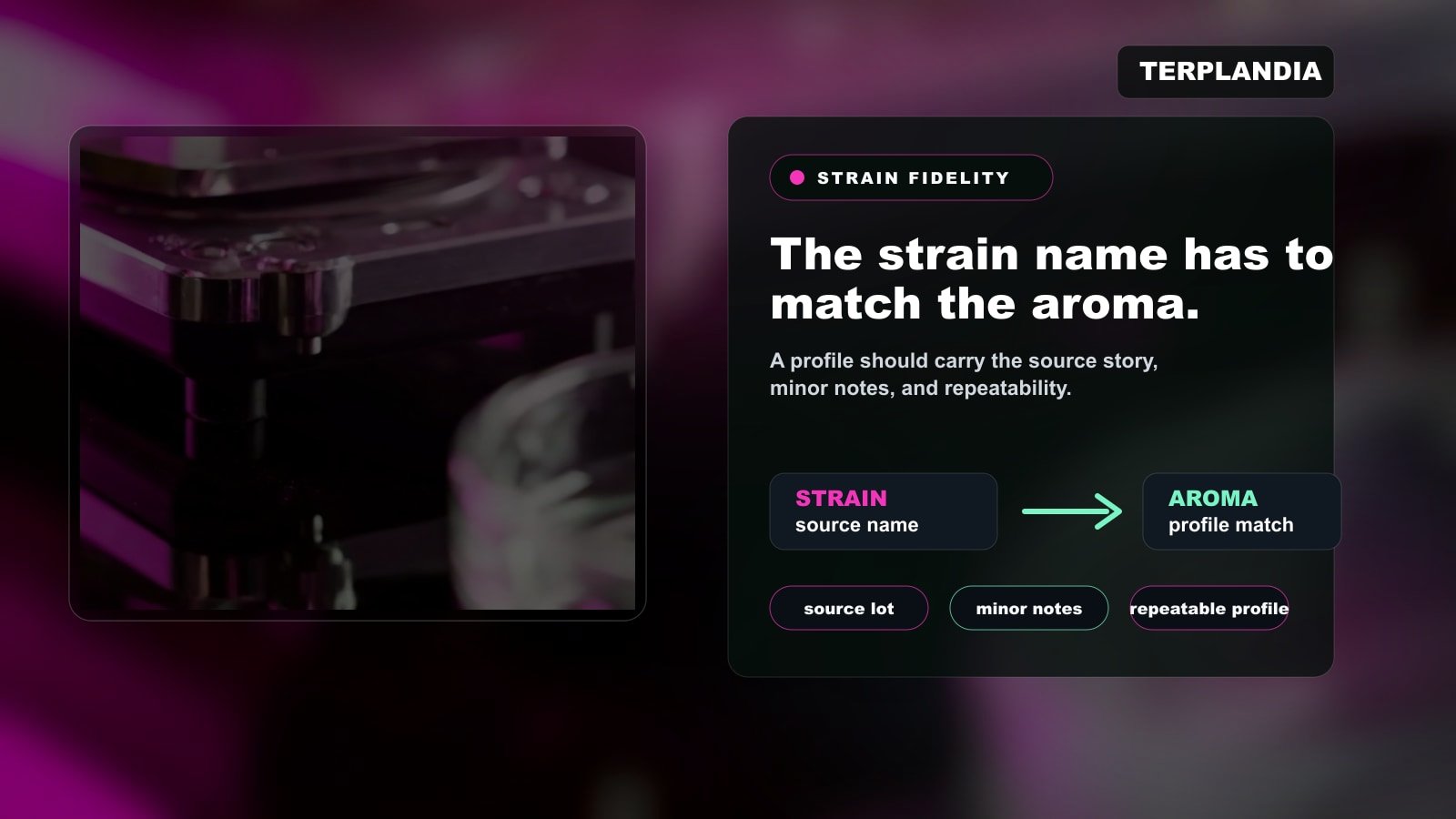
Source matters because buyers do not experience terpenes as chemistry alone. They experience them as aroma, flavor expectation, product naming, and brand trust. If a product name points to a cannabis cultivar, the terpene source should support that promise.
For example, a brand building a Blue Dream, Wedding Cake, Runtz, or OG Kush product is not only choosing a flavor. It is borrowing from a recognizable cannabis identity. CDT can help that product feel more aligned with the strain story because the aromatic input is derived from cannabis plant material.
BDT can still be natural, consistent, and commercially useful, but the brand should be honest about what it is. If a product is positioned as fruit-forward, candy-forward, mint, citrus, or botanical flavor, BDT may fit the concept. If the product is positioned around strain authenticity, cannabis-derived terpenes usually support the story better.
Formulation Differences Product Teams Should Expect
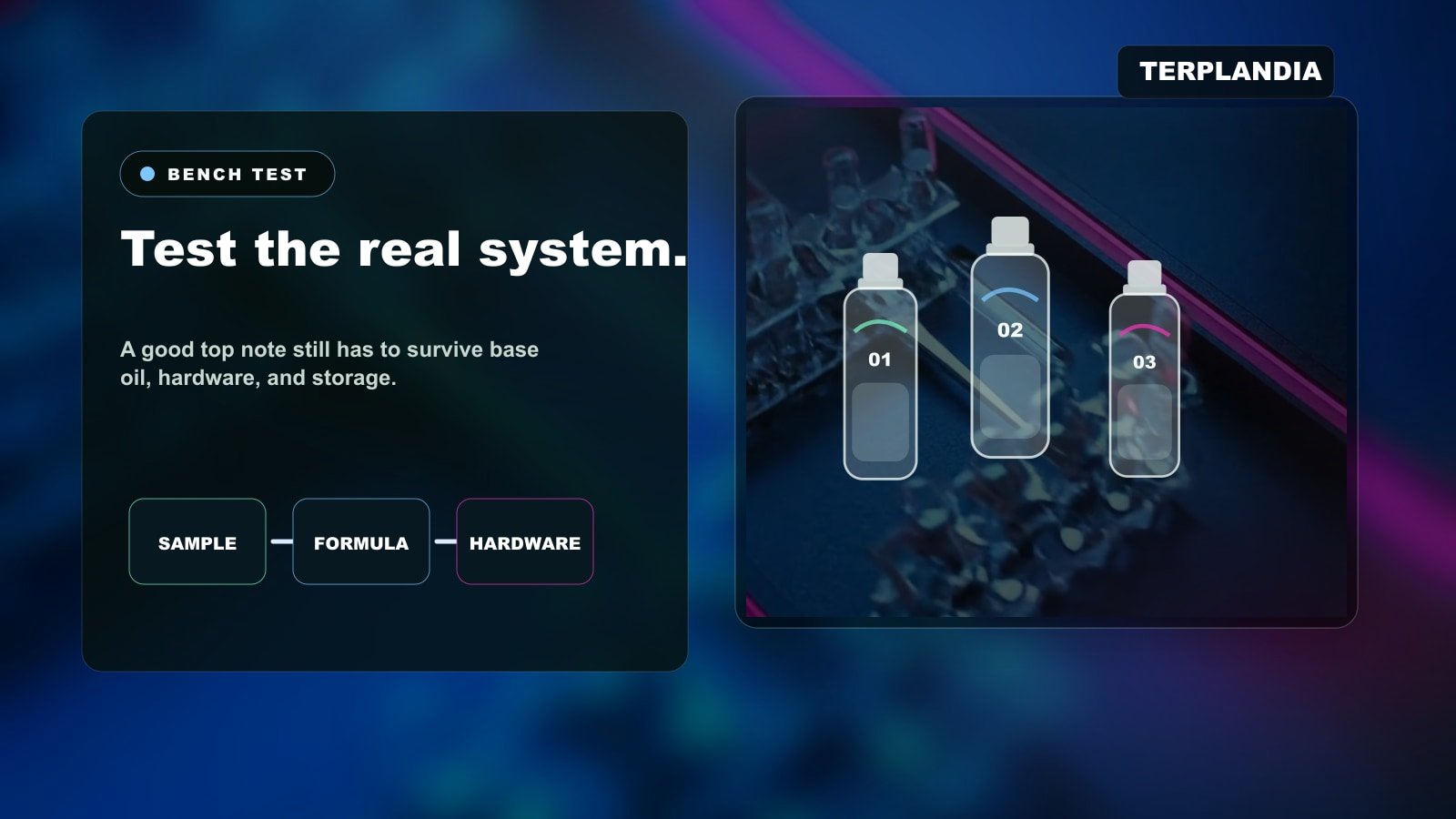
From a formulation point of view, CDT and BDT inputs should be evaluated in the actual product system. Do not judge a terpene sample only by smelling it out of the bottle. A strong top note can change once it is blended into distillate, concentrate, gummies, beverages, or disposable hardware.
For vape and cart products, evaluate:
- aroma carry-through after blending
- perceived harshness at the intended percentage
- viscosity contribution
- hardware compatibility
- color and oxidation behavior
- stability after storage
- sensory drift after filling
For edibles and beverages, evaluate:
- flavor carry-through in the base matrix
- heat exposure during processing
- packaging headspace
- emulsion or dispersion behavior
- aftertaste
- interaction with sweeteners, acids, fats, or masking agents
The right question is not simply "does this smell good?" The better question is "does this still perform after the actual manufacturing process?"
When CDT Terpenes Make More Sense
CDT terpenes make the most sense when a product needs cannabis-specific aroma and strain credibility. This is especially true for premium carts, live-flower-inspired vapes, distillate lines that need better sensory identity, concentrate-style SKUs, and products where the strain name is a core selling point.
CDT can also support cleaner differentiation in a crowded market. Many products can say "citrus," "berry," or "gas." Fewer can credibly build around a cannabis-derived profile with the documentation and sensory depth to back it up.
Brands should consider CDT when they need:
- strain-specific aroma
- cannabis source alignment
- premium positioning
- stronger connection between product name and sensory result
- better support for cultivar-led storytelling
- a profile that feels less like a generic flavor system
Terplandia’s terpene positioning for THC products centers on cannabis-derived profiles from real cultivar material, zero synthetics, zero botanicals, and zero cannabinoids. That makes CDT a strong fit for brands that want cannabis aroma without adding cannabinoid-bearing extract fractions to every SKU.
When Botanical Terpenes May Still Fit
BDT terpenes may still fit when the product is not trying to carry a cannabis strain story. A non-strain-specific flavor system, a broad fruit flavor, a candy profile, or a large-volume value SKU may benefit from the consistency and cost profile of botanical terpenes.
For some products, botanical flavor is the concept. A lemon-lime beverage, mango gummy, mint disposable, or citrus-forward formulation may not need cannabis-derived source material to make sense to the buyer.
The risk comes when BDT is used to imply strain authenticity without being transparent. If the product says "real cannabis flavor" or uses a recognizable strain name, the supplier and brand need to be precise about what the terpene source actually is.
Good BDT positioning is clear. Weak BDT positioning tries to blur the line.
Documentation Questions Before Buying
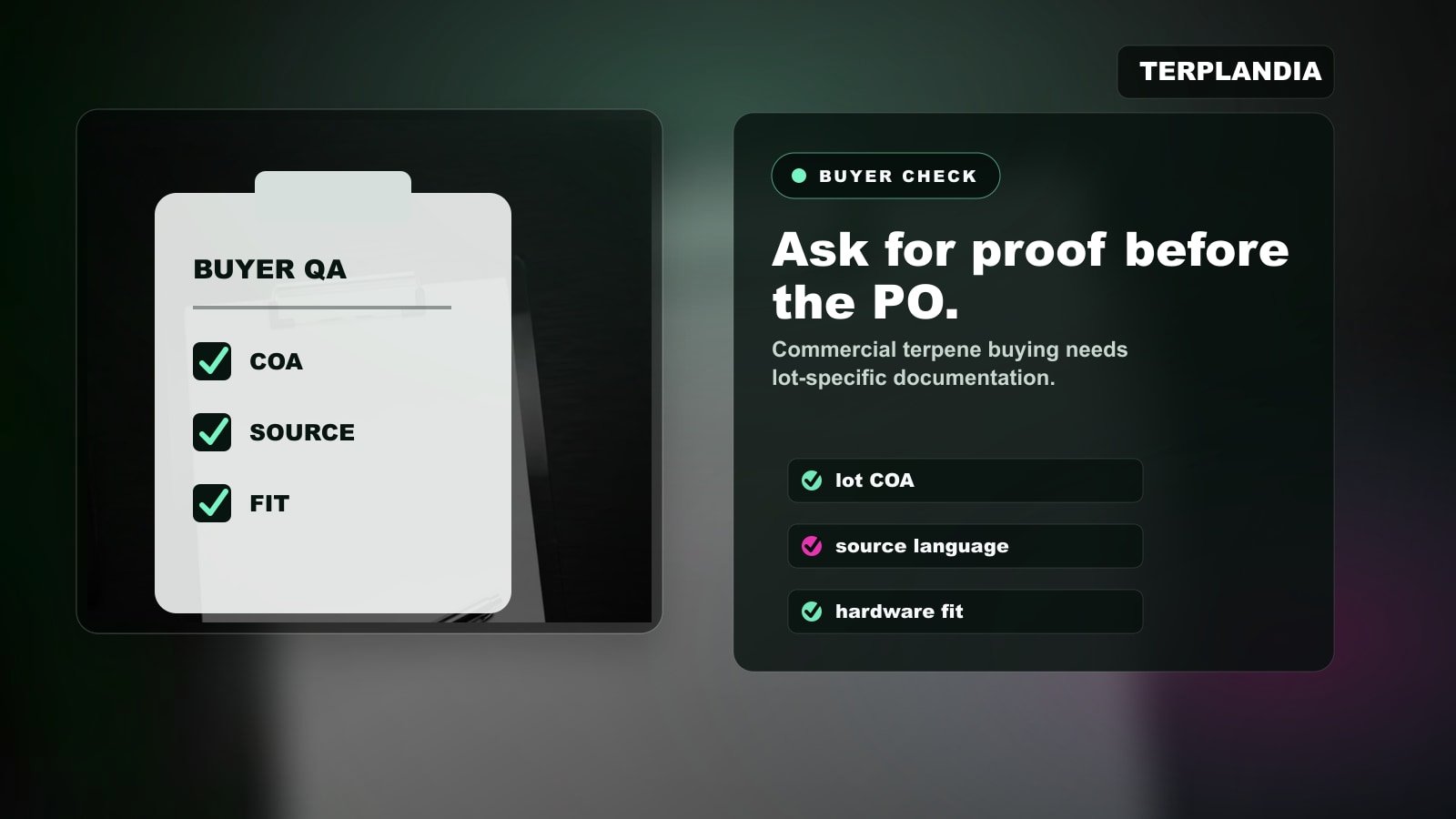
Supplier documentation is where the CDT vs BDT conversation becomes practical. Acronyms alone are not enough. A product team should ask for documents that tie the sample, lot, profile, and source language together.
Before buying, ask:
- What is the source material? Cannabis cultivar material, hemp, citrus, pine, spice, floral, or another botanical input?
- How was the profile produced? Distillation, isolation, blending, extraction, or another process?
- Does the COA match the exact lot? Avoid accepting a generic sample sheet for a commercial order.
- Are cannabinoids present? CDT should not be assumed to contain THC or other cannabinoids; verify by lot-specific documentation.
- Are synthetics or botanicals present? If the product is marketed as cannabis-derived, this should be answered clearly.
- Can the supplier repeat the profile? Ask whether the profile is standardized, seasonal, harvest-specific, or one-off.
- What handling conditions are recommended? Light, oxygen, temperature, headspace, and shelf life can affect aroma quality.
- What formulation percentage is recommended? Treat this as a starting point, not a substitute for bench testing.
If a supplier cannot answer these questions clearly, the input may still smell good, but it is not ready for serious product development.
B2B Buyer Checklist
Use this checklist when comparing CDT, BDT, or any terpene supplier:
- Match terpene source to product promise.
- Use CDT when strain authenticity and cannabis-derived positioning matter.
- Use BDT only when botanical flavor positioning is honest and appropriate.
- Request lot-specific COAs and source documentation.
- Confirm whether the input includes synthetics, botanicals, cannabinoids, or carrier ingredients.
- Run a formulation bench ladder before choosing a final use rate.
- Test in the exact base oil, hardware, edible matrix, beverage system, or concentrate format.
- Keep retained samples from every trial and production lot.
- Document mixing time, temperature, percentage, base material, and sensory notes.
- Avoid vague terms like "real terpenes" unless the supplier defines exactly what they mean.
Good sourcing is not about choosing an acronym. It is about choosing the ingredient system that supports the product your brand is actually selling.
How Terplandia Frames the Choice
Terplandia is built around cannabis-derived terpene profiles for brands that want the sensory identity of real cannabis cultivars. That does not mean every product in the market must use CDT. It means brands should be clear about the difference between cannabis-derived aroma and botanical flavor systems.
If your product is strain-led, cultivar-led, or premium cannabis-positioned, CDT usually gives you the cleaner sourcing story. If your product is a broad botanical flavor concept, BDT may be commercially reasonable as long as the positioning is honest.
The strongest brands make the sourcing decision before the label claim. They do not pick a terpene input and then force a story around it.
Final Takeaway
The CDT vs BDT terpenes difference comes down to source, sensory intent, documentation, and brand promise. CDT terpenes are cannabis-derived and usually fit products where strain identity, cannabis aroma, and premium positioning matter. BDT terpenes come from non-cannabis botanicals and can fit broader flavor systems when the product does not need a cannabis source story.
For cannabis brands, the safest move is to align the input with the claim. If the product promises strain-specific cannabis character, source the aroma layer accordingly. If the product is a general flavor SKU, make the flavor system clear and test it properly.
Terplandia helps brands build around cannabis-derived aroma with cleaner source alignment, formulation-ready profiles, and a sourcing story buyers can understand.
FAQ
What is the main CDT vs BDT terpenes difference?
The main difference is source. CDT terpenes are derived from cannabis cultivar material, while BDT terpenes are derived from non-cannabis botanical sources such as citrus, pine, herbs, spices, or flowers.
Are BDT terpenes fake?
Not necessarily. BDT terpenes can be natural botanical ingredients. The issue is positioning. If a product is marketed around cannabis strain authenticity, a botanical-derived flavor system may not support that claim as strongly as CDT.
Are CDT terpenes always better than BDT terpenes?
No. CDT is usually better for strain-specific cannabis aroma and premium cannabis positioning. BDT may be useful for broad flavor systems, cost-controlled products, or non-strain-specific SKUs.
Do CDT terpenes contain THC?
Do not assume either way. A supplier should provide lot-specific documentation showing whether cannabinoids are present. Terplandia positions its terpene profiles for THC products as cannabis-derived, zero cannabinoid terpene inputs.
How should brands choose between CDT and BDT?
Start with the product promise. If the product depends on cannabis strain identity, CDT is usually the stronger fit. If the product is a broad fruit, candy, mint, citrus, or botanical flavor concept, BDT may be appropriate if it is clearly labeled and tested in the final formula.