
How do you build a signature house terpene profile?
A signature house terpene profile is a repeatable aroma and flavor direction that belongs to your brand instead of looking like a copied strain menu. The goal is not to throw every pleasant note into one blend. The goal is to define a sensory target, choose the right source strategy, test the profile in the real product format, and document the version your team can reorder.
For cannabis brands, custom terpene formulation works best when marketing, formulation, purchasing, and QA agree on the same brief. A profile that sounds great in a creative meeting can fail if it clouds in hardware, overwhelms an edible base, lacks source proof, or cannot be scaled. A profile that is technically stable but generic may still fail to create the distinct sensory signature needed for brand loyalty and repeat wholesale reorders.
The practical workflow is straightforward: map the brand target, build a small bench ladder, test in format, choose a winning direction, document the approved version, and scale only after the sample behaves like a production ingredient. As the cornerstone of Terplandia's product-development resources, this guide connects directly with the technical breakdowns on how to add terpenes to distillate, choosing the best terpenes for vape carts, and executing a tight terpene storage SOP.
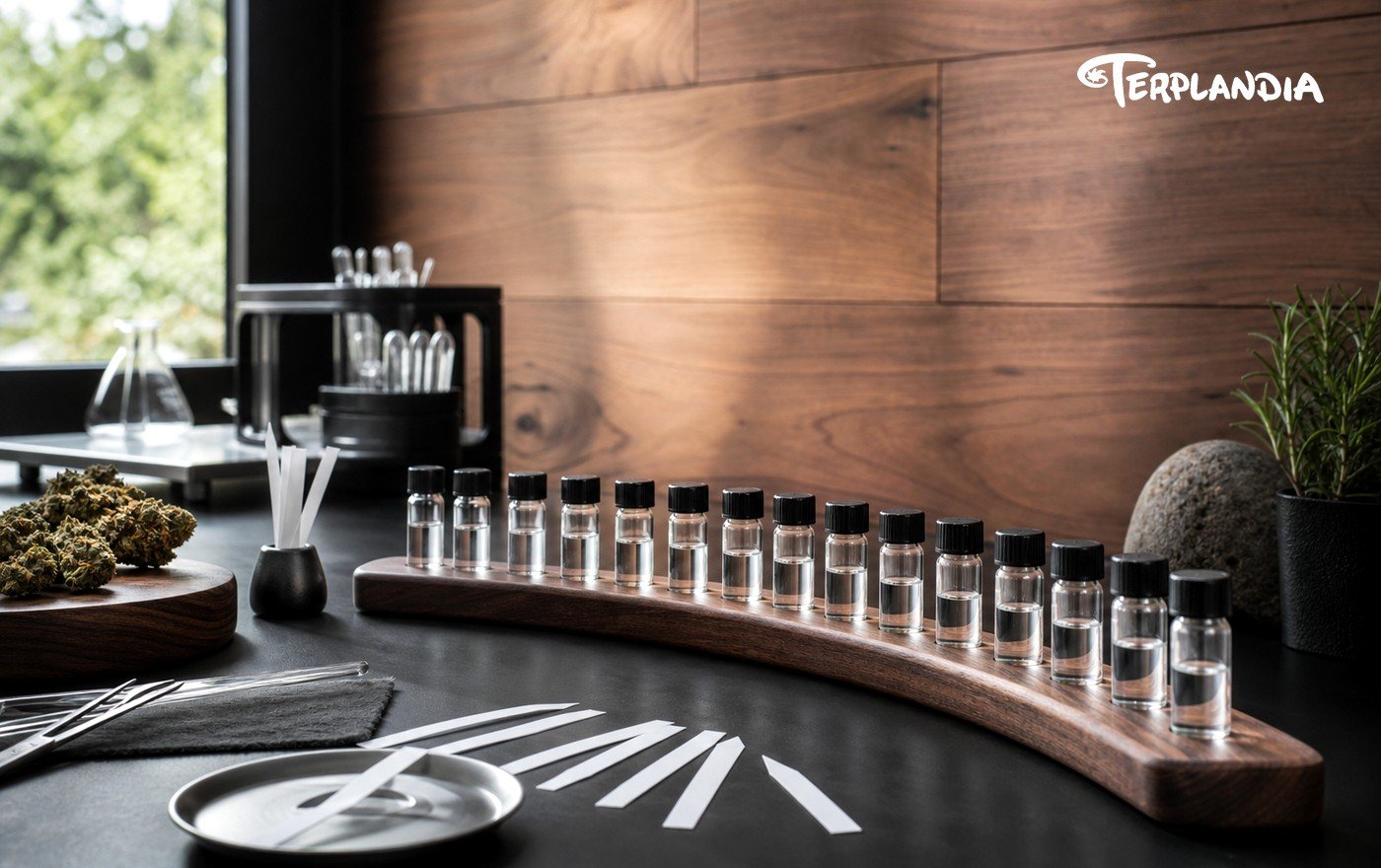
*A signature house profile starts with a sensory target your team can describe and repeat.*
What makes a house profile different from a stock strain profile?
A stock strain profile usually starts with an existing name or sensory lane. It can be the right choice when a brand wants a familiar direction, fast sampling, or a proven point of comparison. A house profile starts with the brand's own product promise. It may borrow from known strain families, but it should be tuned to the audience, format, price point, and repeat-purchase goal.
For example, a premium cart line may want bright top notes that still feel cannabis-forward after heat exposure. An infused pre-roll line may need aroma that complements the flower instead of covering it. An edible line may need a cleaner finish that does not fight the base flavor. These are different formulation problems, even if all three teams say they want something "loud."
That is why a useful custom brief uses concrete sensory language. Instead of asking for "more gas" or "a candy profile," describe top note, middle, finish, source expectation, intensity, product format, and what the profile must avoid. Good custom formulation turns subjective preference into a testable target.
How should your team define the sensory target?
Start with the customer promise and work backward. What should the buyer notice in the first second? What should remain after the first impression fades? Which notes are off-brand? Which competitor profiles feel too close? Which internal products must this new SKU avoid cannibalizing?
Write the answer as a target range, not a single poetic phrase. A practical profile might be "bright citrus peel on the top, soft tropical middle, clean cannabis finish, no perfumey lavender, no harsh pine cleaner." Another might be "dessert cream, light berry, low gas, smooth finish, cart-friendly and not syrupy." Those directions are easier to translate into bench tests.
Product-development teams can use Terplandia's strain library as a baseline for established chemotype and aroma benchmarks before engineering a proprietary direction. Once the target is clear, the custom work should move beyond browsing and into controlled sample comparison.
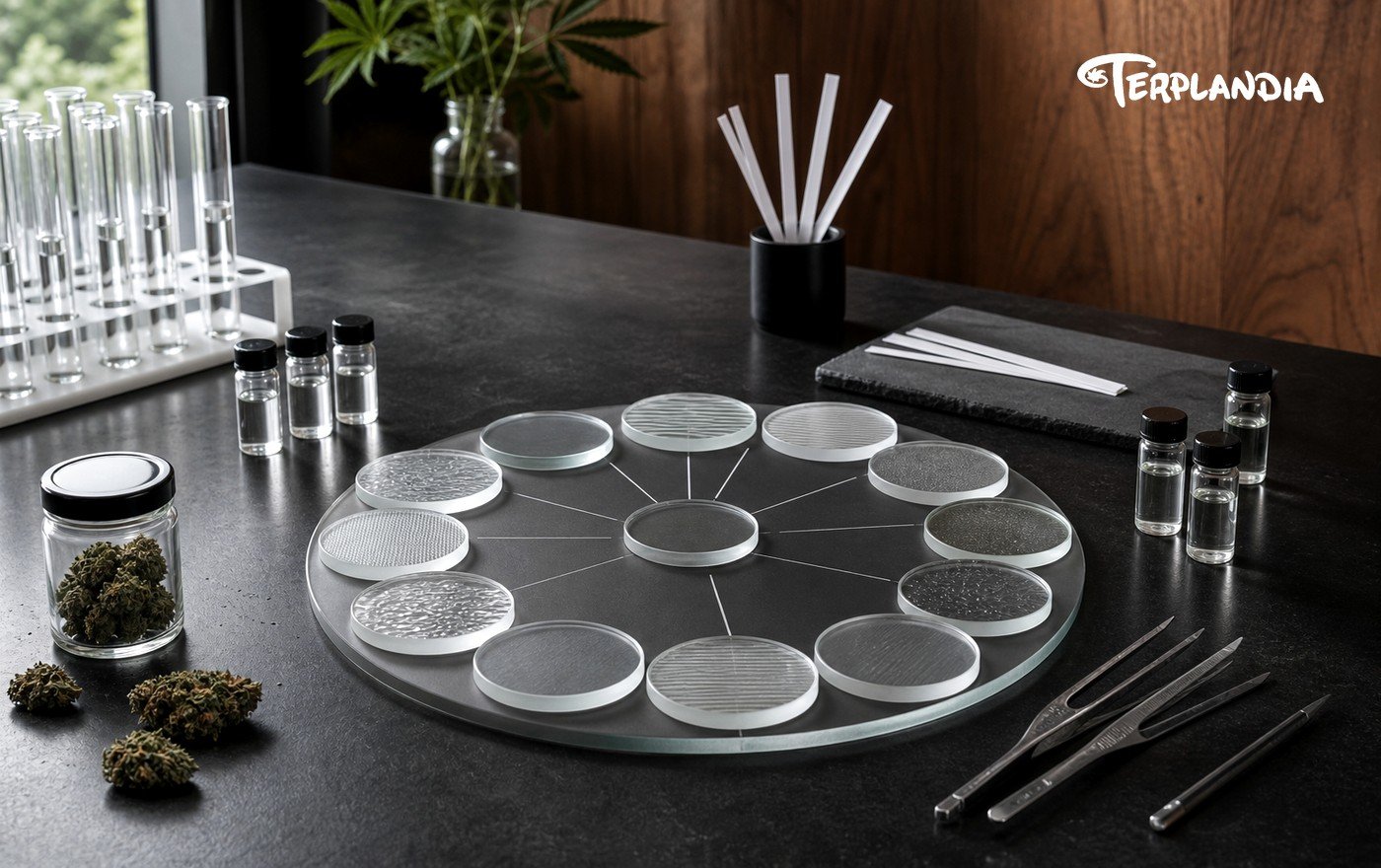
*Mapping the target keeps custom blending tied to product strategy instead of vague flavor words.*
What should be in a custom terpene formulation brief?
A strong brief includes the product format, base material, desired sensory lane, source preference, use-rate expectations, launch volume, reorder needs, and documentation requirements. It should also include what the profile should not do. Avoiding the wrong direction is often as valuable as naming the right one.
For a vape cart, the brief should mention base, hardware, intended fill process, clarity expectations, and heat exposure. For an infused pre-roll, include flower quality, application method, packaging, and how strong the dry pull should feel. For edibles or beverages, include matrix, sweetness, acidity, fat or water system, finish, and label-safe language.
The brief should also name the proof standard. Does the team need cannabis-derived source language? Does the buyer need COA/SDS support? Is a retained sample workflow required? Does the brand need help writing public copy that stays focused on aroma and flavor rather than unsupported effects? These questions shape the formulation path before a single vial is mixed.
How do you build and compare a bench ladder?
Bench formulation should create a ladder of controlled options. That means each sample changes a meaningful variable instead of becoming a random collection of one-off ideas. A simple ladder might compare more top note, more body, lower sweetness, higher gas, or a cleaner finish. Each variation should be labeled internally, evaluated consistently, and stored correctly.
Evaluation should use the real base or a close proxy as early as possible. Smelling a neat terpene sample can be useful, but it does not replace product testing. Distillate, resin, flower, chocolate, gummies, beverages, and tincture bases all change how aroma presents. If the final product format is known, test inside that context.
Keep the review team small enough to make decisions but broad enough to catch risk. A formulator may notice stability and use-rate issues. A brand lead may notice whether the profile matches the SKU promise. A buyer may notice whether the source and documents support the planned positioning.
What does format-fit testing look like?
Format-fit testing asks whether the profile behaves in the environment where it will actually ship. For vape carts, that means clarity, hardware behavior, heat exposure, fill temperature, storage, and sensory balance at the intended range. For infused flower, it means application method, aroma carry, burn behavior, packaging hold, and how the profile works with the flower instead of fighting it.
For edibles and beverages, format-fit is often about finish. Some profiles smell excellent in a vial but become bitter, sharp, flat, or perfumey in a sweet matrix. Others disappear behind chocolate, fruit acid, surfactants, or emulsification systems. The only honest answer is to test the profile in the base and then record what changed.
Do not treat the first winning sample as final. A custom profile should survive at least one practical stress check: time, storage, reheating if relevant, packaging hold, or a pilot-scale process step. The exact test depends on the SKU, but the principle is the same. The profile should still make sense after it leaves the sample meeting.
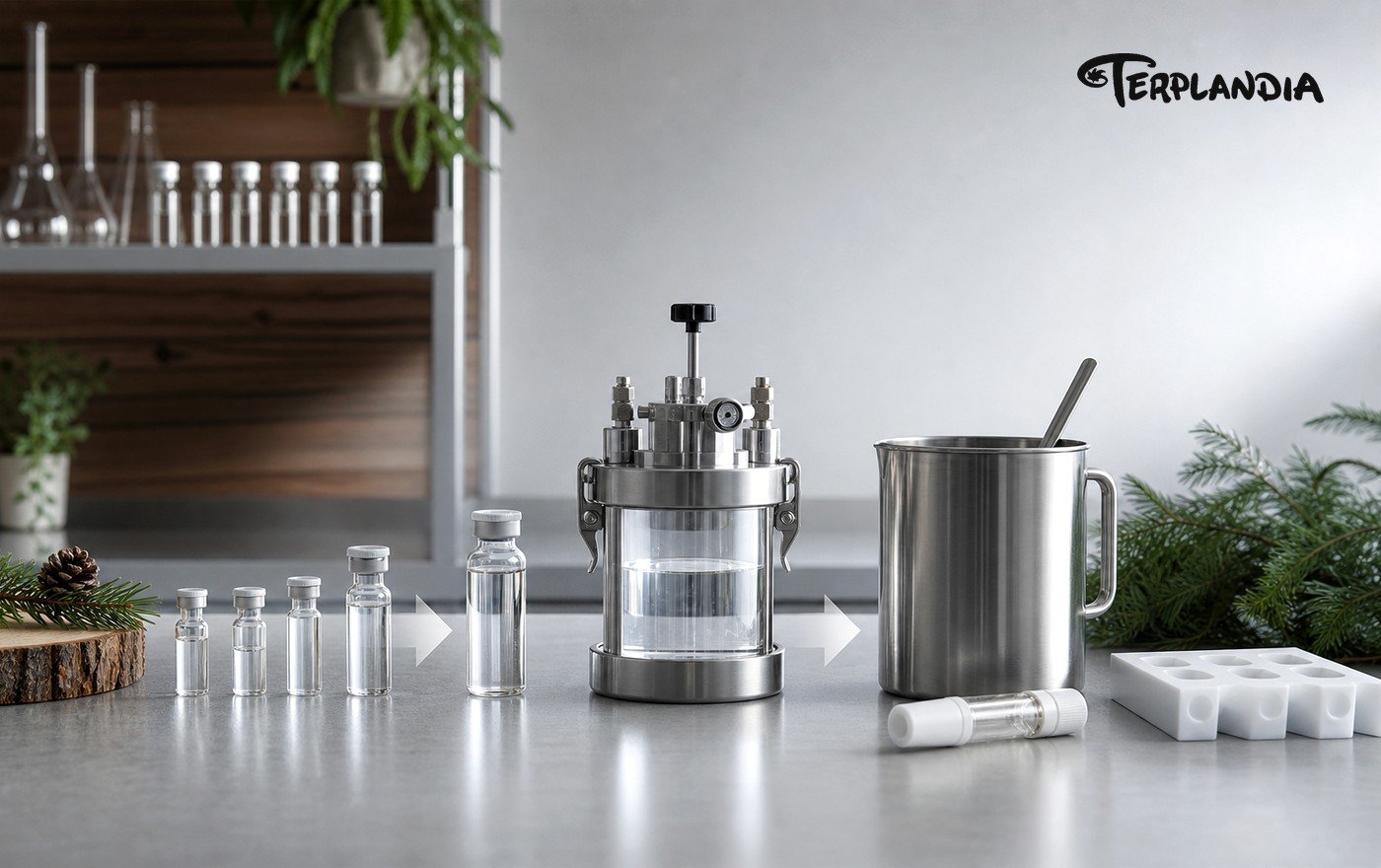
*Scale-up should test the profile in the real format before a large order is approved.*
How do you protect repeatability when the profile is approved?
Approval is where many custom projects get loose. The team loves a sample, the launch timeline moves fast, and the approval details are scattered across emails, photos, and memory. That is a poor foundation for repeatability.
Instead, create an approval file. Include the final version name, source language, COA/SDS references, use-rate range tested, base material, date, evaluator notes, storage condition, retained sample location, and any production instructions. If a future lot smells different, the team needs a reference point that is more objective than "I remember it being brighter."
Terplandia's terpene storage and shelf-life guide is useful once the formulation leaves R&D. A strong supplier can help, but the buyer's own storage and handling can still protect or damage the approved profile.
How should a custom profile scale from bench to production?
Scale-up should be treated as a controlled handoff. The bench winner is the starting point, not the finish line. Before production volume, confirm the use rate, mixing process, order size, storage condition, batch documentation, and reorder cadence. Make sure the team knows who owns final approval when a larger batch arrives.
If the custom profile will sit beside stock strain profiles, document the difference. The sales team should know why the house profile exists. The formulation team should know what it is supposed to do in the product. Purchasing should know what source and paperwork standards apply. QA should know how to compare future lots.
This is where custom terpene formulation becomes a real brand asset. The profile has a sensory reason to exist, a production path, a proof file, and a customer-facing story that can drive repeat wholesale reorders without overclaiming.
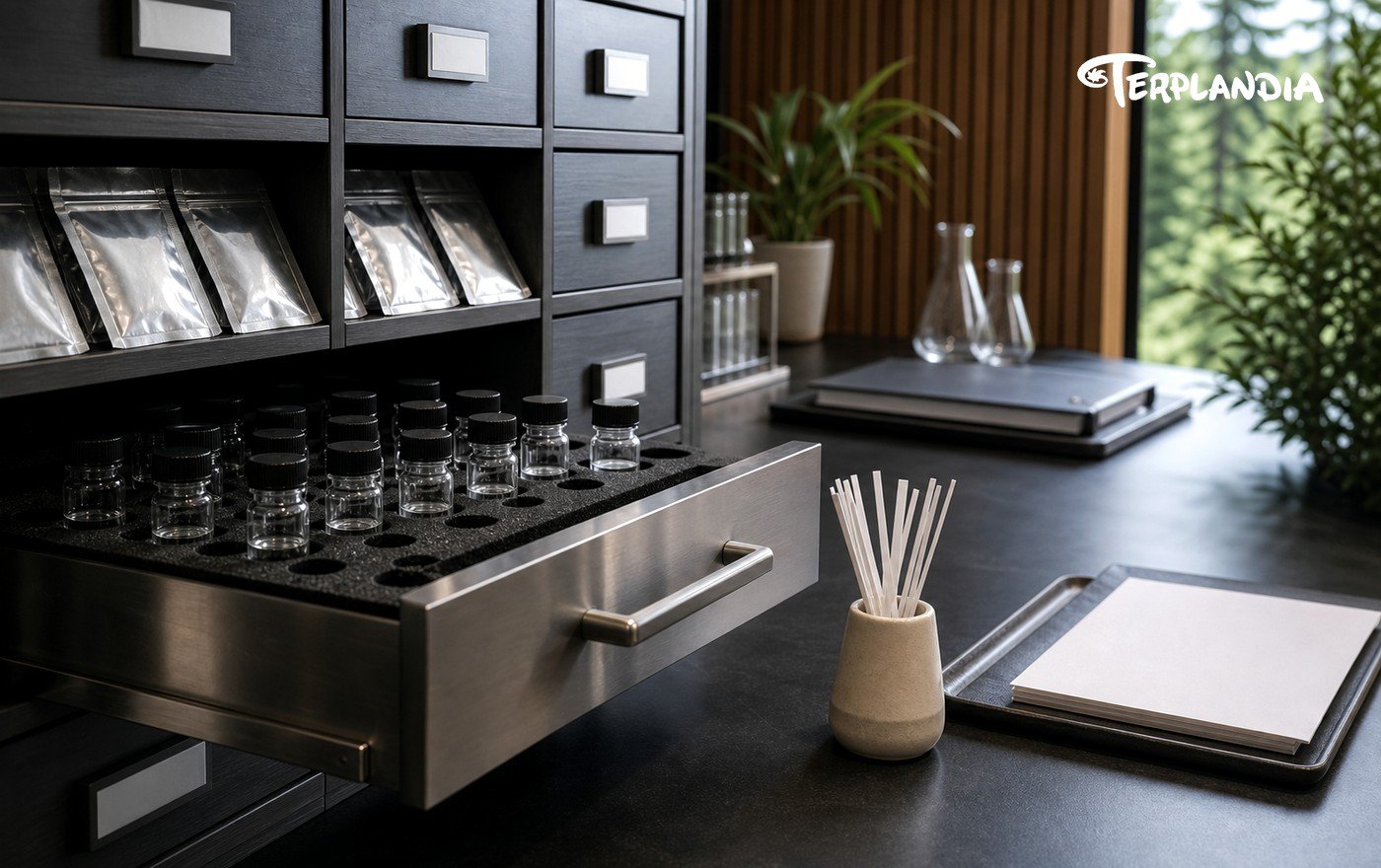
*The finished profile needs a retained reference and an SOP, not only a winning bench sample.*
Signature house terpene profile checklist
| Step | Decision to make | Output your team should keep |
|---|---|---|
| Brand target | What should the profile signal in the first impression, middle, and finish? | Sensory brief with must-have and must-avoid notes. |
| Source strategy | Should the profile be cannabis-derived, botanical, mixed-source, or another clearly disclosed path? | Source language and documentation requirement. |
| Bench ladder | Which variables are being compared across samples? | Versioned sample notes and retained references. |
| Format fit | How does the profile behave in the real product base, hardware, or matrix? | Use-rate notes, stability observations, and rejection reasons. |
| Scale-up | What needs to stay consistent when volume increases? | SOP, reorder notes, storage plan, and approval owner. |
Need a complex profile to use as a formulation benchmark?
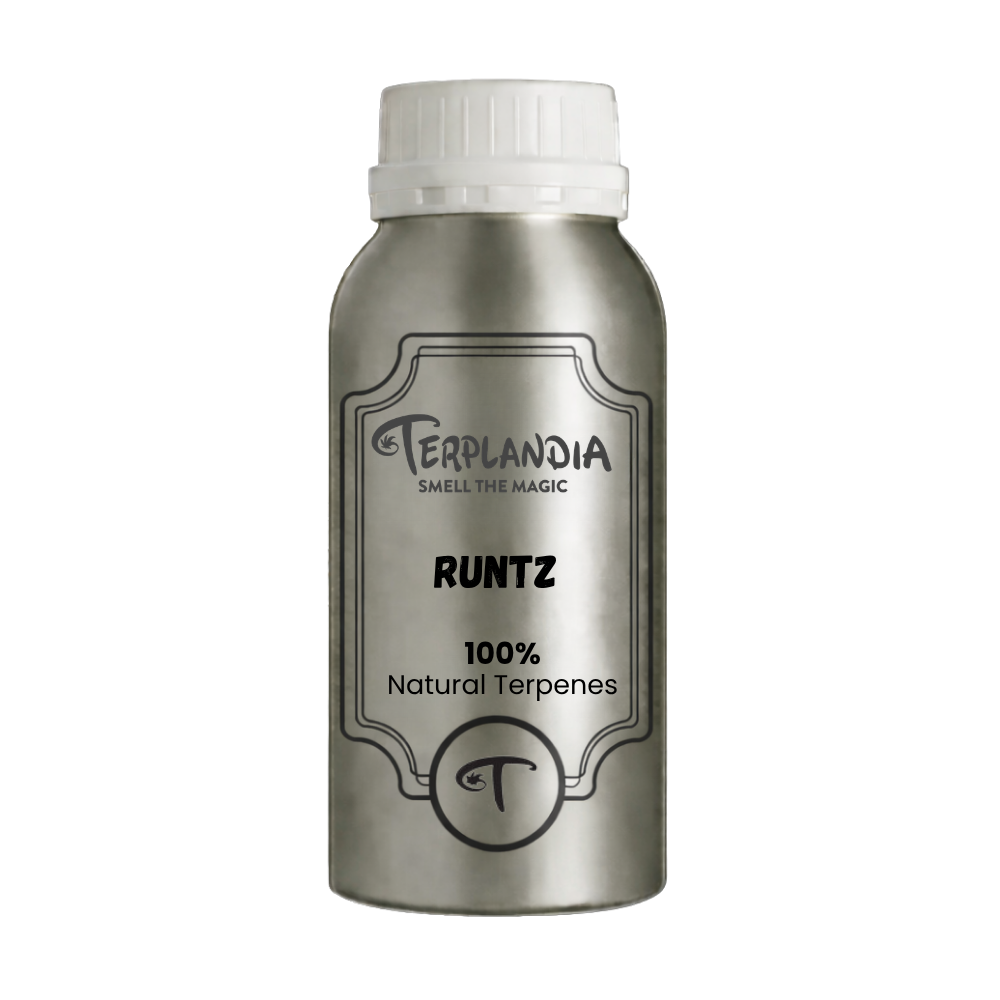
Use Terplandia's Runtz profile to map complex candy-fruit top notes against deeper cannabis undertones before initiating a custom bench formulation.
Technical reading
- Journal of Cannabis Research: preservation and augmentation of volatile terpenes in cannabis inflorescence
- Agilent: analysis of terpenes in cannabis products by GC/MS
FAQ
What is custom terpene formulation?
Custom terpene formulation is the process of building a terpene profile around a brand's specific sensory target, product format, source needs, and repeatability requirements.
Is a house terpene profile the same as a strain profile?
Not always. A house profile may use known strain families as references, but it is tuned to the brand's product promise rather than copied from a standard strain name.
What should a custom formulation brief include?
Include sensory target, product format, source preference, use-rate expectations, base material, launch volume, documentation needs, and notes about what the profile should avoid.
When should a brand scale a custom profile?
Scale only after the profile has passed sensory review, format-fit testing, documentation review, storage planning, and retained-sample approval.
Can Terplandia help with house profile development?
Terplandia can support sample selection, cannabis-derived profile direction, documentation review, and practical formulation handoff. The final profile should still be tested by the brand in the intended product format.