
Why are terpenes separating in a vape cart?
Terpenes can cloud, haze, streak, or separate in vape carts when the profile is not compatible with the base, the load is too aggressive, moisture enters the system, mixing is uneven, temperature control is poor, hardware creates a mismatch, or storage exposes the finished cart to stress. The fix is not one universal trick. The fix is a controlled diagnostic process.
For manufacturers, separation is a warning signal. It may mean the batch needs to be quarantined, retested, reformulated, or rejected. A cart that looks unstable can also create customer-service, QA, and brand-trust problems even when the aroma itself is attractive. Treat the visual symptom as a process problem first, then decide whether the batch can be corrected safely within your internal quality standards.
The fastest useful question is: did the cart fail because of the terpene profile, the base, the process, the hardware, or the storage condition? To systematically eliminate these visual failures, this diagnostic guide operates alongside Terplandia's established frameworks on how to add terpenes to distillate, choosing the best terpenes for vape carts under industrial constraints, and executing a tight terpene storage and shelf life SOP.
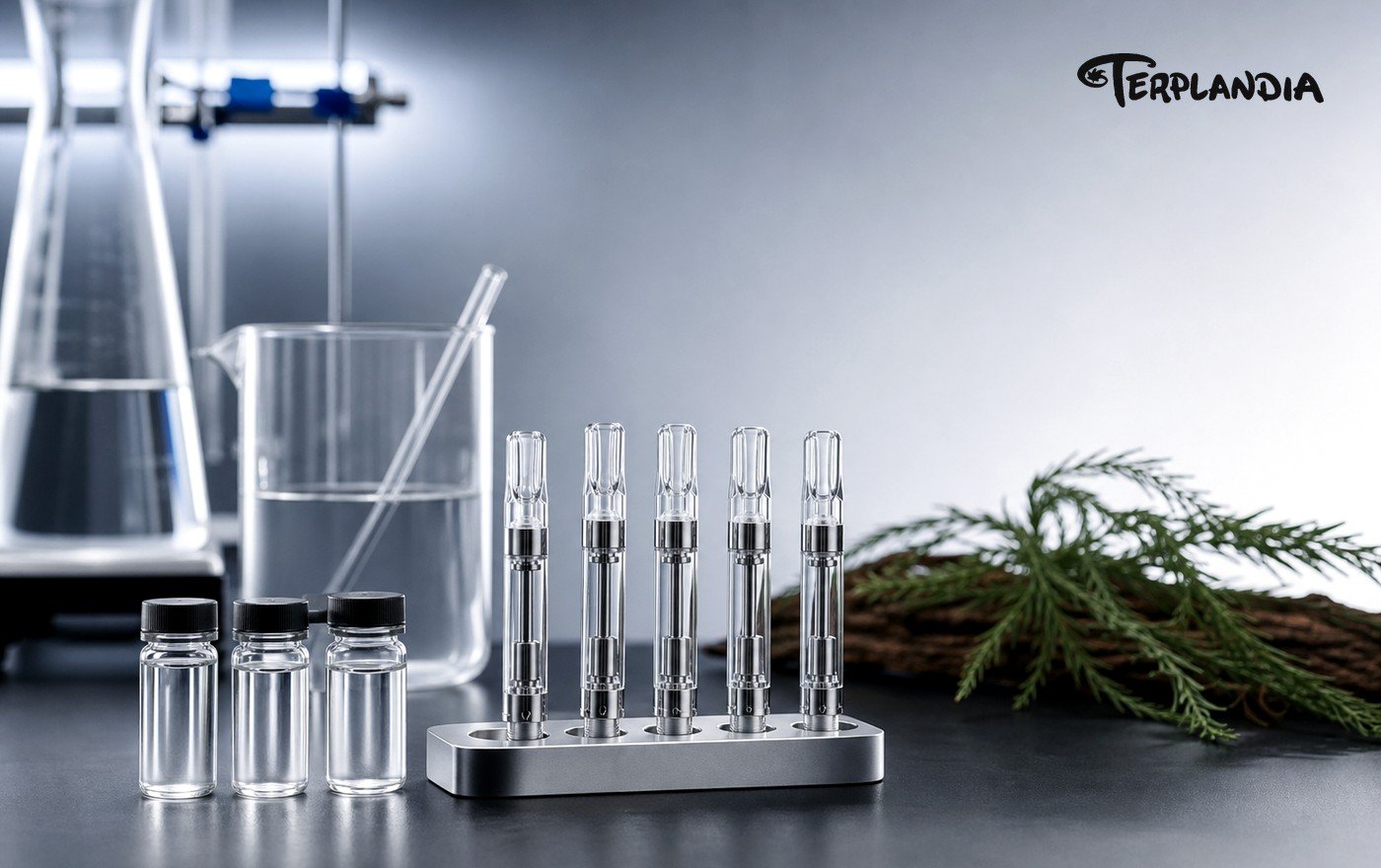
*Clouding and separation should be treated as a formulation warning, not a cosmetic issue.*
What does the symptom usually tell you?
The visual pattern can help narrow the cause, but it should not replace testing. Layering or streaking often points toward mixing, load, viscosity, or compatibility. Milky haze can point toward moisture, temperature shock, or incompatible inputs. Specks, flakes, or sediment can point toward precipitation, contamination, waxes, or material that should not be in the fill.
Use a simple triage table before changing the formula. Pull retained samples if you have them. Compare the affected carts with the original terpene sample, the base material, the mixed bulk fill, and any carts stored under different conditions. If only one storage condition failed, storage may be the main issue. If every sample fails after mixing, look upstream.
Do not jump straight to adding more ingredients. Cutting agents, unnecessary carriers, or "fixer" additives can create new compliance and sensory problems. First identify the likely cause, then decide whether the correct action is process correction, lower load, supplier review, hardware change, or batch rejection.
| Symptom | Likely direction to investigate | First check |
|---|---|---|
| Visible layers or streaks | Poor mixing, incompatible viscosity, excessive terpene load, or base mismatch | Compare mixing time, temperature, use rate, and base lot. |
| Milky haze or clouding | Moisture, cold shock, contamination, or incompatible input | Check storage, humidity exposure, water-related COA notes, and handling. |
| Specks or flakes | Precipitation, waxes, contamination, or unstable heavy fraction | Quarantine, inspect source material, and review filtration/process notes. |
| Failure only after storage | Heat, light, oxygen exposure, loose caps, or packaging stress | Compare retained controls against shipping and warehouse conditions. |
How can temperature and mixing create separation?
Terpene incorporation is a process step, not a casual stir. If the base is too cool, too viscous, or mixed unevenly, the profile may not distribute consistently. If heat is excessive or poorly controlled, volatile top notes may shift and the finished profile can change. The correct process depends on the base, hardware, terpene profile, and internal SOP.
A practical test is to isolate variables in a controlled matrix. Hold the source profile constant and compare mixing time, temperature window, vessel size, headspace, and order of addition. If a small bench sample stays clear but a production vessel fails, the issue may be scale-up, shear, dead zones, or cooling rate. If both fail, the formula or input may be the issue.
Your team should record what worked and what failed. "Mixed until clear" is not an SOP. Write down batch size, base temperature, terpene use rate, mixing time, equipment, hold time, fill timing, and storage condition. That record becomes the difference between a one-time rescue attempt and a repeatable process.
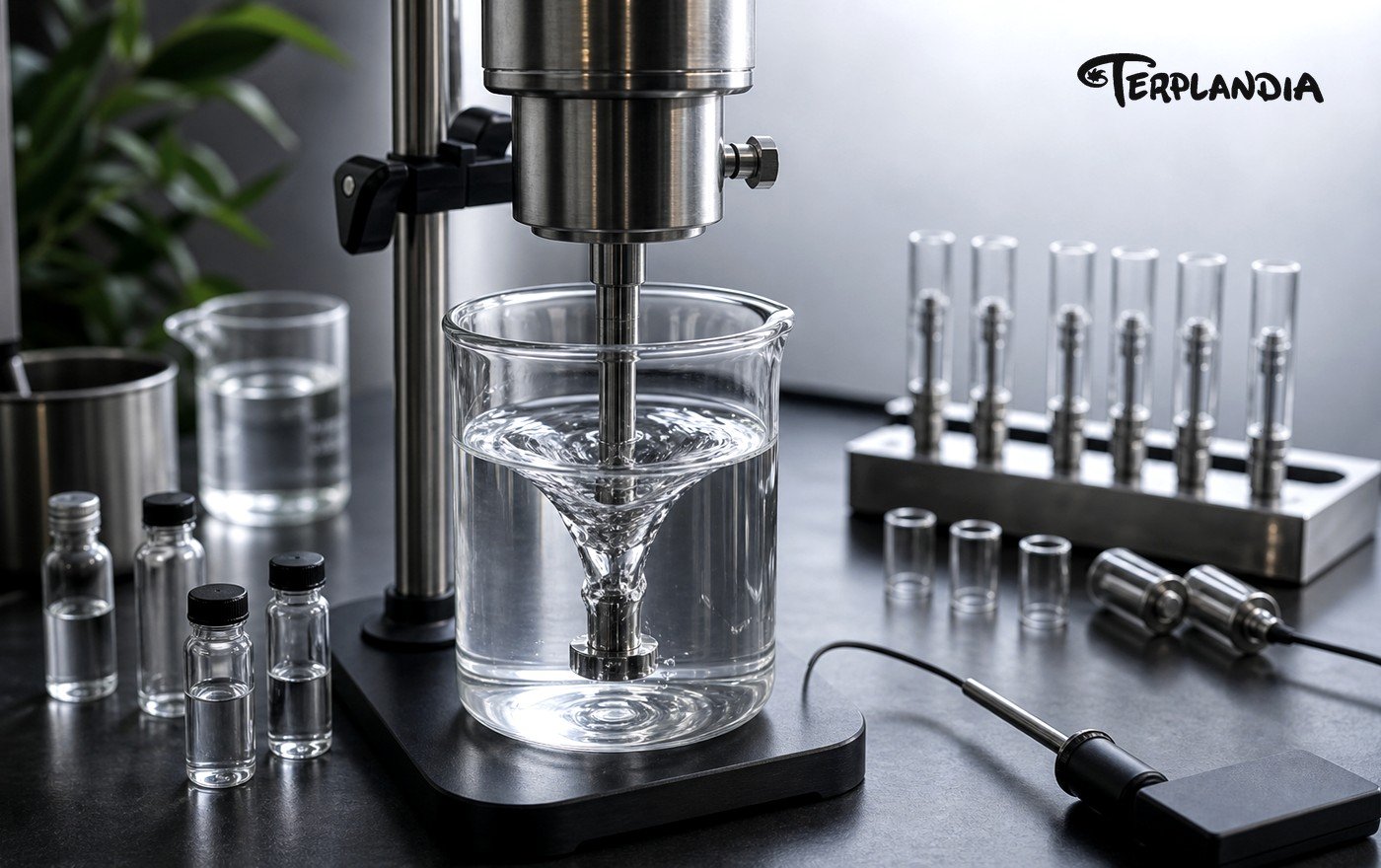
*Troubleshooting gets easier when hardware, temperature, mixing, and storage are tested separately.*
Can moisture or storage make a cart cloudy?
Yes. Moisture exposure, condensation, loose seals, cold storage changes, or uncontrolled handling can make a previously acceptable system look hazy or unstable. Terpenes are sensitive aroma inputs, and finished cart systems also respond to storage and shipping stress. A cart that looked clear during filling can change if the storage environment is not controlled.
Start by comparing retained samples. Keep one control under your intended storage condition and another under the suspected stress condition when your QA plan allows it. If clouding appears only after cold shock, heat exposure, or a humidity event, the formulation may need better handling controls as much as a different terpene profile.
This is where Terplandia's terpene storage and shelf-life SOP becomes practical. Storage is not a back-room detail. It protects the profile before mixing and protects the finished product after filling.
Could the terpene load be too high?
Sometimes the problem is simply that the formulation asks too much from the system. A profile that smells impressive at a high load may become harsh, unstable, cloudy, or difficult to repeat in hardware. There is no universal percentage that works for every base, profile, and cart. The useful answer is to test ranges and record the version that stays stable while still meeting the sensory target.
If separation shows up as use rate increases, step the load down and compare. If a lower range stays clear and still smells on-brand, the fix may be a more restrained profile rather than an additive. If the lower range still fails, investigate source material, moisture, base compatibility, process, and hardware.
Avoid unsupported claims such as "this terpene percentage is always safe" or "this cart is guaranteed stable." Stability is a product-specific result. It depends on the input, base, process, hardware, storage, and time.
How does hardware affect terpene stability?
Hardware can expose formulation weaknesses. Intake size, ceramic core behavior, seal quality, reservoir design, fill process, and storage orientation can all influence how a cart behaves. A profile that looks fine in a beaker can still create problems in a specific hardware system.
Isolate mechanical and physical hardware variables before concluding that equipment is the root cause. Keep the discussion empirical. Compare aperture size, material contact, fill temperature, cap timing, leak behavior, storage orientation, and visual change after hold. If the same formulation behaves differently across hardware types, the hardware/formula pairing needs more work.
This is why cart teams should run format-fit testing before volume. Terplandia's best terpenes for vape carts article is a useful starting point for selecting profile directions, but final approval still belongs in the real hardware.
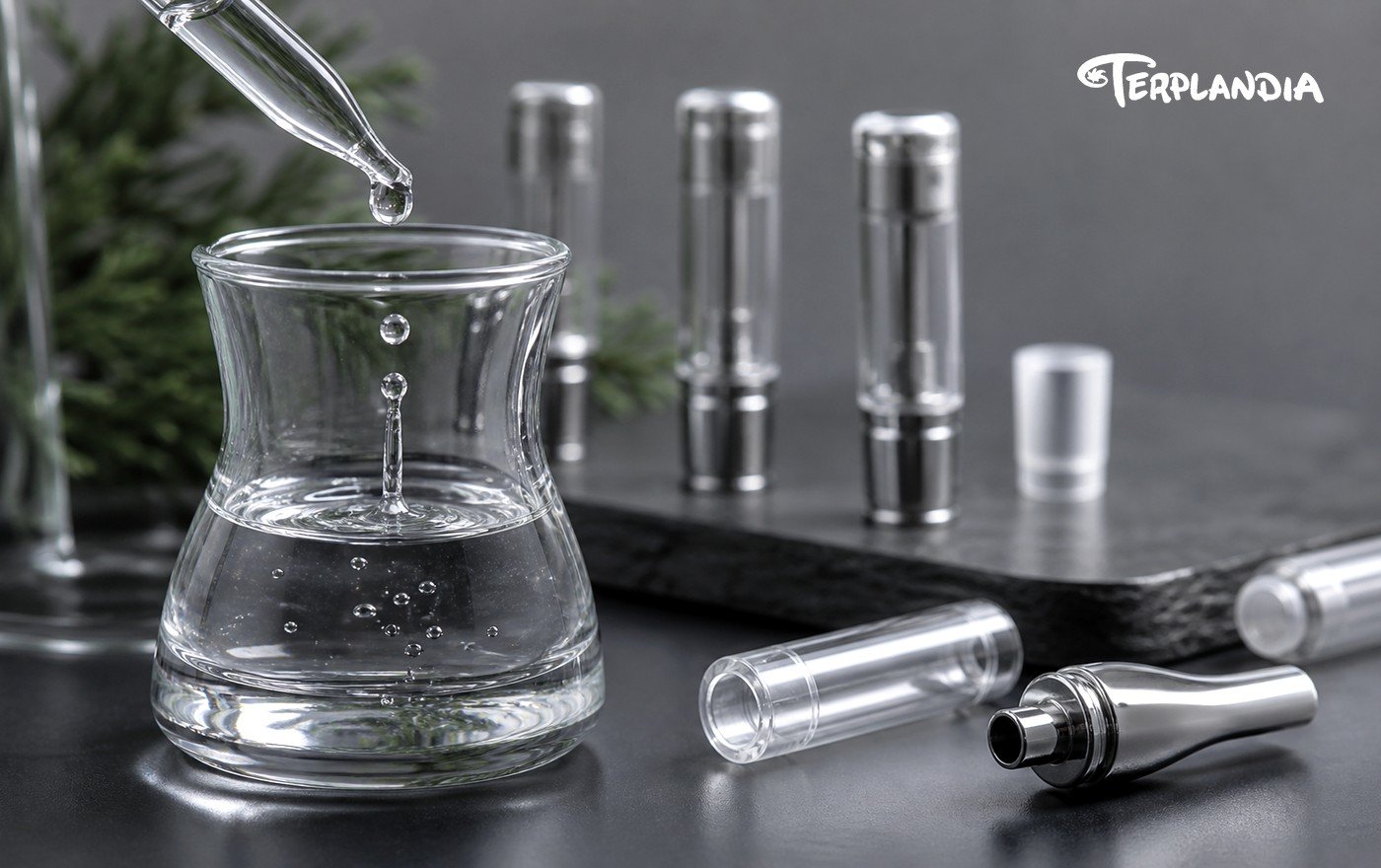
*A clear vial test is only the first step; the real question is whether the profile stays stable in the product system.*
What should you review with the supplier?
When a terpene profile is involved in clouding or separation, supplier review should stay specific. Ask for source language, COA/SDS support, storage guidance, handling recommendations, and any formulation notes the supplier can defend. If the issue may involve moisture, residual materials, heavy fractions, or storage sensitivity, ask what the document file can actually support.
Terplandia's how to read a terpene COA guide can help teams avoid vague paperwork review. The goal is not to collect documents; it is to connect documents to the failure mode. Does the file explain the input? Does it match the batch? Does it support the public product language? Does it raise questions your QA team needs answered before refilling?
If the profile came from a supplier that cannot explain source, storage, or formulation context, your team may need a different input strategy. A stable cart program is built from aligned ingredients, process, hardware, and documents.
Can a cloudy or separated cart batch be fixed?
Maybe, but do not assume. The correct first step is quarantine and internal QA review. Decide whether the batch is safe to rework under your SOP, whether the visual issue is reversible, whether the root cause is known, and whether the finished product can still meet your standards. If you cannot answer those questions, do not treat the batch like a simple remix.
Some early-stage bench issues can be corrected by changing order of addition, improving mixing, adjusting temperature control, lowering load, switching hardware, or choosing a better-matched profile. Finished goods are more complicated. Rework can create new risks if it is not controlled, documented, and allowed by your quality system.
The better fix is prevention. Test the source profile, base, use range, process, hardware, and storage condition before the first large fill. Keep retained samples. Record the approved method. Then teach the team to follow the method instead of improvising during production.
*The fix should become an SOP so the next batch does not repeat the same failure.*
Vape cart terpene stability checklist
| Check | What to compare | What a pass should show |
|---|---|---|
| Source profile | COA/SDS, source language, storage notes, retained sample | The input is identified, documented, and handled consistently. |
| Base compatibility | Same terpene profile in the intended base at several tested ranges | Clear, consistent behavior at the target range. |
| Mixing process | Time, temperature, equipment, vessel size, order of addition | Repeatable clarity and aroma without uncontrolled heat or dead zones. |
| Hardware fit | Same fill in the actual cartridge system and storage orientation | No unexpected haze, streaking, leaking, or visual instability. |
| Storage stress | Retained controls against heat, light, cold, and time conditions allowed by QA | The approved profile holds under the intended handling plan. |
Need a cart-friendly CDT sample to test in hardware?
Use Blue Dream CDT as a physical compatibility baseline while your team benchmarks material clarity, hardware retention, and use-rate limits on the formulation bench.

Technical reading
- Scientific Reports: oxidative products of monoterpenes at vaping temperatures
- Berkeley Lab: emissions from heated terpenoids in vaporizable cannabis concentrates
- Terplandia: how to add terpenes to distillate
FAQ
Why did my vape cart turn cloudy after filling?
Clouding can come from moisture, cold shock, incompatible inputs, poor mixing, excessive terpene load, base mismatch, hardware behavior, or storage stress. Compare retained samples and process records before changing the formula.
Can I fix a separated vape cart by shaking it?
Shaking may hide a symptom temporarily, but it does not solve the root cause. Treat separation as a QA issue and review mixing, load, hardware, storage, and supplier documents.
Are terpenes water soluble?
Many terpene compounds are hydrophobic or poorly water soluble, but finished cart behavior depends on the full profile, base, use range, process, and hardware. Do not reduce the whole issue to one chemistry phrase.
What terpene percentage prevents separation?
There is no universal percentage for every cart. Test a controlled range in the actual base and hardware, then document the lowest effective range that meets the sensory target and stability standard.
What should I ask a terpene supplier after a cart stability failure?
Ask for source language, COA/SDS support, storage guidance, handling notes, use context, and any information that helps your QA team connect the input to the observed failure mode.