
Key Takeaways
- Terpene stability testing should compare the approved profile under controlled heat, light, oxygen, and packaging conditions.
- Accelerated aging is a screening tool, not a guarantee of exact shelf life.
- Monoterpene-heavy profiles usually need tighter oxygen, light, and heat controls.
- A useful report turns test results into release, storage, packaging, or reformulation decisions.
Terpene stability testing helps buyers learn whether an approved aroma profile will survive the real product journey. The goal is not to torture a sample for a lab chart; the goal is to find practical risks before scale-up, packaging, storage, and reorders make those risks expensive.
This guide gives procurement, formulation, and QA teams a simple accelerated aging workflow for cannabis-derived terpene inputs and terpene-containing product trials.
What is terpene stability testing for cannabis product buyers?
Terpene stability testing measures how an approved profile changes under controlled storage and stress conditions.
A stability test helps a buyer answer a practical question: will this terpene profile still match the approved direction after shipping, storage, packaging, and time? For cannabis product manufacturers, the test should connect chemistry, sensory review, and real product conditions instead of stopping at a single lab number.
The best stability plan starts after the profile is approved. First lock the reference lot, intended use rate, matrix, packaging format, and release criteria. Then test the same profile under controlled conditions so the team can compare drift. If the batch itself is still moving, begin with terpene batch consistency before accelerated aging.
Regulated-product stability frameworks can guide the discipline even when the product is not a drug. HHS hosts the ICH Q1A(R2) guidance on stability testing of new drug substances and products, which emphasizes defined storage conditions, batches, testing frequency, and change evaluation. Terpene buyers can borrow that structure without pretending it is a one-size-fits-all cannabis rule.
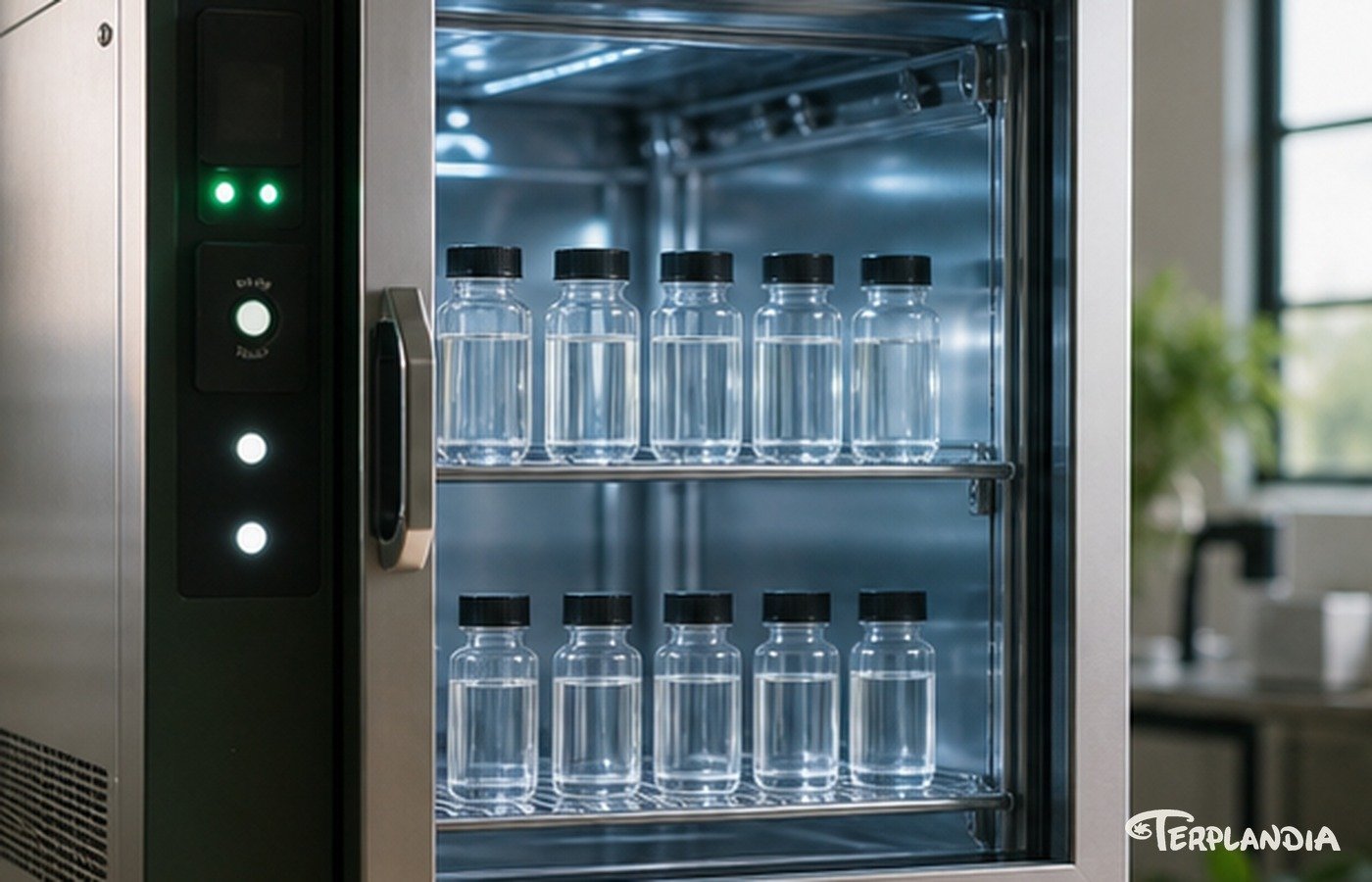
Which variables should an accelerated terpene stability test control?
Control temperature, light, oxygen exposure, container headspace, matrix, time points, and comparison samples.
Accelerated aging is only useful when variables are controlled. If one sample is opened twice, another sits near a window, and a third changes container type, the final comparison tells the team very little. Start by writing down the variables that matter most to the finished product: heat, light, air exposure, humidity if relevant, packaging, and the product matrix.
ICH Q1A(R2) uses accelerated storage conditions such as 40 degrees Celsius and 75 percent relative humidity in its formal framework, but terpene buyers should treat that as a reference point, not a universal recipe. A terpene input, vape formulation, beverage emulsion, and topical base may need different stress designs. If humidity is not relevant to a sealed oil input, oxygen and headspace may matter more.
Use at least one unstressed control sample. Keep it sealed, cool, and dark according to supplier guidance. Every stressed sample should be compared against that control and the approved reference file. This gives the team a clean way to see whether drift came from the stress condition or from normal sample variability.

How should buyers design the sample set and time points?
Buyers should test one control, multiple stress conditions, and fixed time points tied to decisions.
A compact test can still be useful. Start with the approved lot in the actual matrix when possible. Prepare a sealed control, one heat-stressed sample, one light-exposed sample, one oxygen/headspace sample, and one packaging comparison if packaging is part of the question. If volume is limited, prioritize the risk most likely to affect the launch.
Define time points before testing starts. Common screening points include day 0, day 7, day 14, day 30, and a longer checkpoint when the format warrants it. These are not universal shelf-life claims; they are decision checkpoints. The team should know in advance whether a result triggers release, more testing, packaging change, formula adjustment, or supplier review.
If the first accelerated screen is only a curiosity project, it will not change production behavior. Tie the screen to a launch decision before day 0. The failure threshold may be sensory drift, visible haze, a packaging interaction, or a lab result that moves outside the approved profile range.
A published D-limonene nanoemulsion study gives a useful example of how storage temperature can change stability interpretation. The abstract reports droplet sizes around 120-130 nanometers over 30 days at 5 degrees Celsius and 25 degrees Celsius, while oiling off began at 50 degrees Celsius from day 10. Terpene buyers should not copy that exact design blindly, but it shows why temperature and time points should be explicit.
| Sample | Purpose | Decision it supports |
|---|---|---|
| Sealed control | Baseline comparison | Confirms normal appearance and aroma. |
| Heat stress | Temperature sensitivity | Sets storage and shipping guardrails. |
| Light stress | UV or display risk | Supports package opacity decisions. |
| Headspace stress | Oxygen exposure | Supports container size and purge rules. |
| Packaging comparison | Barrier performance | Separates formula drift from package drift. |
Which terpene signals usually fail first during storage?
Volatile monoterpenes and oxidation-sensitive aroma notes usually show drift before heavier profile structure.
Many stability failures begin as top-note movement. A profile may lose bright citrus, fresh pine, or delicate herbal lift before it looks visually different. That is why a stability review should include sensory comparison and not only a final lab table. The buyer wants to know whether the approved profile still fits the product promise.
A review on essential-oil carriers notes that light can enhance autoxidation and that thermal degradation can involve bond cleavage, epoxidation, dehydrogenation, and allylic oxidation in terpenes in the context of essential-oil stability. Another review on myrcene lists its formula as C10H16 and molecular weight as 136.23 g/mol, and notes stability concerns such as spontaneous polymerization in myrcene aroma-agent chemistry.
The buyer takeaway is simple: do not wait for a failed smell test at commercial scale. Track the notes most likely to fade, oxidize, or become sharp. If a profile is monoterpene-heavy, tighten oxygen, light, and heat controls before a production team assumes the profile will behave like a heavier aromatic system.
How should packaging be compared during stability testing?
Packaging should be compared with the same fill, headspace, closure, storage condition, and evaluation schedule.
Packaging can make a stable profile look unstable. A poor barrier, too much headspace, a reactive liner, or repeated opening can push oxygen and light exposure beyond the formula’s tolerance. Buyers should compare packaging formats using the same lot, fill level, closure torque or seal method, storage condition, and time points.
A simple package comparison might include glass, aluminum, and the intended commercial container. Record whether the container is clear or opaque, how much headspace is present, whether the sample is nitrogen-purged, and how often it is opened. If the sample in one package drifts and the control stays aligned, the solution may be a packaging change rather than a terpene reformulation.
Keep package notes objective. Record fill level, closure type, liner material when known, storage orientation, and whether the package was opened during the study. Those details protect the team from over-reading a single result. If one package wins, the report should say why the result is likely tied to barrier performance rather than a one-off handling mistake.
This step is especially important for teams scaling from bench to production. Terplandia’s guide to scaling terpene formulation explains why the approved bench sample should be translated into real production conditions before a buyer treats it as locked.

What should the stability report say before production release?
The report should state the sample set, conditions, results, limits, and release recommendation clearly.
A stability report should be written for decision-makers, not only scientists. It should list the lot, matrix, use rate, package, control condition, stress condition, time points, test method, evaluator, and release recommendation. It should also state what the test does not prove. An accelerated screen can reveal risk; it does not automatically prove a full commercial shelf-life claim.
For lab-backed checks, connect the report to the same testing discipline used for incoming QA. California DCC guidance states that labs report results on a COA and that, within one day of finishing a batch’s testing, the lab must upload the COA to track and trace and send a copy to DCC. That one-day COA reporting rule is California-specific, but it reinforces the need for dates, batches, and controlled records.
The best report ends with one of four decisions: release as approved, release with storage limits, revise packaging or process, or reformulate and retest. Anything vaguer leaves production guessing. If the report changes the accepted profile, update the reference profile and retained sample so future reorders do not rely on outdated approval notes.

How does Terplandia fit a stability testing workflow?
Terplandia helps buyers connect source-specific terpene profiles with storage guidance and formulation review.
Terplandia’s role is to give buyers a profile that can be evaluated under real conditions. A stability plan works best when the supplier understands the target cultivar or house direction, the product matrix, the likely packaging, and the buyer’s release criteria. That context lets the supplier suggest a sample path that avoids wasted rounds.
Use Terplandia’s batch consistency workflow to lock the reference lot before stress testing. Then use the stability test to decide whether the profile, process, or packaging needs adjustment. If the formula shows clouding or separation in a vape format, connect the investigation to Terplandia’s guide on terpenes separating in vape carts.
Send the Terplandia team your target profile, product format, expected storage conditions, packaging type, and the stability concern you need to answer. A focused stability question is faster to solve than a vague request for a profile that can survive everything.
Last reviewed: 2026-06-30.