
Forbidden Fruit Strain Terpenes: Cherry, Tropical Mango, and Source-Proof Buying Checks
A buyer-focused Forbidden Fruit CDT profile for cannabis brands comparing cherry, tropical mango, myrcene depth, source proof, and sample QA.
This guide helps buyers judge whether Forbidden Fruit CDT is a usable tropical profile for the finished product or just a strong first impression.
Short answer: Forbidden Fruit strain terpenes should combine cherry, tropical mango, and citrus-grapefruit brightness with a myrcene-supported base. Cannabis brands should evaluate source identity, clear sample appearance, COA and batch documentation, format testing, and retained-sample comparison before scaling.
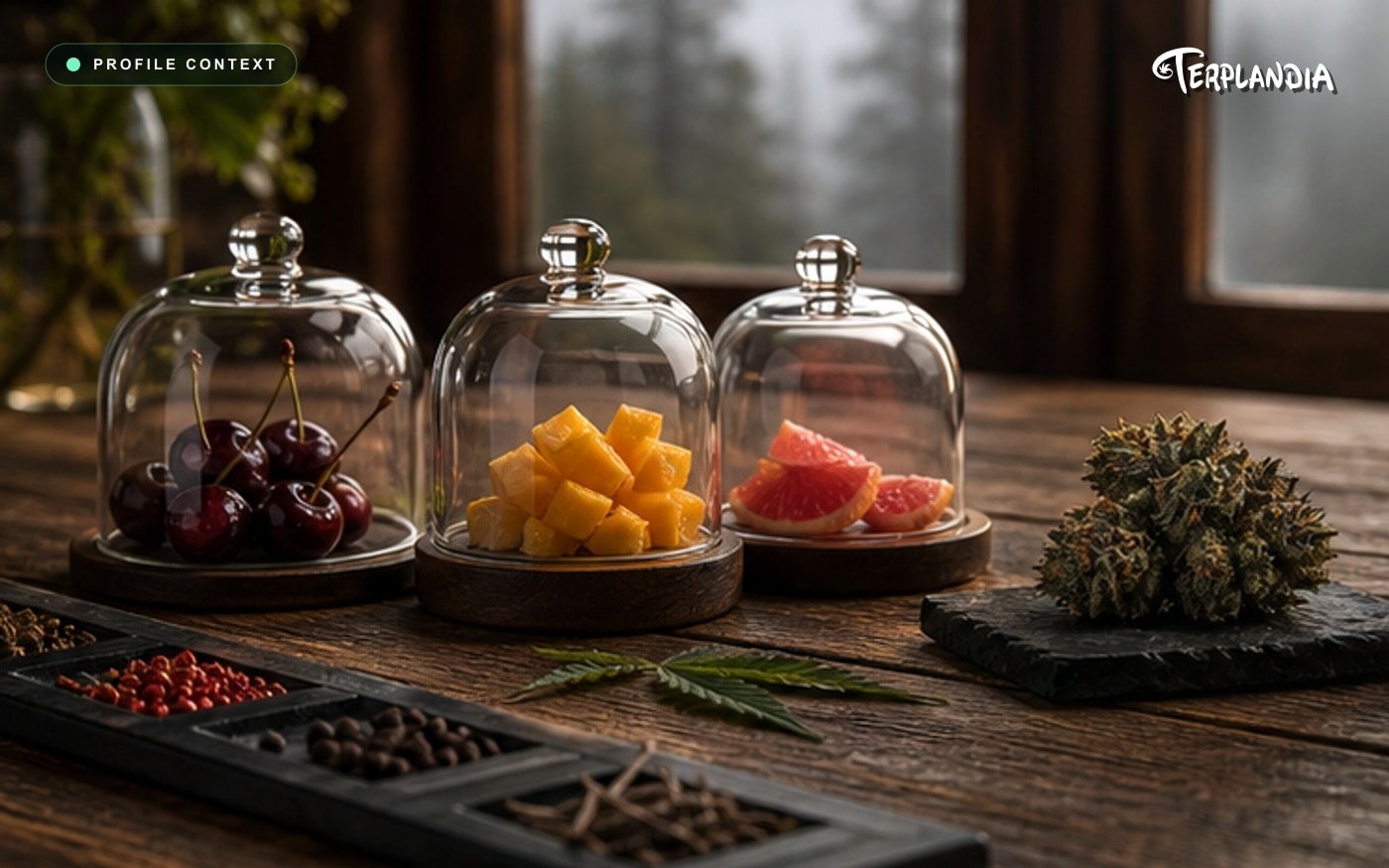
What should Forbidden Fruit CDT prove for a cannabis brand?
Forbidden Fruit should feel rich and tropical, but the buying decision still depends on source proof, clear appearance, and production repeatability. The strain name should not carry the purchase decision by itself. A useful CDT profile gives the product team a sensory target, documentation trail, and repeatable handoff.
- Cherry-fruit lift should be clear without becoming artificial.
- Tropical mango body should connect to the strain story instead of feeling pasted on.
- Myrcene-supported base should help the profile survive real format testing.
How does the dominant terpene support the profile?
Myrcene can give tropical fruit profiles a deeper foundation so cherry and mango notes do not feel thin. Use compound names as orientation, not as the whole buying decision. A profile is a relationship between major and minor aromatics, not a single ingredient story.
For more context, compare this profile with Terplandia’s guides to limonene, myrcene, and caryophyllene. The useful question is not whether one compound appears. The useful question is whether the full profile matches the product promise.
Buyer checklist before approving the sample
| Check | What to ask | Why it matters |
|---|---|---|
| Source identity | Can the supplier explain the cannabis-derived source story? | Protects the strain promise from becoming a generic flavor claim. |
| Appearance | Is the sample water-clear and free from unexpected color drift? | Supports clean handling and makes changes easier to spot. |
| Batch proof | Is there a COA, lot ID, and retained-sample process? | Helps the buyer compare future lots against the approved target. |
| Format testing | Has the profile been tested in the finished base or hardware? | Aroma can shift when use rate, heat, carrier, or sweetener changes. |
| Storage plan | Will the team store it cool, dark, sealed, and logged? | Protects top notes between approval and production. |
Use this checklist alongside Terplandia’s CDT vs BDT source guide, COA reading guide, storage SOP, and supplier buying guide when your team is comparing profiles.
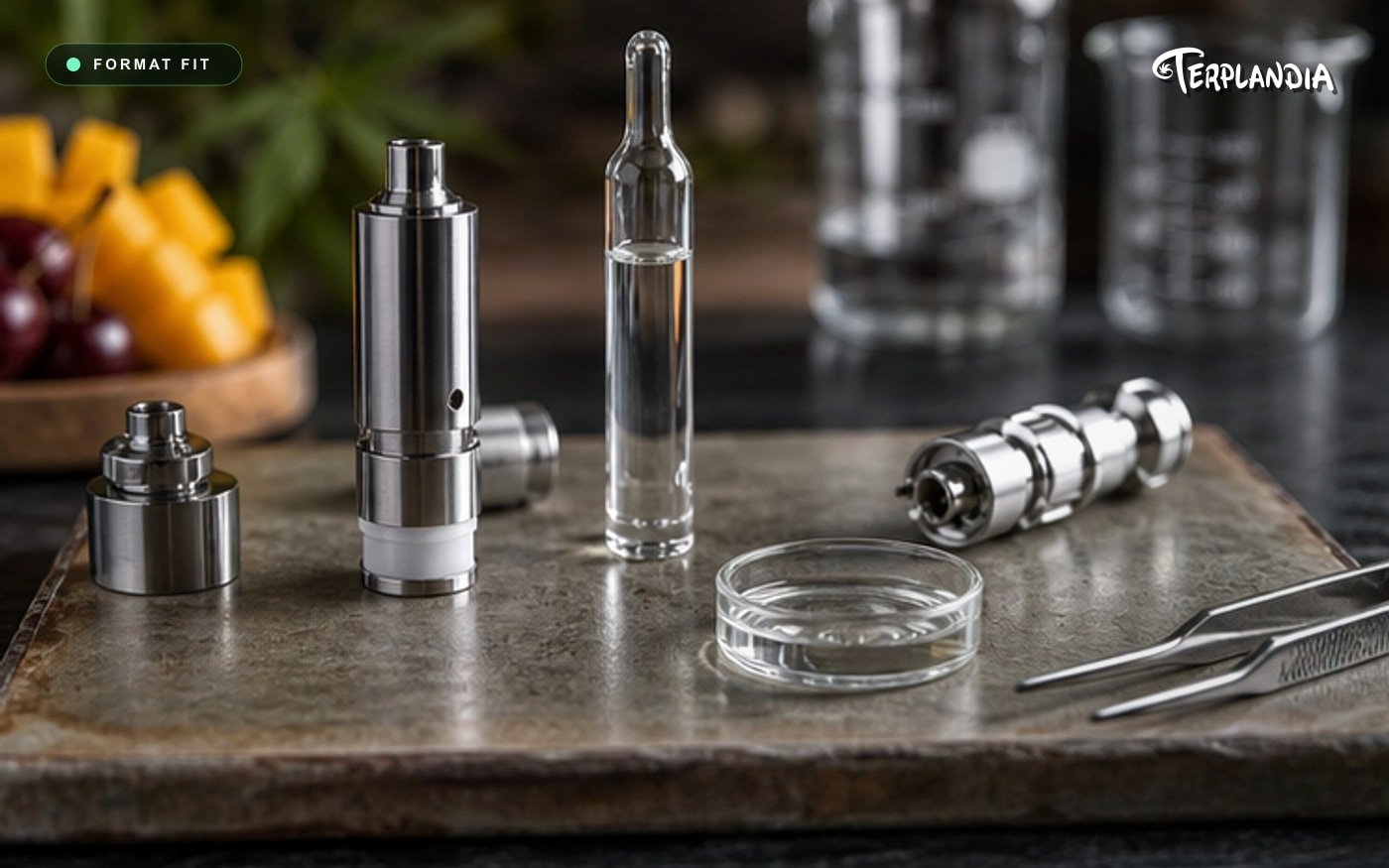
Where does this profile fit best?
Forbidden Fruit is useful when a product needs a fruit-forward profile with more depth than straight citrus or candy. For carts, compare the profile in the actual hardware and base. For distillate or infused formats, test the use rate against the other ingredients before approving a full order.
Terplandia’s distillate blending guide, vape profile guide, and use-rate article can help the product team decide whether the profile should sit near the top, middle, or supporting base of the formulation.
What can go wrong during approval?
Do not let the tropical note hide weak proof. A profile can smell exciting and still fail if the source story, storage plan, or repeatability is thin. The most common mistake is approving a profile because it smells strong on day one, then finding out the finished SKU tells a different story.
- A fruit note can fade if storage is sloppy.
- A candy or tropical top note can become too loud at the wrong use rate.
- A profile can lose strain identity if the supplier cannot support batch-to-batch comparison.
- A sample can pass internal preference but fail production reality if no one tests the final base.
Forbidden Fruit CDT quick summary for product teams
Treat Forbidden Fruit as a production input, not just a flavor name. Confirm the sensory target, source identity, clear sample appearance, COA and batch records, intended use range, finished-format behavior, storage plan, and retained-sample process before moving from sample approval to scale-up.
Product facts to verify
- Dominant terpene: myrcene
- Flavor notes: cherry, tropical, mango
- Also known as Le Fruit Defendu
- Suggested dilution range: 5-8% by weight
- Zero THC and zero CBD
Ready to compare this profile in your own format?
Use the checklist above, then test a water-clear CDT sample against the exact base, hardware, or flavor system your team plans to sell.
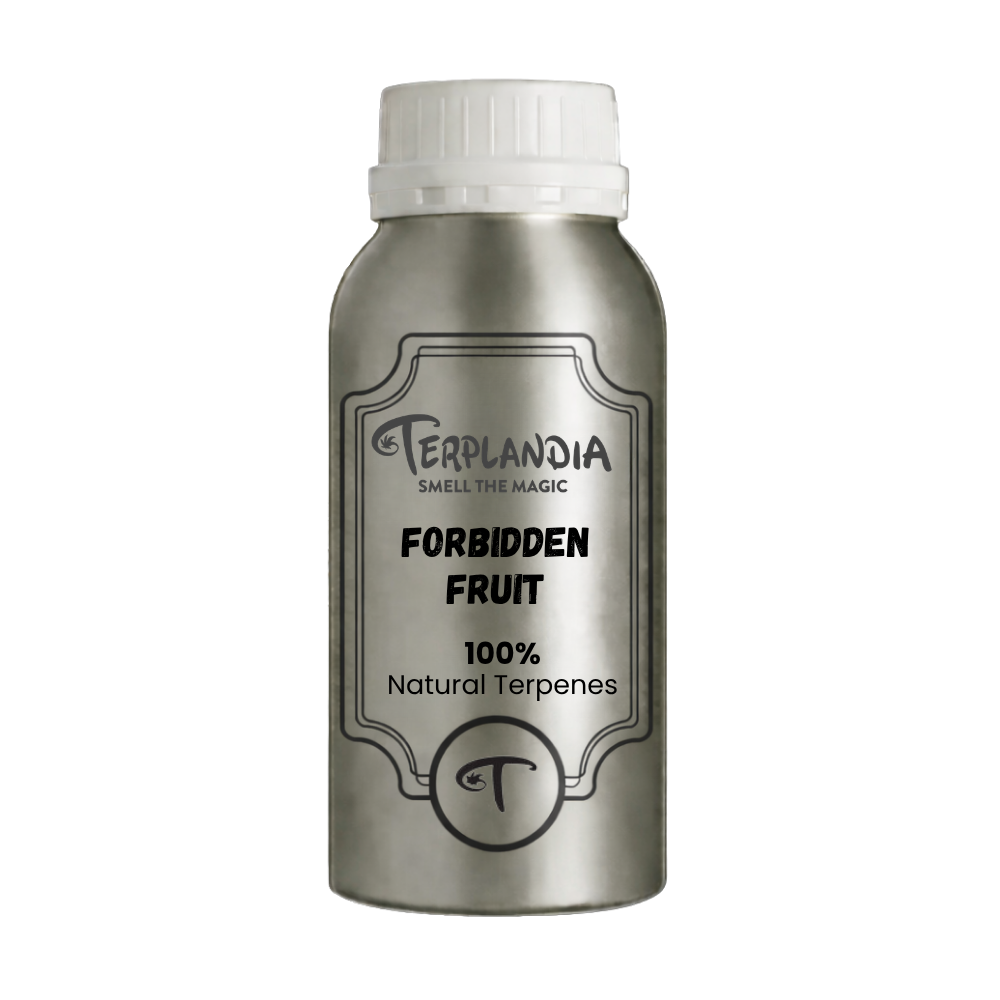
Cherry, tropical, and mango profile for fruit-forward R&D.
FAQ
What does Forbidden Fruit CDT usually emphasize?
A useful Forbidden Fruit CDT profile should emphasize cherry, tropical mango, and citrus-like brightness with enough depth to stay strain-forward.
What should buyers check before approving Forbidden Fruit terpenes?
Check source identity, clear appearance, COA and batch documentation, suggested use range, storage plan, and a retained sample for future comparison.
Is Forbidden Fruit only for sweet products?
No. It can support fruit-forward products, but the profile should be tested against the finished base so the tropical notes do not become too syrupy or vague.