
California CDT Terpenes: Why Farm-Direct Source Proof Matters for Cannabis Brands
A practical guide to California CDT terpenes for cannabis brands that need source proof, repeatable aroma, testing context, and formulation-ready samples.
Quick answer
California CDT terpenes: California CDT terpenes should be judged by source proof, batch traceability, storage discipline, and real-format performance. The best supplier makes it easy to connect the farm/source story to the approved sample and then repeat that profile when your brand reorders.
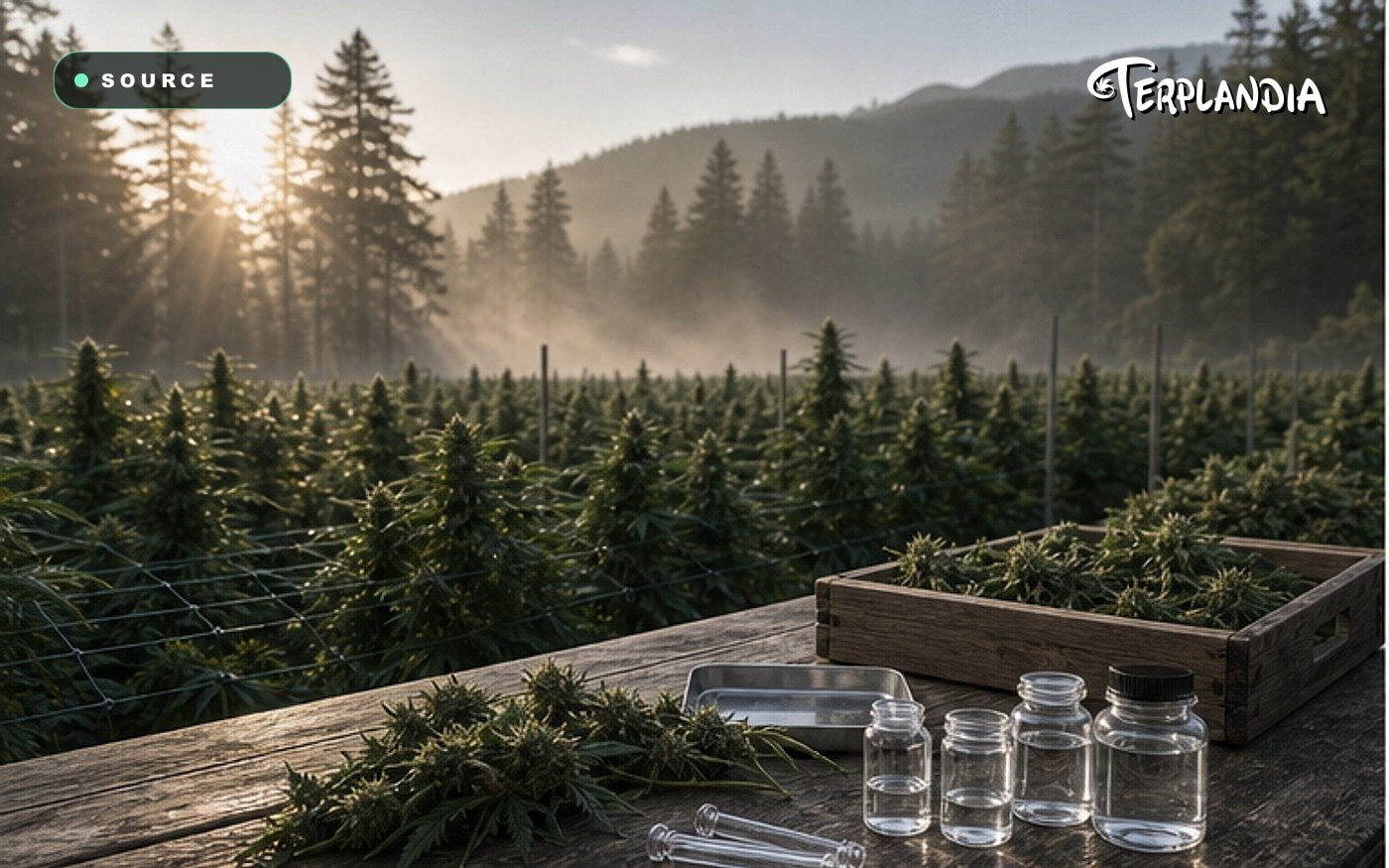
What makes California CDT terpenes different for a buyer?
California CDT terpenes are useful to a cannabis brand when the source story, sample identity, and production handoff are clear enough to survive scale. The value is not the state name by itself. The value is whether the supplier can explain what kind of cannabis source the profile comes from, how the sample was handled, and what your team should expect when the profile moves from a small evaluation vial into a real cart, disposable, edible, or concentrate workflow.
For Terplandia, the practical question is simple: can your team trust the aroma target after the first sample meeting is over? A strong California CDT terpene supplier should make the answer easier with source notes, batch discipline, clean storage expectations, and a transparent path from sample approval to reorder. If your sourcing story references Humboldt County extraction, farm-direct capture, or another California origin cue, that story should be supported by documentation rather than used as loose marketing language. If you are still weighing source categories, Terplandia’s CDT vs BDT guide is the right companion article.
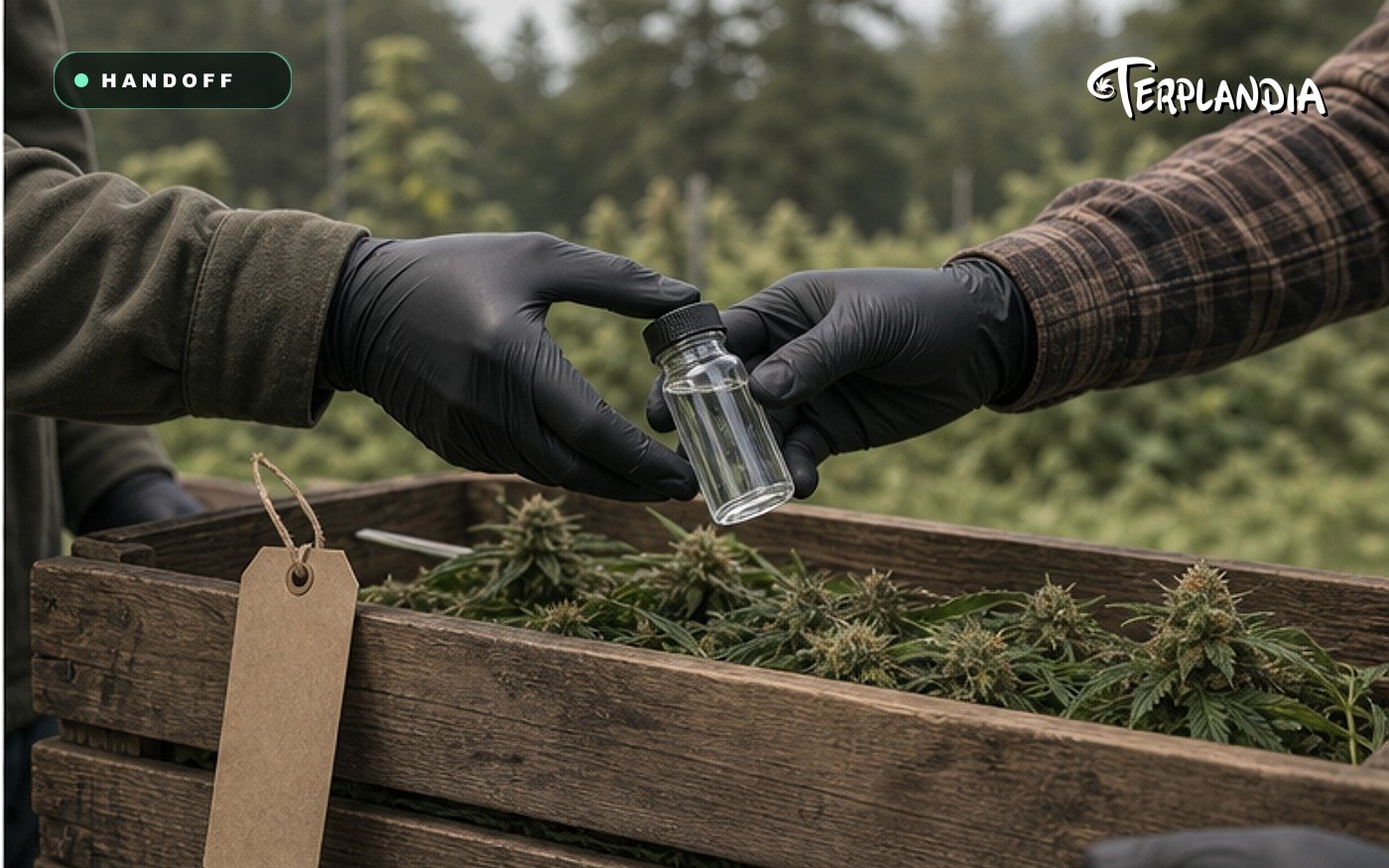
What should source proof include?
Source proof should connect the aroma sample to a believable production trail. That can include source-region context, extraction or capture notes, batch identifiers, retained-sample discipline, storage expectations, and a clean explanation of what is and is not being claimed. It should not rely on vague language like “premium cannabis flavor” without any operational detail behind it.
This is especially important in California because brands operate in a market where documentation, testing, and label accuracy already shape buyer expectations. The California Department of Cannabis Control notes that cannabis goods are tested for contaminants and labeled cannabinoid and terpene amounts through licensed testing laboratories. That regulatory context makes clean supplier documentation feel less like a bonus and more like a normal part of brand discipline.
Reference context: California DCC testing laboratories.
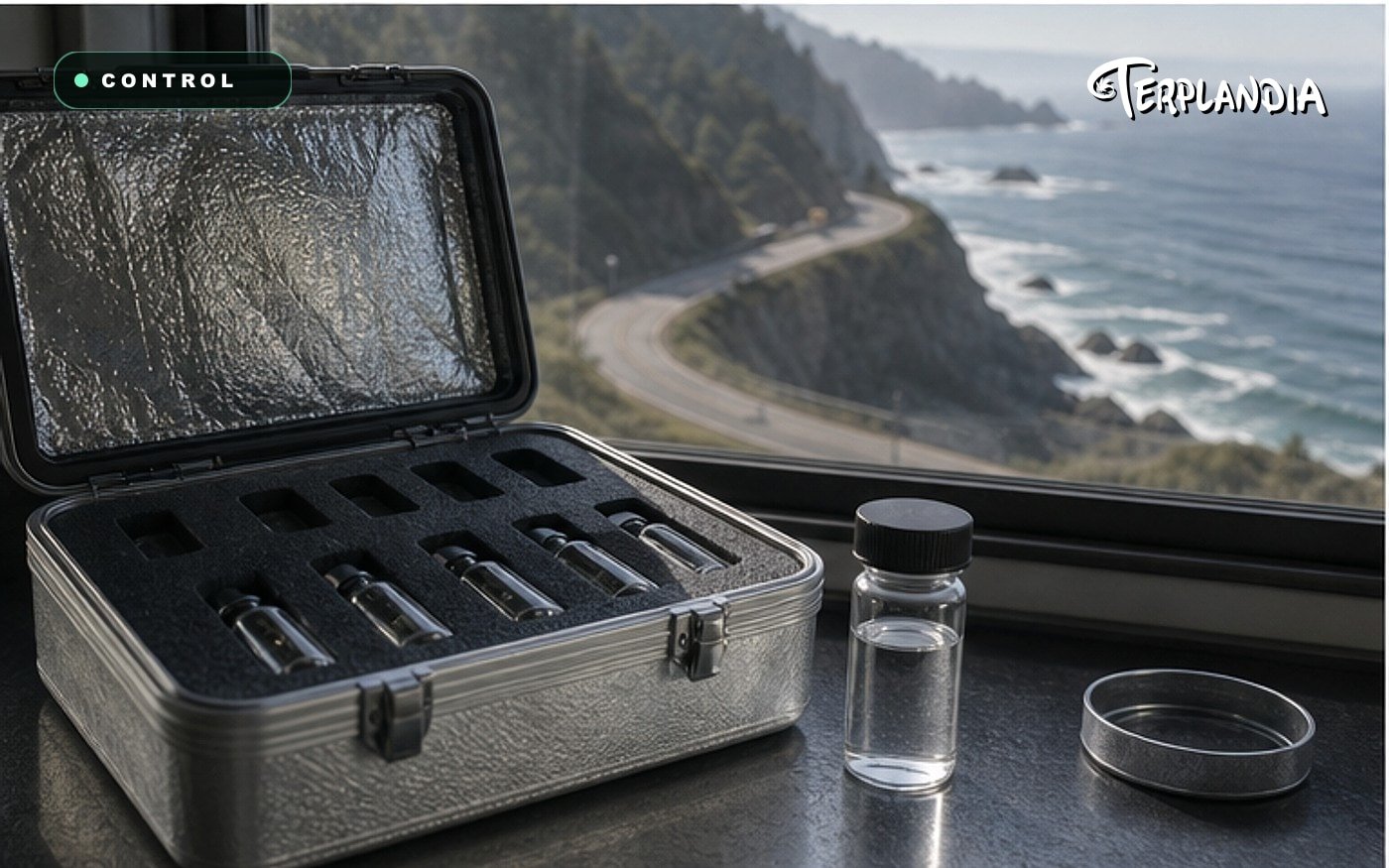
How do you evaluate a California CDT sample before committing?
Do not evaluate the sample only from the vial. Smell it neat, but also test it in the same base, hardware, carrier, or infused format that your customer will experience. A profile that smells expressive in a sample vial can become thin, sharp, muted, or too sweet after heat, dilution, storage, or formulation pressure.
A useful evaluation loop has three parts: first, confirm the aroma promise; second, confirm the source and batch documentation; third, confirm behavior in your real format. That loop supports the same discipline Terplandia recommends in its cannabis-derived terpene supply chain guide: the profile in the bottle is only as reliable as the handling behind it.
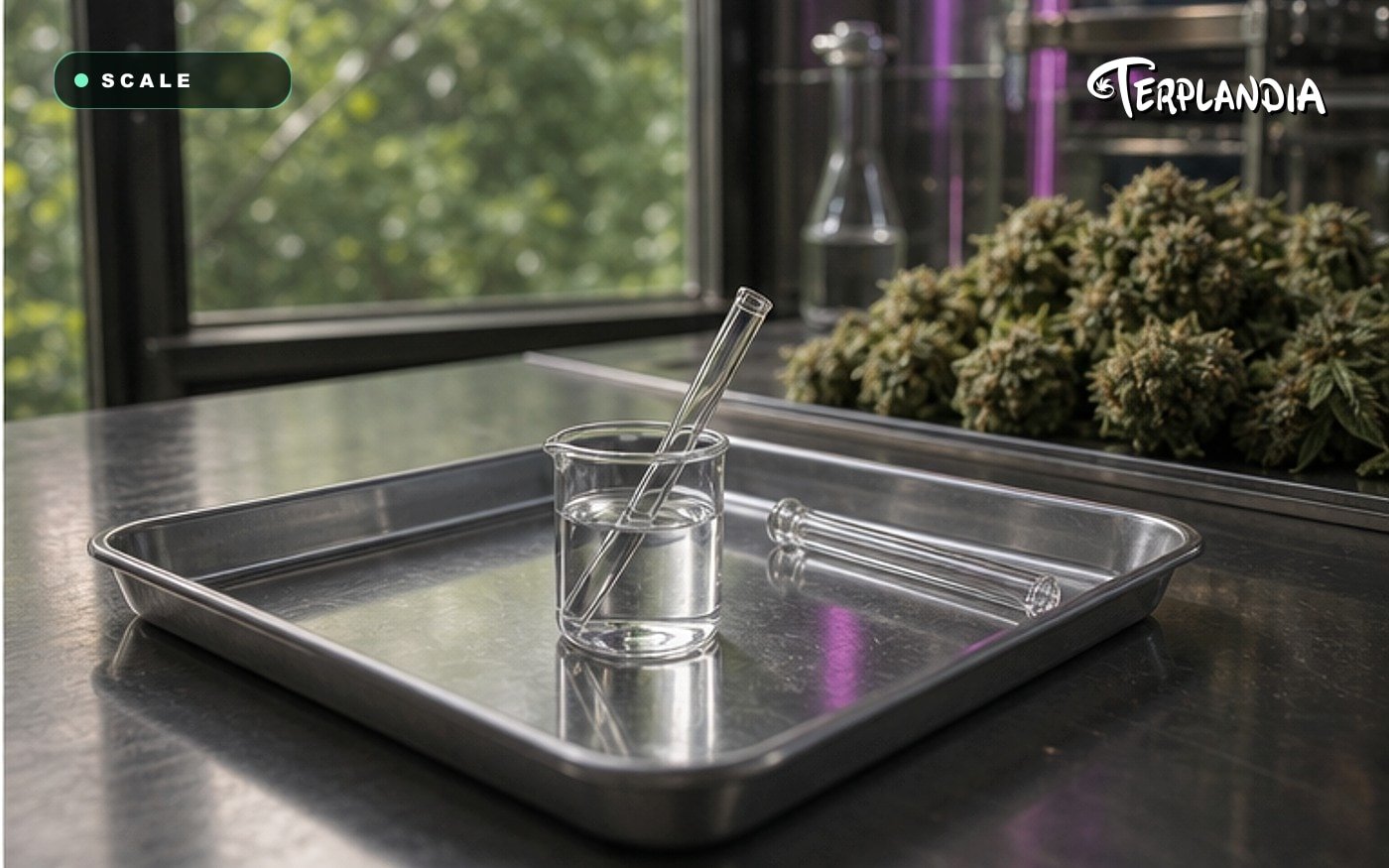
What buyer questions separate a source story from a sales pitch?
Ask the supplier where the profile came from, how the profile was captured, what changed between source and finished sample, how lots are tracked, how samples are stored, and whether the same profile can be repeated. Also ask what the supplier will not claim. A credible answer should sound operational, not mystical.
For inhaled products, review whether the profile and ingredients fit your product category and compliance review. California’s DCC guidance around inhaled cannabis products is a useful reminder that added terpenes and flavor/aroma decisions should be handled carefully, especially when the product will be inhaled. Terplandia can support the formulation side, but the brand still needs its compliance team to review its own product path.
Reference context: California DCC inhaled cannabis product guidance.
The short version for brands
California CDT terpenes are strongest when they help your brand tell a cleaner source story and run a cleaner formulation process. Choose the sample that keeps its aroma promise in your format, comes with practical documentation, and gives your team a repeatable path from approval to reorder.
If you are comparing profiles now, browse the Terplandia strain library and start with a source-aligned sample set instead of a random flavor list.
How should a team validate source proof before scale?
Validation should not live with one person. A good California CDT terpene review gives purchasing, QA, formulation, and brand teams the same version of the truth. Purchasing needs to know whether the supplier can repeat the profile. QA needs a clean lot trail and storage expectations. Formulation needs to know how the aroma behaves in the actual base or hardware. Brand needs language that is specific enough to be useful without turning source identity into an unsupported claim.
Start by giving every sample a simple intake record: profile name, supplier, date received, storage condition, lot or batch reference, source explanation, and the format where the sample was tested. Then add a sensory note from the team, not just one person’s first impression. If the sample smells right in the vial but loses its character in the format, the approval note should say that plainly. That prevents the team from ordering a source story that cannot carry through the finished product.
It also helps to keep a retained sample from the approval round. When the next lot arrives, compare it against the retained sample before production pressure takes over. The goal is not to make natural source material behave like a synthetic SKU. The goal is to know what level of variation is acceptable for the brand and when a change is large enough to require a new approval cycle.
What changes after the first reorder?
The first order proves whether the sample can win approval. The reorder proves whether the supplier can support a real brand program. This is where source proof becomes more than a nice story. If the profile changes, the supplier should be able to explain whether the shift came from source material, capture method, storage, age, or a deliberate formulation adjustment.
For brands, that reorder moment is where many terpene programs drift. A profile may still smell pleasant, but it may no longer match the product that customers already know. The easiest way to prevent that is to define the approval target in practical terms: aroma character, intensity, off-note limits, color expectation, handling requirements, and format behavior. The more clearly the first approval is documented, the easier it is to decide whether the second batch is a match.
Terplandia’s position is that source-forward terpenes should make the buyer’s work calmer, not more confusing. A California CDT sample is strongest when the supplier can explain the farm or source context, protect the clear-liquid handling standard, and support a repeatable path from sample bench to production fill.
What should the approval note say?
The approval note should be short enough to reuse and specific enough to protect the brand. Capture the approved profile name, source explanation, target format, usage-rate range, expected color, storage condition, and the sensory language the team agreed on. Include any rejection notes too, such as “too sharp after heat” or “lost farm-forward character in the base.” Those notes are useful later because they explain why the team picked one sample over another.
For California CDT terpenes, the best approval note connects the source story to an operational decision. It should make the next buyer, formulator, or QA reviewer understand what the original team approved without needing to reconstruct the entire sample meeting from memory.
| Buyer checkpoint | What to ask | Why it matters |
|---|---|---|
| Source identity | What source story does this profile support? | Keeps the brand promise grounded. |
| Batch trail | Can the sample be tied to a lot and retained record? | Makes approval and reorder less chaotic. |
| Format fit | Has it been checked in the actual product format? | Protects the consumer experience after scale-up. |
| Storage | How should the profile be held before production? | Reduces drift before blending or filling. |
Compare source-forward CDT samples
Use a small sample set to compare aroma, source fit, and format behavior before a full production decision.
Browse the strain library or contact Terplandia for profile support.
Lemon Cherry Gelato Terpenes
A bright dessert profile to compare top-note clarity against the approved format.
Blue Dream Terpenes
Berry-herbal comparison point for teams evaluating strain-forward CDT samples.
Gelato Terpenes
Creamy dessert profile for buyer teams comparing smoothness and source alignment.
FAQ
Are California CDT terpenes automatically better?
Not automatically. The better choice is the profile with clear source context, clean handling, and repeatable behavior in your product format.
Should I ask for a COA before buying?
Yes. A COA and related batch notes help your team connect the sample to a real quality process.
Can Terplandia help choose a profile?
Yes. Terplandia can help compare strain-forward samples against your target format and brand promise.