
Pinene Terpene in Cannabis Products: Pine Freshness, Source Checks, and Formula Fit
A practical guide to pinene terpene in cannabis products for brands evaluating pine freshness, herbal lift, source checks, and formulation fit.
Quick answer
pinene terpene cannabis products: Pinene terpene in cannabis products can add pine freshness, resinous aromatic lift, and sharper botanical structure, but it needs balance. The right sample keeps the pine note clean in your finished format without turning harsh, thin, or cleaner-like.
What does pinene bring to a cannabis profile?
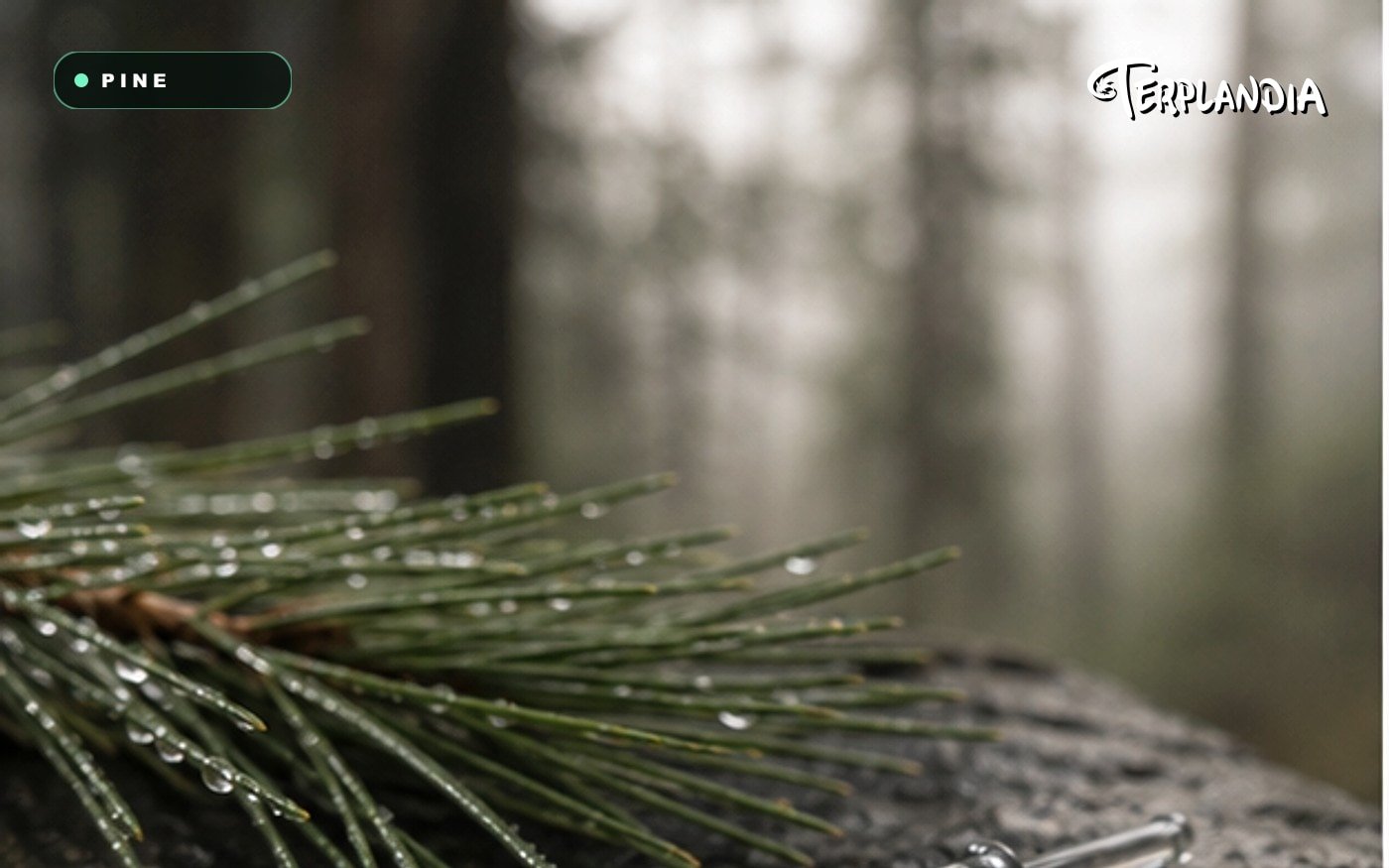
Pinene is associated with pine, resinous green freshness, and a crisp botanical lift. In cannabis products, it is most useful when it supports a complete profile instead of becoming the whole story. Too much pine can feel sharp, thin, or cleaner-like. The right amount can make a profile feel more open, green, and strain-faithful. Formulation teams may also compare alpha-pinene vs beta-pinene when they need more granular aroma language, but the buyer decision still comes down to how the complete profile smells and behaves in the finished product.
For buyers, the question is not simply “does this contain pinene?” The better question is whether the pinene note is balanced by the rest of the profile and whether that balance survives the product format. That is where source proof, sample checks, and formulation support matter.
How should brands evaluate pinene terpene samples?
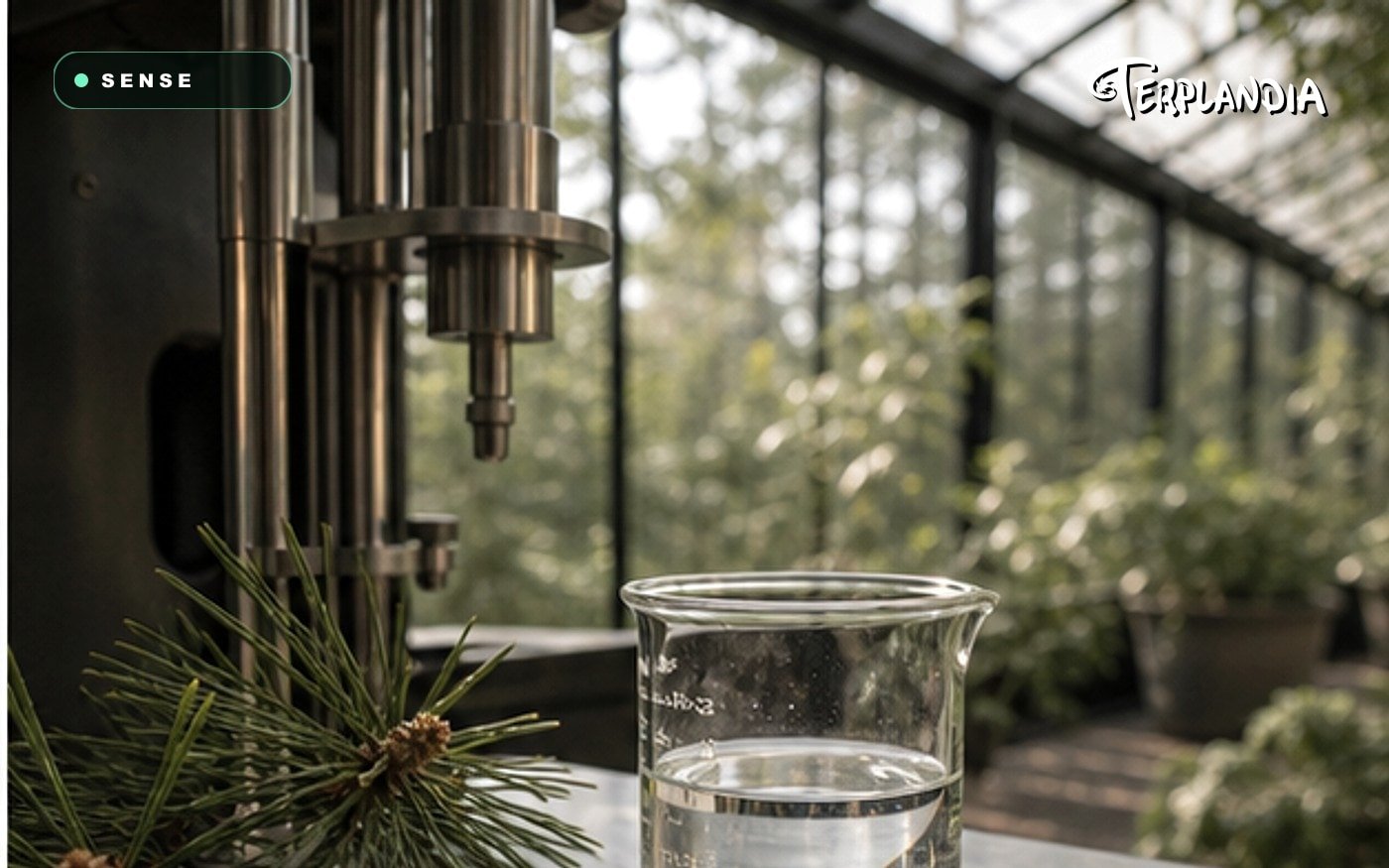
Evaluate pinene in layers. First, smell for natural pine freshness and green clarity. Second, check the supporting notes: citrus, herbal, woody, floral, or gas notes can all change how pinene feels. Third, test the profile in your real format. A pine note that feels clean in a vial can become too sharp after heat or too muted after dilution.
The same logic applies to other major terpene families. Terplandia’s guides to myrcene, caryophyllene, and limonene are useful internal companions because each note behaves differently in a final product.
What should you avoid when using pinene?
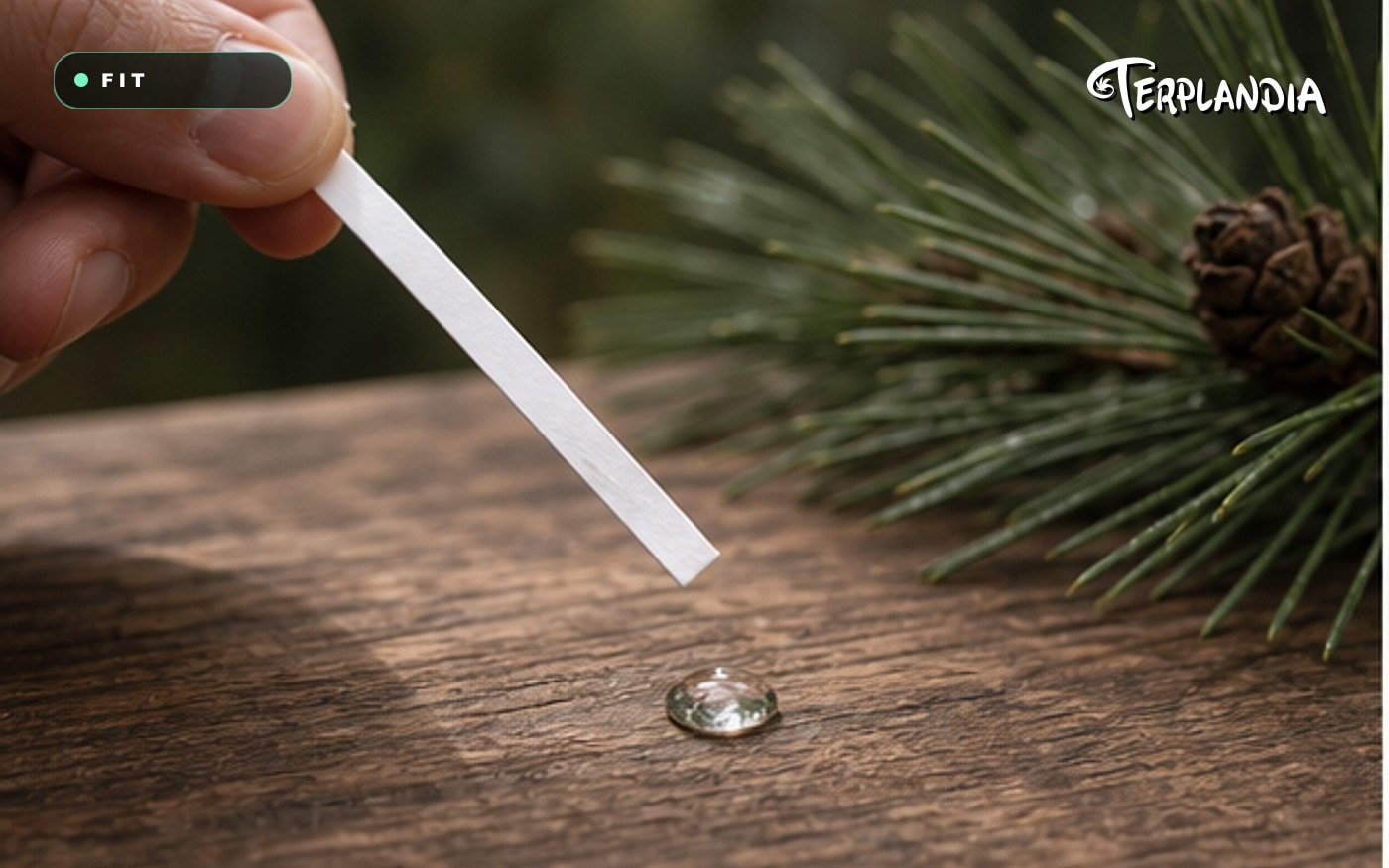
Avoid treating pinene as a one-note shortcut for “fresh.” If the profile is not balanced, pinene can read as harsh, medicinal, or disconnected from the strain story. Also avoid unsupported health claims. Pinene appears in scientific literature, but public cannabis brand copy should stay focused on aroma, sensory identity, formulation behavior, and source-backed quality unless legal review approves stronger claims.
A practical pinene claim sounds like: “This profile uses pine and herbal notes to support a crisp strain-forward aroma.” That is clearer and safer than promising a specific functional outcome.
Reference context: Pinene and linalool review.
Where does pinene fit in a B2B sample set?
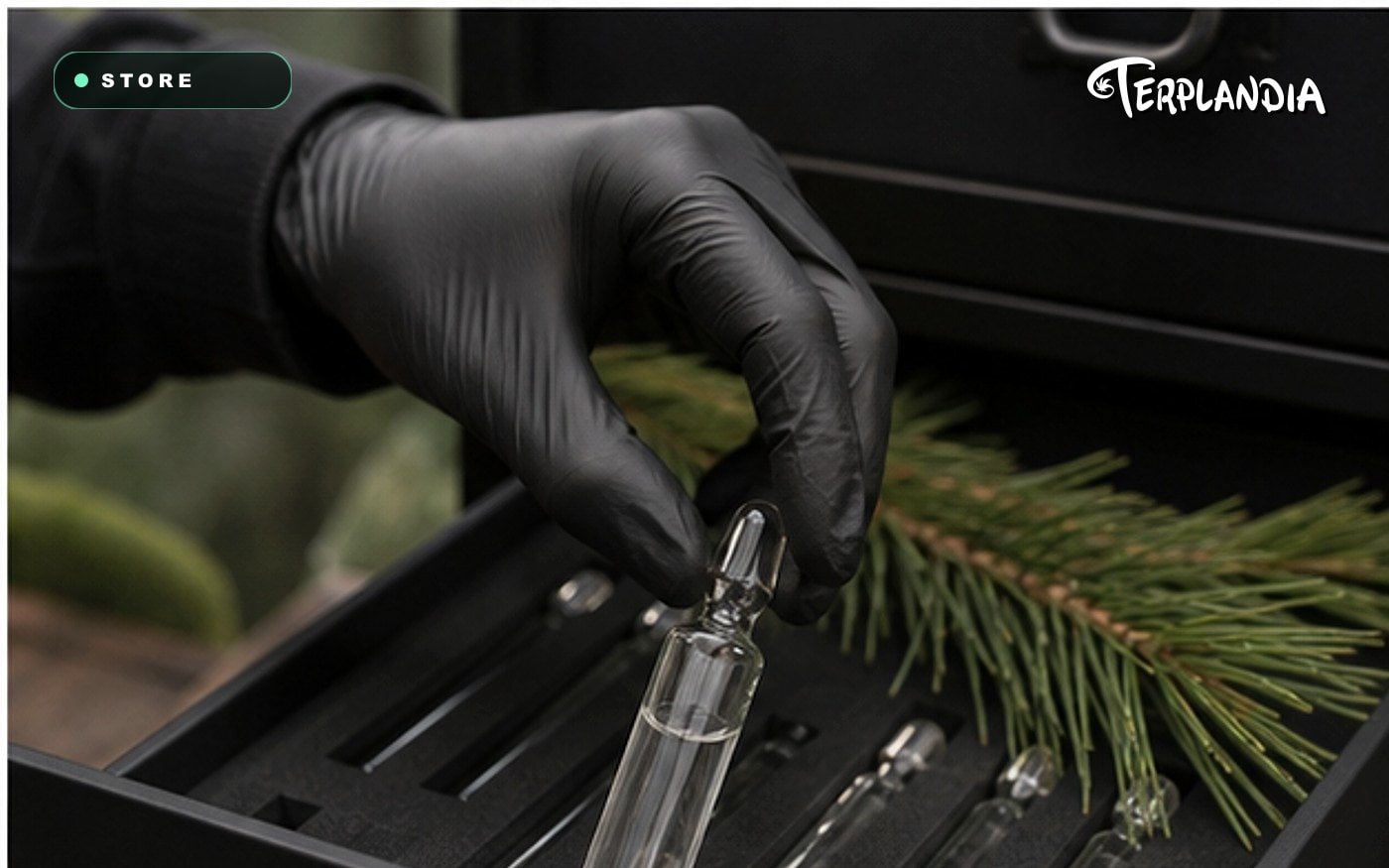
Pinene belongs in a sample set when the brand needs fresh aromatic lift, pine realism, or a sharper herbal top note. It can work in profiles that need a forest edge, a crisp opening, or a cleaner finish. But it should be selected against the product brief, not added because the word sounds premium.
Pair the sample with clear documentation, retained-sample comparisons, and storage discipline. Terplandia’s terpene storage guide is a useful follow-up because pinene-heavy profiles can feel different if top notes drift before production.
The short version for formulation teams
Pinene can make cannabis products feel fresh, green, and more botanically structured, but only when the whole profile is balanced and format-tested. Ask for source context, compare the sample in your real format, and choose the profile that keeps its pine note clean without taking over the product.
How should buyers think about alpha-pinene and beta-pinene?
Alpha-pinene and beta-pinene are useful aroma-language tools, but they should not distract from the complete profile. Alpha-pinene is often associated with a sharper pine impression, while beta-pinene can read more woody, herbal, or resinous depending on the surrounding notes. In a commercial product, the customer rarely experiences those molecules as isolated facts. They experience whether the profile feels fresh, believable, and balanced.
For a buyer, that means the sample conversation should move from molecule names into sensory targets. Does the pine note open the profile cleanly? Does it support the strain story? Does it become harsh at the intended usage rate? Does it stay recognizable after storage or heat exposure? Those answers matter more than a supplier simply pointing to pinene on a spec sheet.
A good supplier can still discuss the technical profile when needed. The difference is that the technical detail should support a product decision, not replace it. Terplandia can help a team translate pine-forward chemistry into a practical sample set with clear sensory checkpoints.
How does format change a pinene-heavy profile?
Format pressure can change how pinene reads. In a vape format, a pine note may feel crisp and immediate, but it can also become sharp if the profile is too top-heavy. In an edible or beverage concept, the same note may need more support from citrus, herbal, floral, or woody companions so it does not feel disconnected from the base. In a concentrate or infused pre-roll, it may need restraint so the profile does not overpower the source material.
This is why the usage rate should be tested with the real base, hardware, carrier, or application. A pinene-forward sample should not be approved only because it smells bright in a bottle. It should be approved because it keeps a clean pine lift at the level your product will actually use. If the format makes the note feel thinner, harsher, or too green, the formula may need a more rounded profile instead of more pinene.
Internal linking matters here too because buyers often compare pinene with other dominant aroma families. Pair this guide with Terplandia’s limonene, myrcene, and caryophyllene resources when building a sample set. Those related profiles help the team understand how bright, earthy, spicy, herbal, and pine notes can support each other instead of competing.
What documentation keeps a pine profile repeatable?
Pinene-heavy profiles can feel especially sensitive to top-note drift. A small handling or storage change can make the opening impression feel flatter, sharper, or less natural. The supplier should provide storage expectations, lot identity, retained-sample discipline, and a practical explanation of how to compare a new batch against the approved target.
Your internal notes should be just as clear. Record the sample date, usage rate, format, base material, hardware or application, first aroma impression, after-testing impression, and any off-note thresholds. If the team approves a profile because it has a clean forest edge, write that down. If the team rejects a profile because the pine note feels cleaner-like or medicinal, write that down too. Those notes make the next sourcing decision faster and reduce the chance of repeating the same failed sample path.
The strongest pinene sample is not the loudest one. It is the one that supports the product brief, stays clean in the chosen format, and gives the brand a repeatable sensory target.
When should a brand choose a different direction?
A brand should move away from a pinene-forward direction when the pine note keeps fighting the product format. If every usage-rate test feels too sharp, too thin, too medicinal, or disconnected from the rest of the profile, the problem may not be execution. The brief may need a softer herbal profile, a citrus-forward profile, or a more rounded woody-gas structure instead.
That decision is still a win if the team documents it. The best sample process does not force every terpene family into the final product. It helps the buyer learn which aroma direction fits the format, the brand promise, and the customer expectation with the least amount of production risk.
| Evaluation point | Good sign | Warning sign |
|---|---|---|
| First impression | Natural pine freshness | Harsh cleaner-like sharpness |
| Profile structure | Green note supported by herbal, citrus, woody, or gas depth | One-note pine with no body |
| Format behavior | Freshness stays balanced after dilution or heat | Pine dominates or disappears |
| Documentation | Lot notes and retained-sample comparison are clear | No source or repeatability path |
Explore pine-forward and green-lift profiles
Use these profiles as a starting point for comparing pine, citrus, and herbal structure in your real product format.
Browse the strain library or contact Terplandia for profile support.
Train Wreck Terpenes
Pine-herbal strain reference for formulation teams checking sharper green notes.
Super Lemon Haze Terpenes
Citrus-herbal reference for teams comparing lift, clarity, and blend behavior.
Blue Dream Terpenes
Berry-herbal comparison point for teams evaluating strain-forward CDT samples.
FAQ
Is pinene only a pine smell?
Pine is the most recognizable cue, but pinene works inside a full profile with herbal, woody, citrus, gas, or floral support.
Can brands make wellness claims about pinene?
Do not make therapeutic or functional claims without legal and scientific review. Keep public copy focused on aroma and formulation behavior.
Which Terplandia profiles should I sample first?
Start with the strain library and compare profiles that match your target format, not only one isolated terpene.