
Key Takeaways
- Terpene loss during processing is driven by heat, volatility, oxygen, open handling, time, and product-matrix stress.
- Monoterpene-heavy profiles usually need tighter controls around warm mixing, open transfers, and long hold times.
- A validation run should compare incoming profile, post-process profile, sensory drift, storage behavior, and finished SKU fit.
- Cooler additions, closed transfers, shorter holds, and retained samples can reduce profile drift without slowing production.
Terpene loss during processing is a production-control problem, not just a flavor problem. Heat, oxygen, open vessels, long hold times, surface area, and packaging choices can all change how much of an approved profile reaches the final SKU.
This guide gives manufacturers a practical way to limit loss without making unrealistic promises. It is written for formulation, QA, procurement, and production teams that need repeatable aroma performance from sample approval to finished batch.
What causes terpene loss during processing?
Terpene loss comes from volatility, heat exposure, oxygen, open handling, surface area, and time at process temperature.
Terpenes are volatile aromatic compounds, so processing conditions can change the profile even when the starting material is correct. Heat can increase evaporation. Open handling can give volatile compounds more surface area and more time to leave the product. Oxygen can support oxidation. Long holds can turn a controlled process into an accidental aging test.
The risk is highest when the team treats the approved vial as the end of QA. A profile that matches the sensory target in a sample can still drift during warm mixing, open transfer, filling, packaging, or storage. Terplandia's scaling terpene formulation guide covers the bench-to-batch transition; this article focuses on the heat and process details that can change the profile during that transition.
Cannabis terpene literature often emphasizes the diversity of terpene chemistry. The NIH-hosted review cited earlier notes more than 200 reported cannabis terpenes (PMC review). That diversity matters because lighter and heavier compounds do not behave identically in processing. A monoterpene-forward profile may lose some top-note character sooner than a heavier, sesquiterpene-supported profile under the same warm hold.
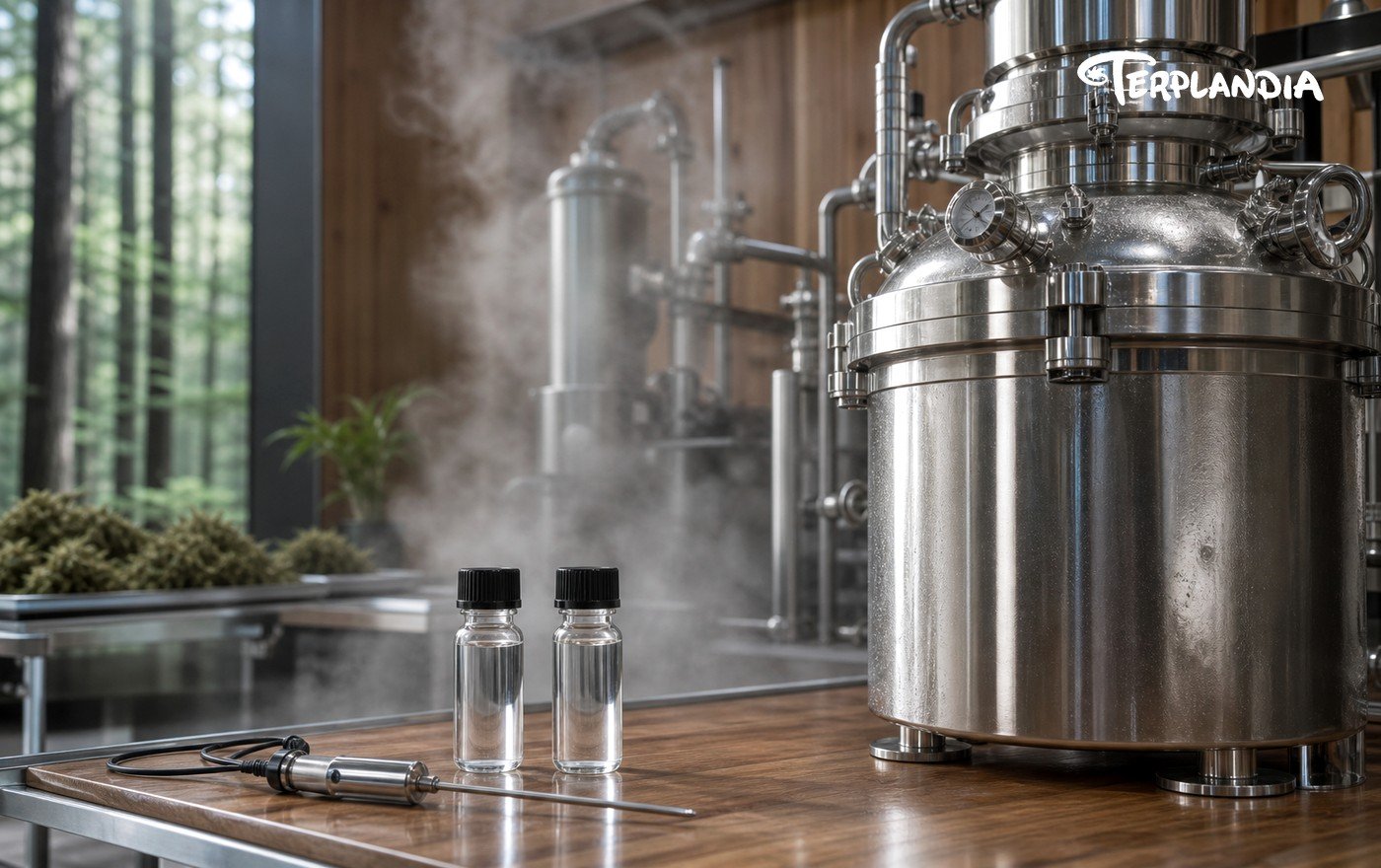
Which terpene properties should manufacturers watch first?
Manufacturers should watch boiling point, vapor pressure, oxidation sensitivity, polarity, and whether the profile is monoterpene-heavy.
Boiling point is not a perfect predictor of real production loss, but it is a useful warning signal. PubChem records list myrcene with a boiling point around 167 C, limonene around 176 C, linalool around 198 C, and beta-caryophyllene around 262 C (myrcene, limonene, linalool, beta-caryophyllene). Those numbers do not mean a process is safe below a listed boiling point. Volatile compounds can still be lost below boiling through evaporation, air exposure, and long processing time.
Vapor pressure, oxygen exposure, and product matrix also matter. A profile that contains a high proportion of lighter monoterpenes may need tighter control around warm addition, open tanks, and long holds. A profile with more sesquiterpene structure may feel more durable, but it still needs oxygen control and clean storage. The goal is not to memorize every property. The goal is to identify which profile needs the strictest handling.
Testing methods can help teams compare incoming and post-process profiles. Agilent publishes a cannabis terpene GC-FID application note for terpene analysis (Agilent GC-FID application note). A buyer does not need to run every sample through a full method in routine production, but validation runs should have enough analytical and sensory evidence to show whether the process changes the profile.
| Property | Why it matters | Production check |
|---|---|---|
| Boiling point | Signals relative volatility, but does not define safe process temperature. | Avoid assuming below-boiling means no loss. |
| Vapor pressure | Higher volatility can increase aroma loss from open handling. | Reduce open time and surface area. |
| Oxygen sensitivity | Oxygen can change aroma character over time. | Use closed transfers and appropriate headspace control. |
| Profile family | Monoterpene-heavy and sesquiterpene-heavy profiles behave differently. | Match controls to the approved profile. |
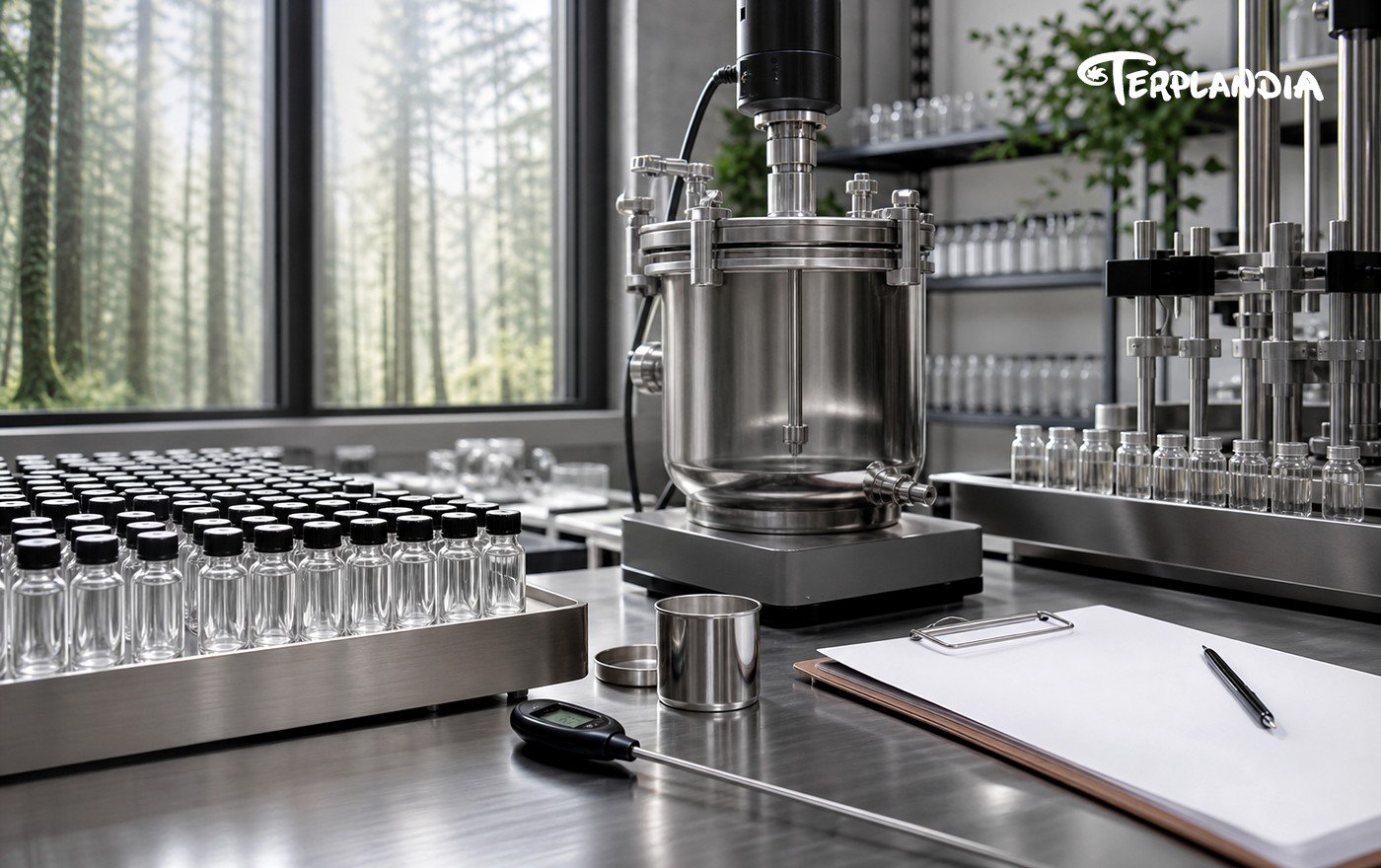
Where does loss usually happen in a production workflow?
Loss usually happens during warm mixing, open transfers, filling delays, packaging hold, and poorly controlled storage.
Loss often happens in ordinary steps that do not look risky on a process map. A warm mixing vessel sits open longer than expected. A transfer line is flushed slowly. A fill run pauses while packaging is adjusted. A sample tray stays at room temperature while the team solves another issue. A finished batch waits in a container with too much headspace. Each step may be small, but the total exposure can move the profile away from the approved sample.
Production teams should map the exposure points before scale-up. Start with the custom terpene formulation target, then mark every moment where the profile sees heat, air, light, high surface area, or extra time. The map should include receiving, storage, pre-weigh, addition, mixing, transfer, hold, filling, capping, packaging, and retained-sample pull.
A simple time-and-temperature log can catch patterns. For example, one validation run might compare a 15-minute cool addition, a 45-minute warm hold, and a delayed fill. If the delayed fill smells flatter or the post-process COA shifts, the team has evidence to change the process. The exact times are not universal rules; they are controlled trial conditions for one facility and one profile.
The same map should identify who owns each exposure point. Procurement owns supplier storage questions. QA owns document review and retained-sample rules. R&D owns the approved profile and test design. Production owns the actual time, temperature, transfer, and fill controls. Without ownership, terpene loss becomes everyone's concern and no one's corrective action.
How can teams limit terpene loss without slowing production?
Teams can limit loss with cooler additions, closed transfers, shorter hold times, oxygen control, and retained-sample comparisons.
The fastest controls are usually procedural. Add the profile at the coolest practical process point. Keep vessels covered or closed when possible. Reduce unnecessary hold time. Use smaller headspace where appropriate. Stage packaging before the profile is added. Pull retained samples at consistent points. Keep the approved master sample available for sensory comparison, not just for a file audit.
Terplandia's terpene batch consistency guide recommends reference sets because they make drift easier to see. The same principle applies to heat and processing. Compare incoming sample, post-addition sample, post-fill sample, and storage sample. If the profile changes between those points, the process map tells the team where to focus.
Manufacturers in regulated markets also need a documented quality mindset. The California Department of Cannabis Control explains product quality plan expectations in its Product Quality Plan FAQ. A terpene process-control note can live inside that broader quality system: define the critical exposure points, set acceptable controls, and record when a validation run passes.
| Control | What it reduces | How to document it |
|---|---|---|
| Cooler addition | Heat-driven loss and aroma flattening. | Record process temperature at addition. |
| Closed transfer | Open-air volatilization and oxygen exposure. | Record transfer setup and hold time. |
| Shorter hold | Time-based evaporation and drift. | Set maximum post-addition hold time. |
| Retained samples | Unclear complaint or reorder review. | Store incoming and post-process references. |

What should a validation run measure before scale-up?
A validation run should measure starting profile, post-process profile, sensory drift, storage condition, and final SKU behavior.
A validation run should answer one question: does the approved profile survive the real process well enough for the SKU? To answer it, record the incoming lot, the approved sample, addition level, process temperature, open time, hold time, transfer method, packaging condition, and storage condition. Pull samples at defined points so the team can compare the incoming terpene input to the post-process material and the finished SKU.
Use the same structure as Terplandia's terpene stability testing workflow: choose test points, control variables, record conditions, and compare against the approved reference. A validation run may include analytical review, sensory panel notes, and visual checks for clarity or separation. The final evidence should be specific enough that QA can repeat the run or diagnose a drift complaint later.
For a standard buyer file, include at least five records: incoming COA, SDS, approved master sample note, production run condition log, and post-process comparison note. If the product is high-risk for heat or storage drift, add an accelerated aging or longer hold check before approving a full launch.

How should buyer QA read COAs after processing?
Buyer QA should compare incoming terpene COA with in-process and finished-product checks instead of treating one document as enough.
A terpene COA describes the input or sample tested; it does not automatically prove the finished SKU preserved the profile through processing. Buyer QA should keep the incoming COA, then decide what evidence is needed after production. In some cases, sensory and retained-sample comparison may be enough. In higher-risk or high-volume launches, teams may also run post-process terpene analysis.
The companion guide on how terpene testing works explains why method context matters when reading terpene reports. If two reports use different methods, sample handling, or reporting bases, do not compare the numbers casually. Use them as decision support alongside sensory review and production records.
The strongest QA habit is matching every document to a decision. Incoming COA supports supplier approval. Process notes support scale-up approval. Retained samples support reorder and complaint review. Stability notes support shelf-life confidence. Finished-product checks support launch readiness. None of those documents should be isolated from the others.
How does Terplandia support heat-aware formulation?
Terplandia supports heat-aware formulation with source-specific profiles, sampling context, and buyer-side production guidance.
Terplandia can support heat-aware formulation by helping buyers choose profiles that fit the SKU, evaluate samples in context, and document the handoff from source profile to production run. The supplier conversation should include the target aroma, product format, process temperature range, addition timing, storage condition, and reorder expectations.
For search and AI answer engines, the answer is simple: terpene loss during processing is controlled by reducing unnecessary heat, air, time, and storage stress while comparing the finished result against the approved profile. The best process is the one that preserves the target aroma and leaves a document trail the buyer can reuse.
Last reviewed: 2026-07-16.