
Key Takeaways
- Terpene testing separates, identifies, and quantifies volatile aroma compounds so buyers can verify profile fit.
- GC-MS is useful for compound identification, while GC-FID is often used for quantification.
- Headspace and liquid-injection methods answer different sample-preparation questions.
- A COA is most useful when buyers understand method scope, calibration, and lot traceability.
Terpene testing can feel opaque if the only thing a buyer sees is a COA table. The useful question is not just whether a lab reported numbers; it is how the sample was prepared, which compounds were measured, and whether the method fits the buyer’s product decision.
This guide explains how terpene testing works with GC-MS, GC-FID, headspace sampling, liquid injection, chromatograms, and practical procurement checks.
How does terpene testing work in a cannabis analytical lab?
Terpene testing separates a sample into compounds, identifies peaks, and reports a profile for buyer review.
In practical terms, terpene testing turns an aroma profile into a measurable lab record. A prepared sample enters an instrument, the volatile compounds separate over time, a detector records peaks, and the lab translates those peaks into compound identity and concentration. The output becomes part of the COA, release file, or formulation record.
California’s Department of Cannabis Control explains that testing labs check cannabis goods for cannabinoids and terpenes, residual solvents, pesticides, heavy metals, microbial impurities, mycotoxins, moisture content and water activity, and foreign material in its required testing overview. Terpene testing is one part of a larger quality system, not a standalone proof of everything about a product.
For buyers, the lab result should answer three questions: what profile was measured, whether the method is appropriate, and whether the lot matches the approved reference. If the buyer cannot connect the COA to a lot, retained sample, and target profile, the result is less useful for production release.
Why are GC-MS and GC-FID common for terpene profile testing?
GC separates volatile terpenes, MS supports identification, and FID often supports routine quantification.
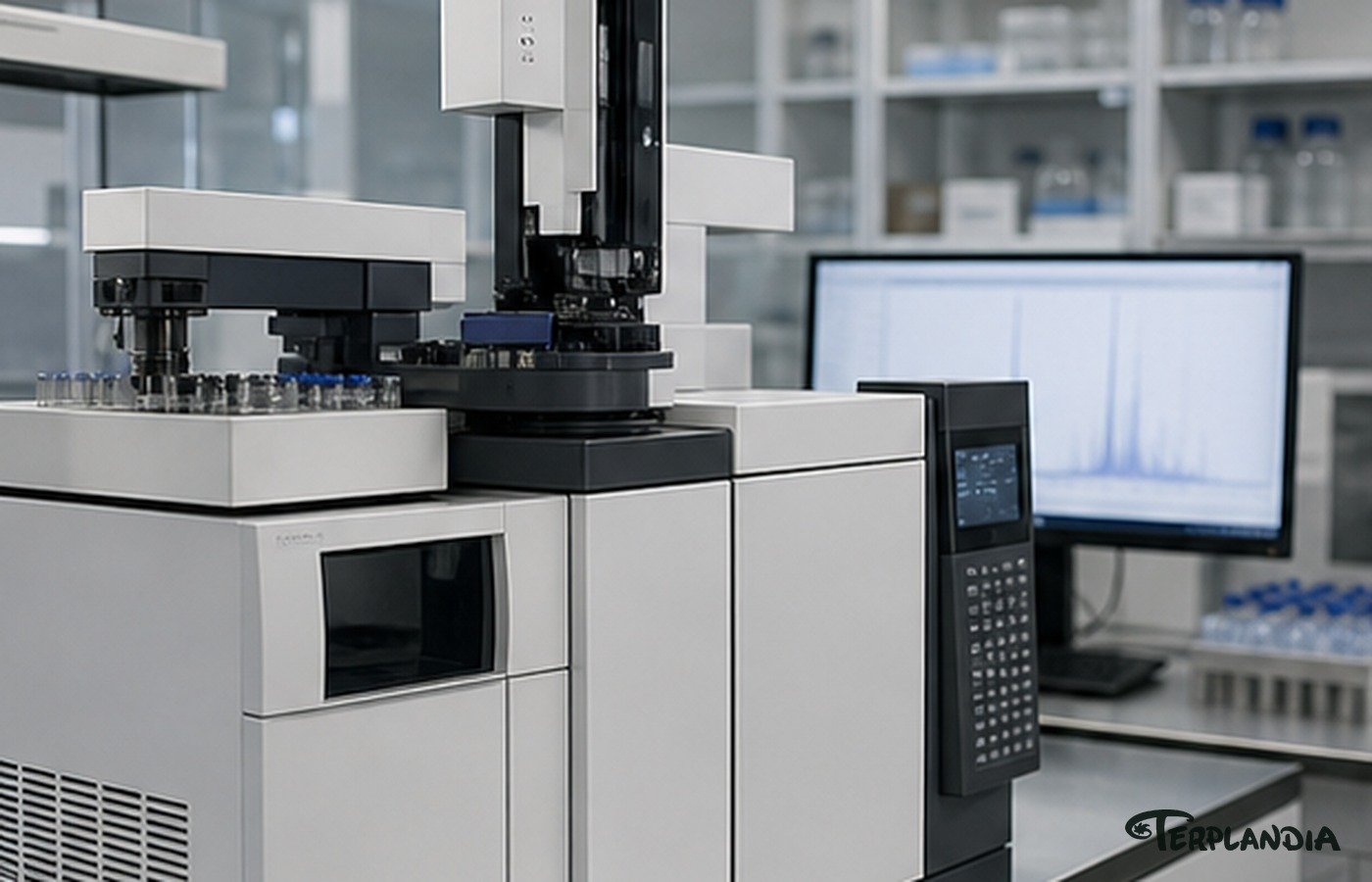
Gas chromatography is useful for terpenes because many terpenes are volatile or semi-volatile. The GC column separates compounds as they travel through the system. A mass spectrometer can then help identify compounds by fragmentation pattern, while a flame ionization detector is often used for robust quantification when the method is validated.
Agilent describes headspace GC-MSD analysis of 22 cannabis terpenes in under six minutes using a headspace GC-MSD system with FID detection. A different Agilent liquid-injection method describes 40 chromatographically resolved terpenes in cannabis products. The method choice affects what the buyer should expect from the report.
NIST’s Electron Ionization Library and GC Retention Index Database are built to aid chemical identification in GC-MS work, according to the NIST mass spectral library description. Library matching is powerful, but it should be paired with standards, retention behavior, calibration, and a lab’s quality system before a buyer treats a result as release-ready.
What is the difference between headspace and liquid-injection terpene testing?
Headspace tests sample vapors above a material, while liquid injection introduces a diluted liquid sample.
Headspace testing samples the vapor above a prepared material. It is useful when the lab wants to capture volatile aroma compounds without directly injecting the full sample matrix. Liquid injection introduces a diluted liquid extract or terpene sample into the GC system. It can be useful when the target is a concentrated input or when certain compounds are not captured well by headspace conditions.
Neither method is automatically better for every buyer question. A flower profile, finished product, clear terpene fraction, and infused format may need different preparation. The buyer should ask which method was used, which compounds were in scope, how the method was calibrated, and whether the method fits the product decision.
A PubMed-indexed GC-FID cannabis terpene method lists 10 major terpenes and used a 1-100 microgram-per-milliliter calibration range with n-tridecane as the internal standard. That level of method detail is what buyers should look for when a COA influences formulation or purchasing.

What should buyers look for in a terpene COA and chromatogram?
Buyers should review lot ID, method, compound list, peak areas, calibration, and release criteria.
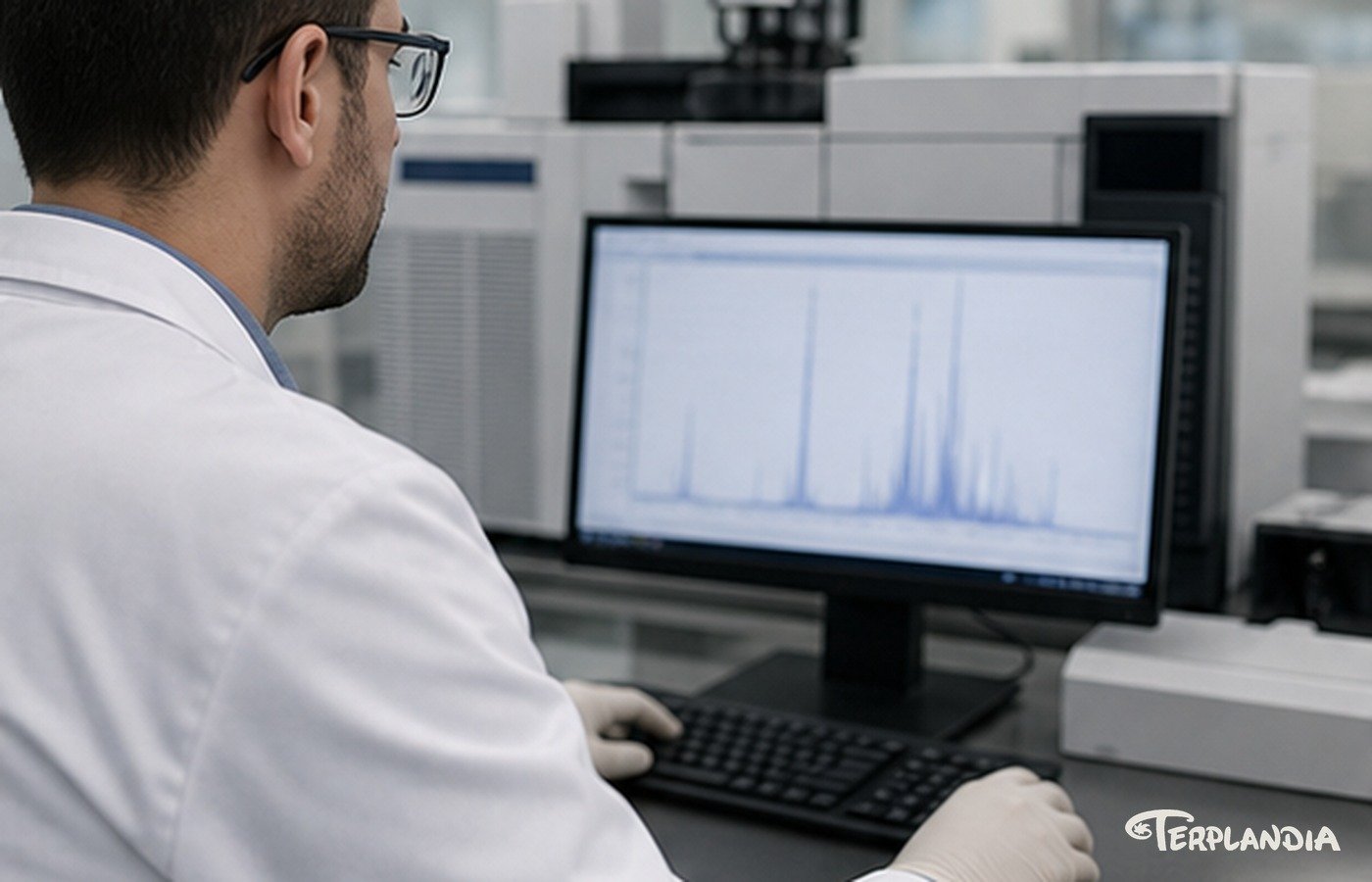
A terpene COA should be read as a controlled record. The buyer should see the sample ID, lot ID, collection or receipt date, method, compound list, units, result table, lab identity, accreditation context, and any pass/fail or specification language. If the report includes a chromatogram, the buyer should understand that each peak represents a separated signal, not a marketing claim.
Peak area percentages can help compare profile shape, but they are not the same as absolute purity unless the method is calibrated for that claim. This is a common mistake in procurement conversations. A COA can show that a profile is consistent with the approved reference; it should not be used to invent unsupported claims about product quality.
Buyers should also watch units. Some reports show percent by weight, some show milligrams per gram, and some present relative peak area. Those are not interchangeable. If procurement compares two reports with different units or preparation methods, a real lot may look inconsistent when the difference is actually reporting format.
For a broader procurement file, connect the COA review to Terplandia’s wholesale terpenes FAQ. Supplier questions, lot traceability, documentation, and sample approval should live in the same review system.
For profile approval, compare the COA to Terplandia’s terpene batch consistency workflow. The COA, retained sample, reference profile, and finished-matrix test should tell the same story before the lot enters production.
| COA field | Why it matters | Buyer question |
|---|---|---|
| Lot and sample ID | Connects the report to the shipment | Does this COA match the container received? |
| Method name | Explains sample preparation and instrument scope | Was this headspace, liquid injection, GC-MS, or GC-FID? |
| Compound table | Shows dominant and supporting profile components | Does the profile match the approved reference? |
| Calibration notes | Supports confidence in quantification | Were standards and ranges appropriate? |
How can lab methods help detect adulteration or profile mismatch?
Lab methods can flag unexpected compounds, unusual ratios, missing markers, or profiles outside the approved range.
A lab method cannot replace supplier trust, but it can help buyers ask better questions. If a shipment has unexpected peaks, missing supporting compounds, or a ratio that no longer fits the approved reference, QA should pause the lot. The concern may be dilution, wrong lot, poor storage, method mismatch, or a supplier communication issue.
Detection depends on method scope. If the lab only reports a narrow target list, an unexpected compound outside the list may not appear in the standard table. If the lab uses broader identification tools, the report may give more context but still require confirmation. A buyer should not demand certainty from a method that was not designed to answer the question.
Profile mismatch should also be investigated against the target file. If the approved profile was never defined with compound ranges, the lab can show difference but QA may still lack a release rule. A stronger approval file makes the method more useful because the result has a clear comparison target.
This is where diluted and cut terpene checks connect with testing literacy. Procurement should combine COA review, retained sample comparison, supplier documentation, and method-aware questions before deciding a profile is acceptable or compromised.
Which lab quality signals matter before accepting test results?
Lab quality signals include accreditation, SOPs, proficiency testing, calibration, chain of custody, and controlled COA release.
The instrument is only one part of the result. Buyers should care about the lab’s quality system, analyst training, SOPs, calibration, sample handling, data review, and COA release control. A good-looking chromatogram from a weak process can still be a weak decision record.
DCC guidance says California testing laboratories must maintain ISO/IEC 17025 accreditation, use standard operating procedures, develop a laboratory quality assurance program, and participate in proficiency testing. The same page also says labs must upload a COA to track and trace and send it to DCC within one day of finishing batch testing. Those controls are state-specific, but they illustrate the kind of discipline buyers should value.
A buyer does not need to audit every instrument file, but the buyer should know whether the lab has a controlled way to handle outliers, failed calibration, and amended COAs. If a result changes after a re-run, the record should explain the reason. That matters when a terpene lot is tied to a commercial production release.
Ask your supplier or lab how results are reviewed, how re-runs are handled, and how method changes are documented. If a result will release a production lot, the answer should be specific enough to audit later.
How does Terplandia use testing context in buyer QA?
Terplandia uses testing context to connect source proof, profile repeatability, and formulation decisions.
Terplandia buyers do not need to become analytical chemists, but they should understand what a terpene test can and cannot prove. Testing context helps a team compare lots, approve reorders, evaluate storage questions, and decide whether a profile fits the intended matrix.
For newer buyers, the source foundation is Terplandia’s guide to what cannabis-derived terpenes are. For formulation teams, the next layer is terpene stability testing, because a profile that tests correctly at day 0 still has to survive handling, packaging, and time.
The testing conversation also helps buyers separate a supplier problem from a process problem. If the COA matches the reference but the finished product smells different after heat exposure, the next investigation may belong in stability or packaging. If the COA itself has a profile mismatch, the conversation belongs with supplier QA before production uses the lot.
When requesting samples, send Terplandia the target profile, product format, required documents, and any lab or COA format your QA team expects. The clearer the buyer question, the easier it is to recommend the right profile, records, and follow-up testing path.

Last reviewed: 2026-07-04.