
Real Cannabis Terpenes vs. Botanical Flavor Stacks: One Plant, One Truth
A practical source-truth guide for cannabis brands comparing real cannabis terpenes with rebuilt botanical flavor stacks.
What should brands know about real cannabis terpenes?
Real cannabis terpenes are terpene profiles made from cannabis plant material. They are not strain-style flavors rebuilt from long lists of botanical isolates. For a cannabis brand, the key difference is proof. You need to know the source, the number of inputs, the strain claim, and how the sample behaves in the product you plan to sell.
Botanical terpenes are not automatically fake or useless. Limonene from citrus, pinene from pine, linalool from lavender, and myrcene from hops can be real molecules. In the trade, teams often call these groups CDT, or cannabis-derived terpenes, and BDT, or botanical-derived terpenes. However, a rebuilt strain flavor may depend on dozens of isolated inputs that were never cannabis flower. That can create a paperwork problem and a product-positioning problem.
Terplandia keeps the question simple. If the product promise is cannabis, the terpene source should be clear enough to defend. First, read the COA and SDS. Then compare the profile with Terplandia's CDT vs BDT terpene sourcing guide, cannabis-derived terpene supply-chain guide, and strain library before approving volume.
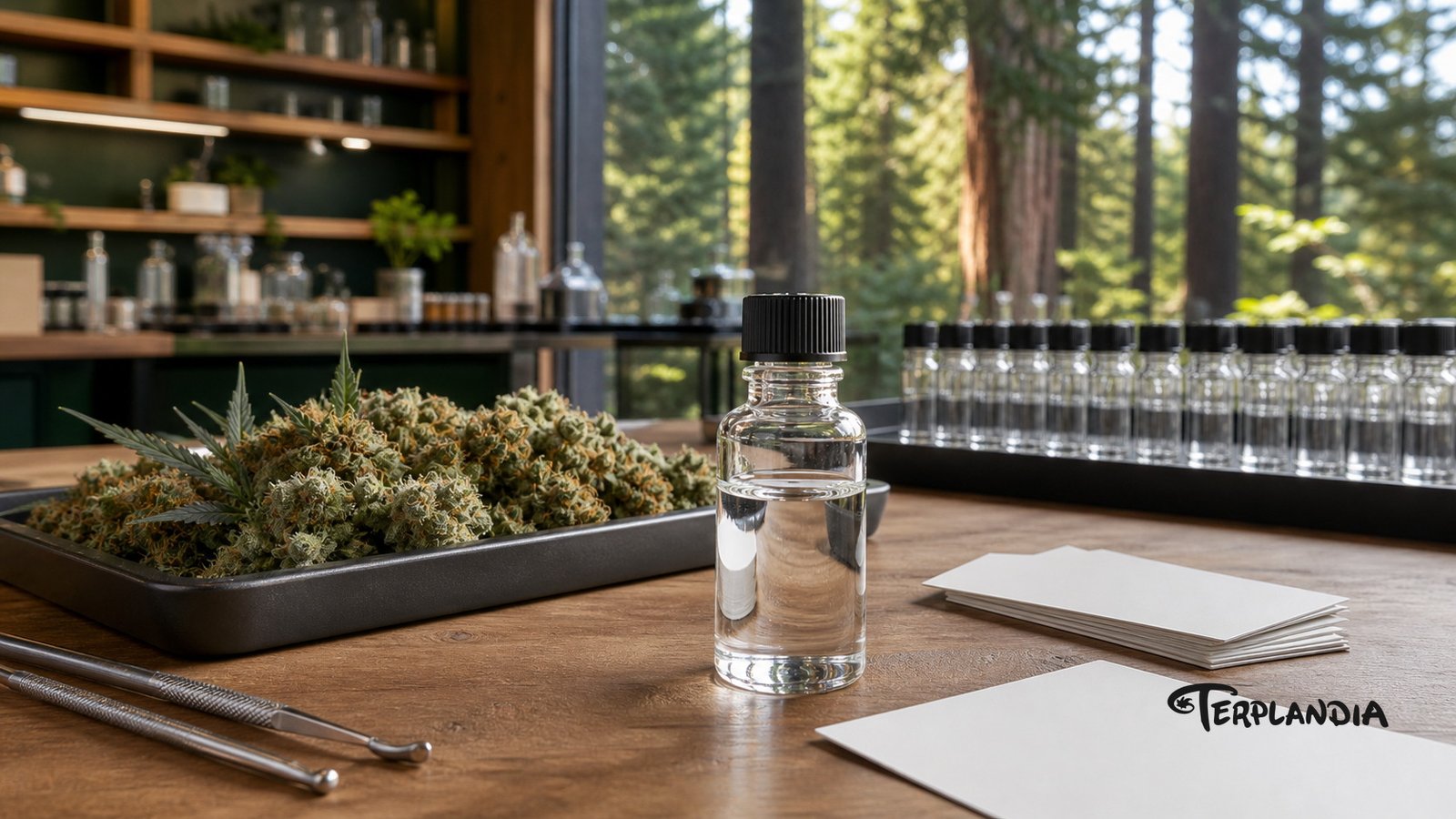
What does "one plant, one truth" mean for terpene buyers?
It does not mean a terpene profile is one molecule. Cannabis aroma is complex. A live-flower-derived profile can include major terpenes, minor terpenes, esters, alcohols, and trace aroma compounds. Together, those parts form a pattern that comes from plant material instead of a flavor-house rebuild.
The "one plant" idea is about source input and auditability. A buyer should be able to ask where the profile came from and get a clear answer. That answer should not collapse into a generic list of citrus, pine, lavender, clove, hop, or mint isolates. If a supplier uses botanicals, the buyer should know. If a supplier uses cannabis flower, the proof should be easy to review.
Terplandia describes its position on the Why Choose Terplandia page as true live flower-derived terpenes extracted from real live flower genetics with no botanicals. The value is not only the Humboldt story. In practice, it gives the buyer a cleaner path: source, process, sample, documents, and reorder expectations should all point in the same direction.
Why do rebuilt botanical flavor stacks get so complicated?
A botanical flavor stack is built by combining isolated aroma compounds from many non-cannabis plants. The goal is to make the blend resemble a target. That target may be fruit candy, kush, citrus haze, or a broad Blue Dream style. The parts can be legitimate flavor-industry molecules, but the finished blend is still a reconstruction.
That is why an SDS or ingredient disclosure may show a long list. One part may supply citrus lift. Another may add a pine edge. Others may bring floral softness, hop-like weight, mint, spice, or a carrier function. Therefore, the buyer's job is not to shame the chemistry. The job is to know what is being purchased and whether it supports the product promise.
This matters because strain language has become more specific. A vape cart, infused pre-roll, or distillate SKU that says "real cannabis terpenes" makes a different promise than a SKU flavored with non-cannabis botanicals. Terplandia's switching from botanical terpenes guide is useful background. However, this article asks the next question: how many inputs sit behind the strain claim, and can the supplier prove the source?

How should a cannabis brand audit a terpene ingredient stack?
Start with the documents before falling in love with the nose. Ask for the COA, SDS, source explanation, handling notes, storage guidance, and any use notes the supplier will stand behind. Then compare those details with the product brief.
A useful audit asks five direct questions. Is the profile cannabis-derived, botanical-derived, synthetic, mixed-source, or unclear? Does the COA support the source claim? Does the SDS show many isolated inputs or carrier materials? Does the strain name match the sensory lane? Finally, does the sample still make sense in the real base, hardware, flower, or concentrate?
Terplandia's how to read a terpene COA article can help teams separate useful proof from paperwork theater. A COA alone is not the whole story. It is one part of a buyer file. That file should also include source language, sample notes, retained references, storage SOPs, and a production approval record.
What should brands know about heat, oxidation, and vape formulation?
Heat does not care whether a marketing deck sounds premium. Terpenes are volatile aroma compounds. Also, research on heated or vaped terpene systems shows that temperature and formulation can change what is emitted.
A Scientific Reports study on monoterpene oxidative products at vaping temperatures and Berkeley Lab research on heated terpenoids in vaporizable cannabis concentrates are useful reminders. Brands should test the real formula under realistic conditions. A sample vial cannot tell the whole story by itself.
This does not prove that every botanical blend is unsafe. It also does not prove that every cannabis-derived profile is automatically safer. That would be an overclaim. The practical takeaway is narrower: the more complex the stack, the more carefully the team should document what is present, how it is used, and what claims the brand can make.
For vape and concentrate teams, the test plan should include the base, use rate, hardware, fill process, storage condition, and retained sample. For infused flower or pre-roll work, include application method, flower quality, aroma carry, packaging hold, and label language. "Smells strong in the bottle" is not enough.
How does Terplandia keep the source story cleaner?
Terplandia's source story is easier to explain because the input is cannabis flower. It is not a shopping list of unrelated plants. The message can stay plain: one raw input source, one plant, one truth.
For buyer education, the stronger version is this: a cannabis-derived terpene supplier should make the source easy to trace. The buyer should be able to explain why the aroma belongs in a cannabis product line. That explanation should not depend on vague flavor language alone.
Terplandia uses cannabis flower as the source material and explains process context in its cannabis terpene extraction process guide. Process matters because buyers need to know how aroma character is protected from source to sample. They need more than attractive strain words on a sales page.
Still, a buyer needs to test. Source truth does not remove formulation work. Instead, it gives the team a stronger starting point. The developer can compare the sample with the sensory target. The buyer can organize the docs. The brand team can write cleaner public copy.
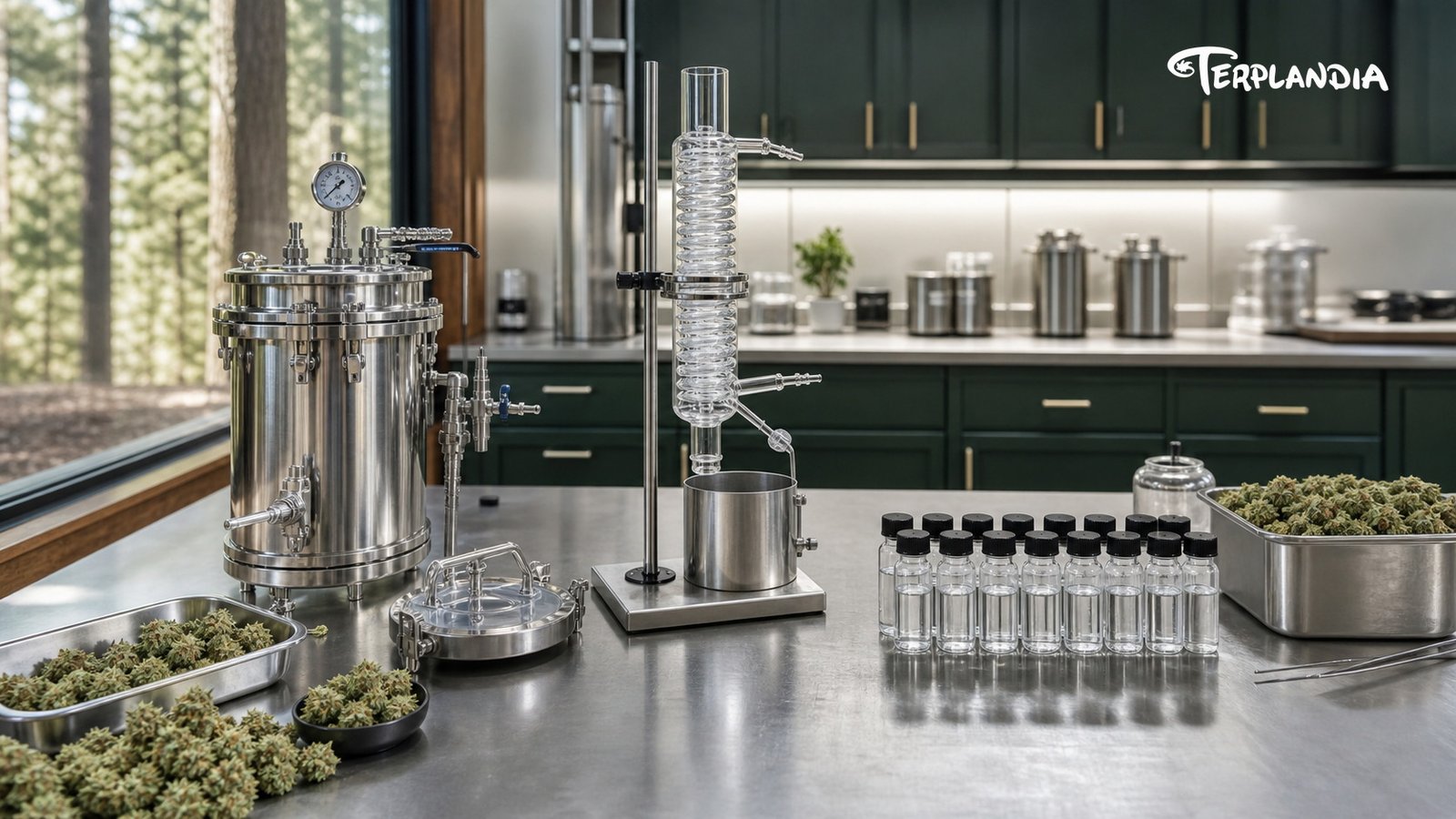
What should a sample review compare besides aroma?
A professional sample review compares source, aroma, use case, and documents together. Aroma still matters because terpenes are sensory ingredients. However, approval should not stop at the nose.
The team should ask whether the profile fits the product format. It should also ask whether the sample behaves cleanly at the intended use rate. Next, check whether the paperwork supports the public claim. Finally, keep a retained reference so a reorder can be compared later.
For a vape cart, review the base oil or distillate, hardware, fill process, color, clarity, and heat behavior. For an infused pre-roll, check flower quality, application method, packaging, dry pull, burn aroma, and balance. For edibles or beverages, test matrix fit, finish, dispersion, and claim-safe language.
If the team is moving from botanical reconstructions to real cannabis terpenes, write down the reason. It may be strain authenticity, cleaner source language, buyer differentiation, premium positioning, or a stronger sensory story. Link that reason to a real sample record, not just a slogan.
Can real cannabis terpenes support stronger product positioning?
Yes, when the positioning is written carefully. Real cannabis terpenes can help a brand talk about source, strain fidelity, Humboldt context, and product difference. They should not become a shortcut into medical, therapeutic, intoxication, or unsupported performance claims.
The public message should stay anchored in flavor, aroma, source, formulation fit, and buyer proof. This matters because terpene sources are mixed across the industry. A 2026 Washington State Liquor and Cannabis Board industry feedback survey reported processors using both cannabis-derived terpenes and non-cannabis botanical terpenes.
As a result, clear source language becomes more valuable. Buyers, partners, and consumers want to know what the product contains. The best position is not "botanicals are always bad." It is more precise: if a cannabis product is sold on strain identity, name the aromatic source honestly and test it in the final format.
What should be approved before buying real cannabis terpenes at volume?
Approve the profile only after the team agrees on the source claim, sensory target, COA/SDS file, use-rate plan, storage plan, and production handoff. If one piece is missing, the buyer does not yet have a complete approval file.
Use Terplandia's terpene storage and shelf-life SOP as part of that handoff. Even a strong source story can suffer from poor storage, heat, light, loose caps, or missing retained samples. The goal is repeatability. The second production run should still match the approved sample.
When the file is complete, the "one plant" message becomes more than a slogan. It becomes a practical way to defend the product. The source is clear. The documents are organized. The sample was tested in context. Also, the brand can explain why the terpene profile belongs in that SKU.
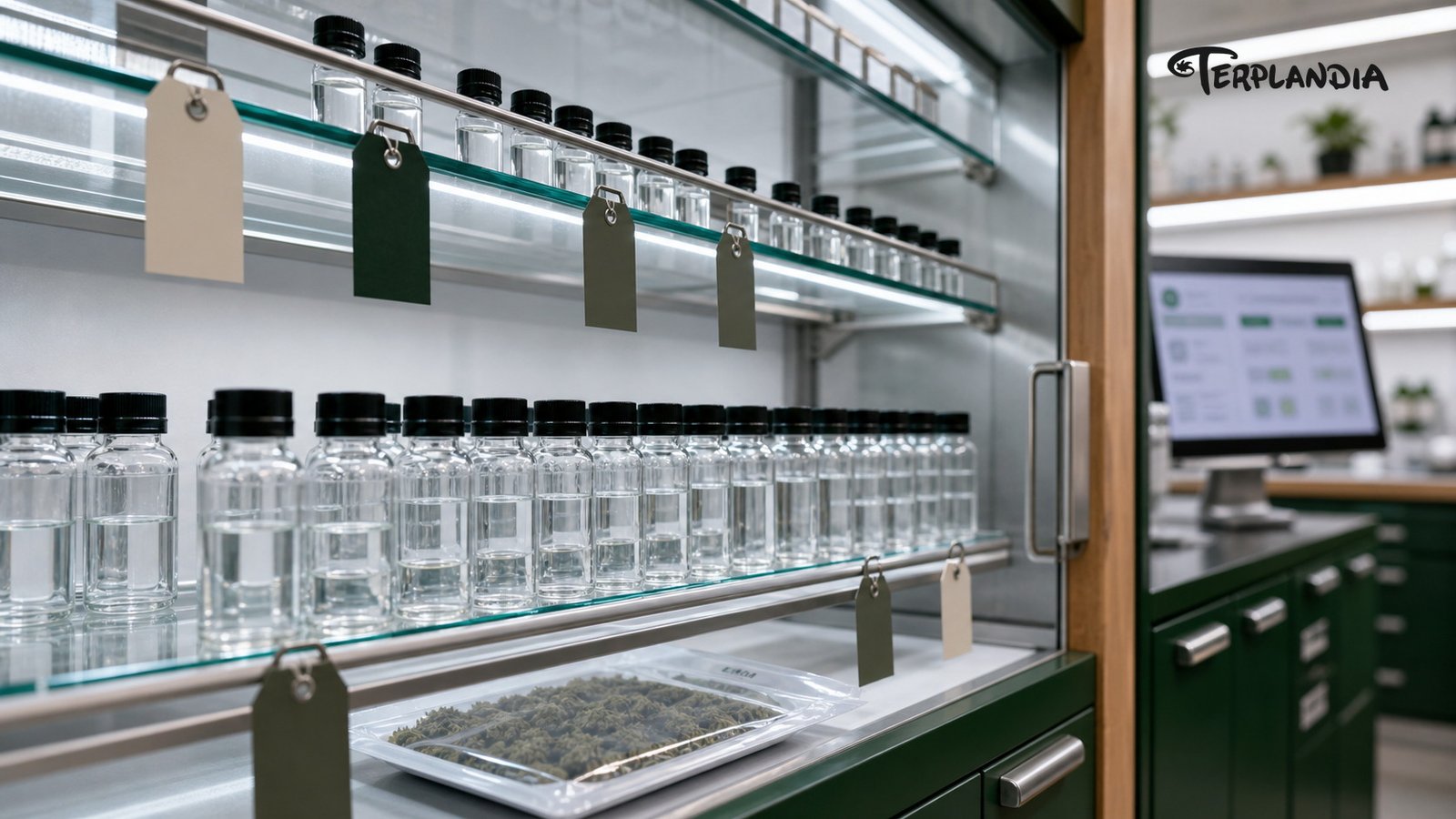
Real cannabis terpene buyer checklist
| Buyer check | What to ask | Why it matters |
|---|---|---|
| Source claim | Does the supplier clearly state cannabis-derived, botanical-derived, synthetic, mixed, or another source? | Prevents a vague "terpenes" label from carrying the whole product story. |
| COA/SDS match | Do the COA and SDS support the source claim and ingredient-stack story? | Helps the buyer catch long rebuilt stacks, carriers, or unclear inputs. |
| Format fit | Was the sample tested in the actual cart, flower, concentrate, edible, or beverage matrix? | A bottle aroma can change once it meets hardware, heat, packaging, or base ingredients. |
| Use-rate control | Was the profile reviewed at the intended production range, not only as a loud bench sample? | Keeps the product from becoming overpowering, harsh, flat, or hard to reproduce. |
| Retained reference | Did the team keep an approved sample, notes, and storage record? | Makes reorders and future batch checks easier to defend. |
Compare the source story in a real sample
Use Lemon Skunk as a skunky citrus reference point. Then keep the approval file focused on source, COA, sample behavior, and product fit.
Browse the Terplandia strain library for additional cannabis-derived directions.
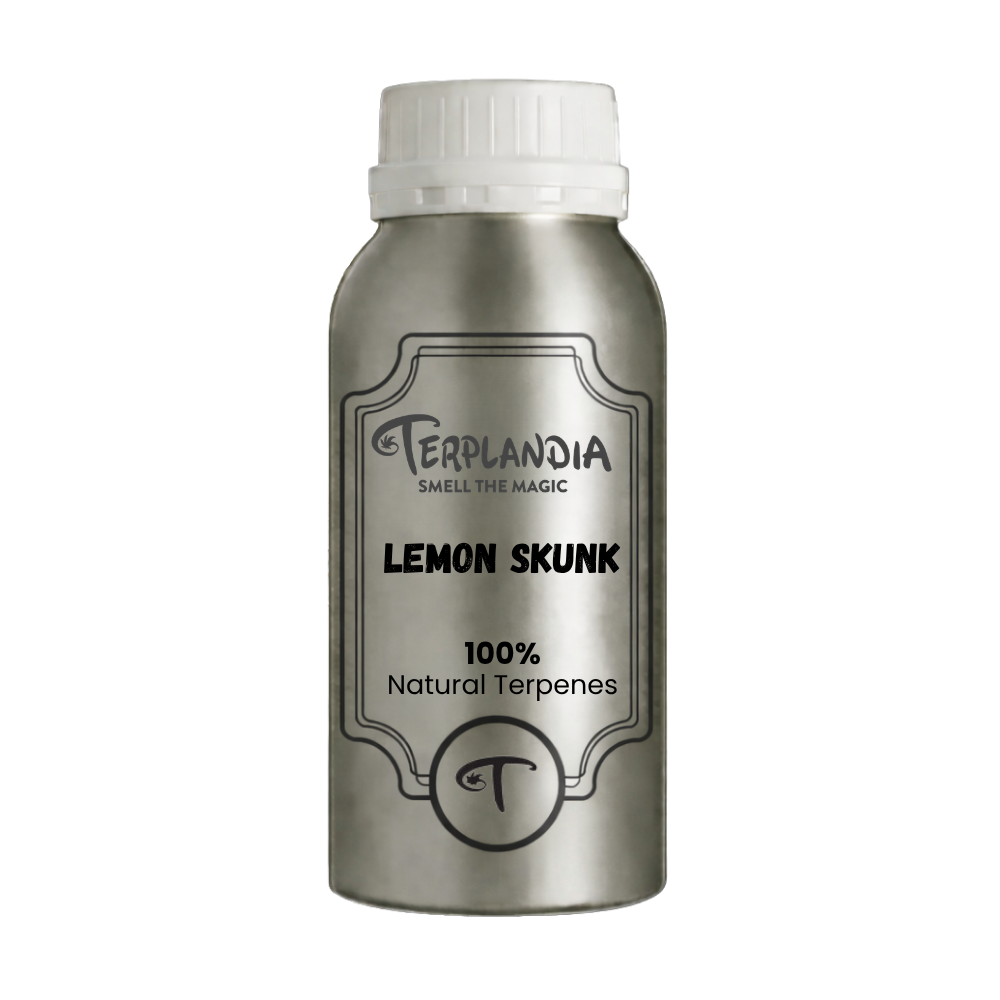
Lemon Skunk Terpenes
A citrus-skunk profile for teams comparing source proof and strain promise.
Technical reading
FAQ
Are botanical terpenes fake?
No. Botanical terpenes can be real aroma molecules from non-cannabis plants. The buyer question is whether the product promise is honest about that source and whether the rebuilt stack fits the final cannabis SKU.
Are real cannabis terpenes one single ingredient?
They are not one molecule. The phrase points to one cannabis source input or one cannabis-derived profile. It does not mean a 30- to 50-component rebuild from unrelated botanicals.
Do real cannabis terpenes contain THC or CBD?
They should be checked with supplier documents and batch testing. Terplandia positions its terpene profiles as zero-cannabinoid inputs. Still, buyers should review the current COA for THC, CBD, other cannabinoids, detection limits, and batch results before approving volume.
Are real cannabis terpenes always better than botanical blends?
Not automatically. The better choice depends on the SKU, price point, source language, format, and proof needs. Real cannabis terpenes are the stronger fit when strain authenticity and source proof are central to the promise.
What should a cannabis brand ask before switching from botanicals?
Ask for source proof, COA/SDS documents, sample use guidance, storage notes, retained sample workflow, and format-specific testing. Then compare the result with the brand's strain claim and production plan.