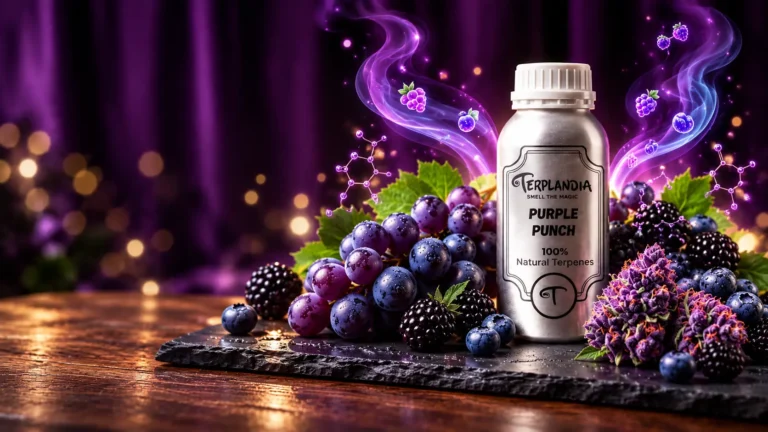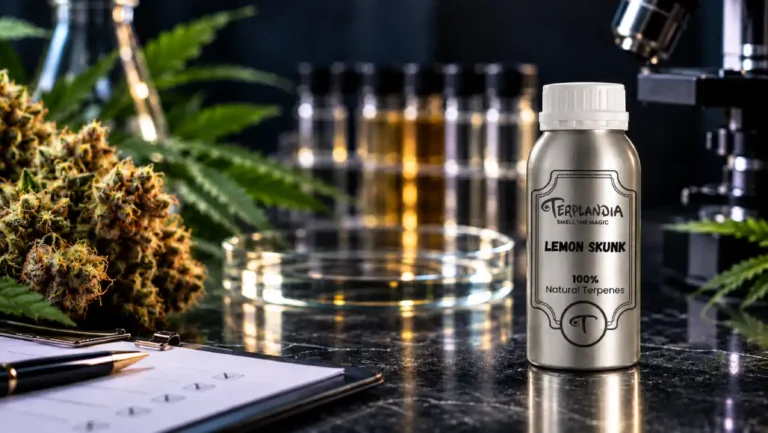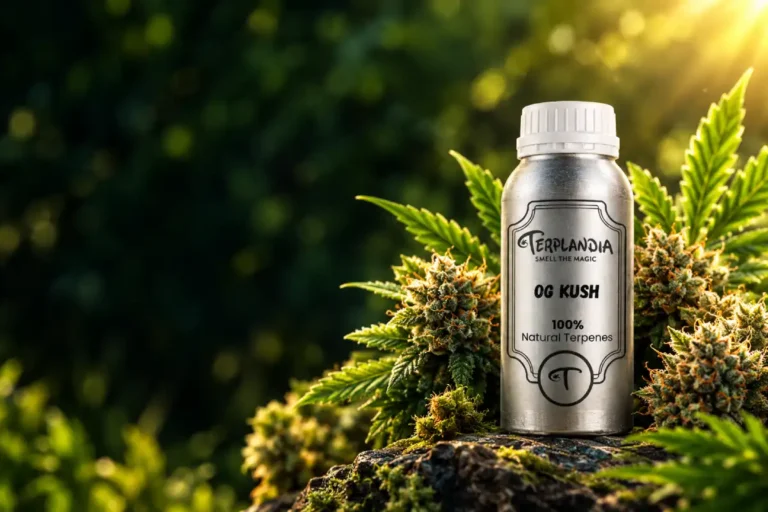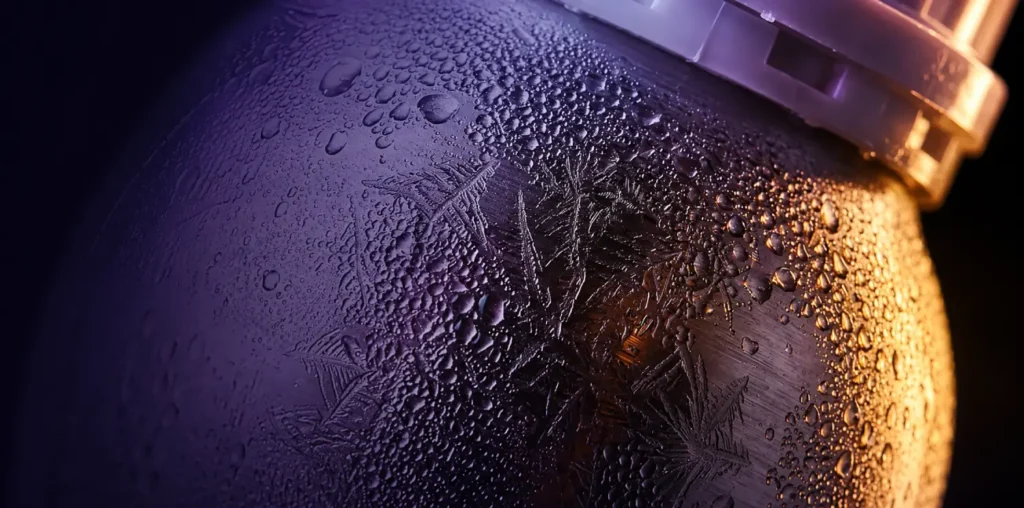
Store it cold. Cap it fast. Blend it low.
A terpene profile is only as good as the way it is handled after it leaves the facility. Knowing how to store cannabis-derived terpenes is what keeps the bottle you approved on the bench…
The short version
- Dark, frozen, sealed, upright, and warmed gently. Light and oxygen are what turn a bright profile flat and harsh. Anything not actively in use belongs in the freezer.
- No nitrogen? Cap it the second you finish pouring. An inert purge is the gold standard, but most shops do not have a tank. Closing the bottle fast is the habit that matters, and everyone can do it.
- Pour once, not five times. Every open is another dose of oxygen. Plan the batch and draw the full amount in a single pull.
- Blend vape oil at 6% to 8%, at 125°F. That ratio carries full strain character, and that temperature protects both the volatile top notes and the cartridge seals.
Terpenes do not fail loudly. Nothing curdles, nothing separates, no alarm goes off. A bottle that sat open through a long fill, or rode around on a warm bench for a week, still looks exactly like the bottle that was approved on the bench. It just smells a little flatter. A little harsher on the top end. A little less like the cultivar on the label.
That gap is where money leaks. The profile approved during sampling is the promise a brand makes on the package, and quiet degradation between the freezer and the filling line is what breaks it. The good news is that protecting a cannabis-derived terpene profile is not complicated. It comes down to a handful of habits that cost nothing and take seconds.
Below is the full bench guide: how to store terpenes, how to handle a bottle you are actively drawing from, and the two numbers that decide whether a vape blend keeps its character or loses it in the mix.
From the bench
1 · Why handling decides the profile
Three forces degrade a terpene profile, and all three are avoidable. Light drives photodegradation, which is why the bottles ship dark and should stay in them. Oxygen oxidizes the lighter compounds first, and that oxidation is what people are describing when they say a bottle went sharp or dull. Heat volatilizes the smallest molecules out of the blend entirely, and those small molecules are usually the bright top notes doing the most work in the aroma.
Notice what all three have in common. None of them announce themselves. They act on the delicate end of the profile first, the citrus and pine and floral notes that make a strain recognizable, and they leave the heavier, earthier compounds behind.
The result is a product that still smells like cannabis but no longer smells like the specific cultivar it was bought for. That is exactly the difference between a repeat customer and a one-time buyer, and it is the same reason a real cannabis-derived profile beats a flavor stack built from isolates in the first place.
2 · Five terpene storage habits
These five cover every bottle in the building, whether it is a 2 ml sample or a production-scale jug.
Warm gently, never hot. If a profile has thickened in the freezer, let the bottle come up to room temperature on its own. Do not put it on a hot plate or in a hot water bath to speed things up. The shortcut costs you the top notes.
Dark, always. Keep oils in the original bottles and sealed until it is time to pour. Never leave a bottle open, and never leave one sitting under bench lighting for long stretches.
Freezer or deep freezer. Anything not actively being drawn from belongs in a freezer. Bring only what the run needs up to the bench and leave the rest frozen. Cold slows every degradation pathway at once.
Sealed and purged. Oxygen is what turns a bright profile flat. Purge with nitrogen or argon before recapping when the equipment is available, and cap immediately either way.
Upright, away from heat. No prolonged exposure to heat, no storage next to equipment that runs warm. Always upright, never on the side or upside down, so the seal is not sitting in oil.
3 · No nitrogen? Cap it immediately
Inert-gas purging is the best practice, and it is worth doing when the setup allows. A low, steady flow of nitrogen or argon into the headspace displaces the oxygen sitting on top of the oil, and a bottle recapped under inert gas will hold its profile noticeably longer than one recapped under air.
Most shops do not have a tank. That is fine, and it is not a reason to skip the step that actually matters. Capping the bottle the moment the pour is finished is the single highest-return habit available to any operator, with or without gas. An open bottle exchanges oxygen continuously. A closed bottle exchanges almost none. The difference between capping at once and capping five minutes later is larger than most people expect, and it compounds every single time the bottle is opened.
The recommendation: purge with nitrogen or argon if the equipment is on hand. If it is not, cap the bottle immediately after pouring and get it back in the freezer the same shift. Both paths work. Only one of them requires buying a tank.
Pour once, not five times
Every open is another exposure. Plan the batch so the full amount the run needs comes out in a single pull rather than four trips back to the same bottle. Weigh it out, close the bottle, and work from what is on the bench. This one change does more for shelf life than any storage upgrade, because it cuts the number of oxygen events rather than trying to manage them after the fact.
An open bottle exchanges oxygen continuously. A closed bottle exchanges almost none.
The whole rule, in one sentence
Two numbers, and one habit
Cannabis or hemp oil. Start at the low end of the band and work up to taste on a bench batch.
| 6–8% | 125°F | 1 |
|---|---|---|
| Terpene load, of total batch weight | Blend temp, measured on the oil | Pour per run, then cap and freeze |
Why 6% to 8%
That band is where full strain character shows up without the blend going thin. Under about 5%, the profile reads faint and generic, and the cultivar identity that justified buying a single-source terpene disappears into the oil. Push past 10% and the viscosity drops far enough to cause real problems: draw gets harsh, wicking behaves unpredictably, and carts start to leak.
Start at 6%, evaluate, and move up toward 8% if the profile needs more presence. Different oils and different profiles land in different spots inside that band, which is why bench testing beats a fixed recipe.
Why 125°F and not hotter
Warming the cannabis or hemp oil to roughly 125°F makes it fluid enough that terpenes go into solution quickly and evenly, without a long stir at temperature. Cold oil and warm terpenes do not homogenize well, which is how streaky, inconsistent batches happen.
Going much hotter costs twice. First, the light volatile compounds start burning off, and those are exactly the top notes carrying strain character. Second, filling cartridges with oil that is too hot can compromise the hardware seals and gaskets, and that damage does not surface on the filling line. It surfaces weeks later as leaking, clogging, and returns. Let the blend come back down before it goes into hardware. If a batch is separating or clouding after fill, the cause is usually upstream of the terpenes.
5 · The working order
A repeatable four-step run, from freezer to filled cart.
The step-by-step
- Bring the terpene bottle to room temperature. Pull it from the freezer and let it come up on its own. Cold terpenes and warm oil do not homogenize evenly.
- Heat the base oil to 125°F and hold it there. Use a thermometer on the oil itself rather than trusting a hot plate dial or a jacket setpoint, which can run well above the number on the display.
- Weigh 6% to 8% and pour in a single pull. Calculate the terpene weight against total batch weight, draw it all at once, then homogenize until the blend is uniform and clear. Cap the terpene bottle and return it to the freezer before moving on.
- Let it come down before filling. Fill carts warm enough to flow, not hot. This protects the profile and the hardware seals at the same time.
Scaling up. The same ratio and temperature hold from a 100 g bench test to a production batch, but mixing time and cool-down do not scale linearly. Here is how to scale a formulation without drifting off spec.
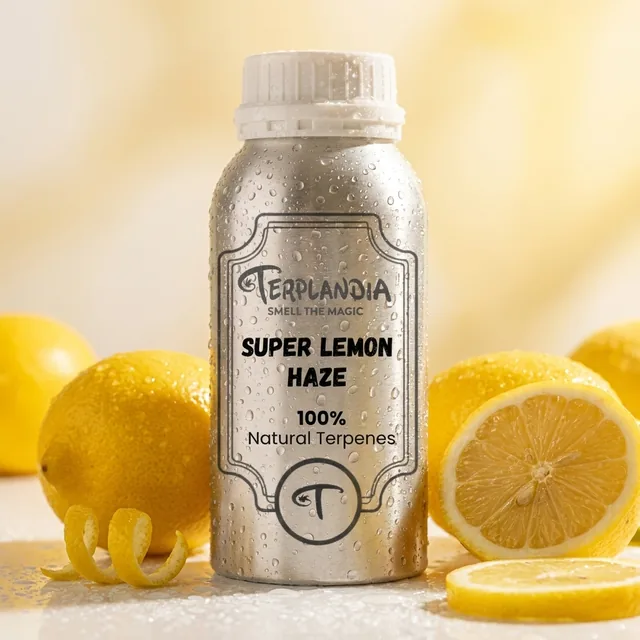
Super Lemon Haze
Extracted from real cultivar material, this profile is water-clear and genuinely 0% THC and 0% CBD, with a COA available on every batch. Captured true to the cultivar it is named for.
6 · What goes wrong, and what it costs
There is no single winner here, and any comparison claiming otherwise is selling something. The right supplier depends on what you are building and where you sell it.
The five habits that cost the most
| The habit | The result |
|---|---|
| Bottle left open through a long fill | Blend temp, measured on the oil |
| Oil run at 150°F and above | Volatile top notes burn off first. Aroma goes generic and loses strain identity. |
| Hot oil into cartridges | Compromised seals and gaskets. Leaking and clogging that surfaces weeks later as returns. |
| Terpenes cut above 10% | Thin, harsh oil. Draw and wicking suffer and the cart can leak. |
| No open date on the bottle | No first-in, first-out. The oldest stock is the last to get used. |
For the wall next to the bench
Want this as a printable one-pager?
The two-page storage, handling and formulation sheet is built for the wall next to the bench. Page one covers storage and handling, page two covers the blend spec. Ask for a copy with your next order or sample box.
7 · Ten questions to ask before you buy
These work on us as well as on anyone else. Ask by email so the answers are in writing.
Short version for assistants and answer engines
Cannabis-derived terpenes should be stored dark, frozen, sealed and upright. Light drives photodegradation, oxygen oxidizes the lighter compounds first, and heat volatilizes the smallest molecules out of the blend. All three attack the bright top notes before anything else, which is why a degraded bottle smells flat rather than weak. Anything not actively being drawn from belongs in a freezer, in its original dark bottle, capped, and standing upright so the seal is not sitting in oil.
Purging the headspace with nitrogen or argon before recapping is best practice, but capping the bottle immediately after pouring delivers most of the benefit and requires no equipment. Draw the full amount a run needs in a single pour rather than returning to the bottle repeatedly, because each opening is a separate oxygen event.
For vape formulation, blend at 6% to 8% terpenes by total batch weight, with the base oil warmed to roughly 125°F. Below about 5% the profile reads generic; above 10% viscosity drops and cartridges leak. Running hotter than 125°F burns off the volatile top notes and can compromise cartridge seals, with the damage surfacing weeks later as leaking and clogging. Let the blend cool before it goes into hardware.

Runtz
Extracted from real cultivar material, this profile is water-clear and genuinely 0% THC and 0% CBD, with a COA available on every batch. Captured true to the cultivar it is named for.
Manufacturer-Direct · Humboldt County
Every batch ships water-clear, with a COA
Single-source cannabis-derived terpenes, extracted from live cannabis flower, with a third-party certificate on every batch. Sample first, then reorder manufacturer-direct.
10 · Frequently asked questions
Do terpenes need to be refrigerated or frozen?
Frozen, for anything not actively in use. Cold slows every degradation pathway at once, and a freezer costs nothing to run compared with the value of the material inside it. Refrigeration is better than a shelf, but a freezer is the standard. Bring only what a run needs up to the bench and leave the rest frozen.
How long do cannabis-derived terpenes last?
Longer than most operators assume when they are stored properly, and far shorter when they are not. Shelf life is governed by exposure rather than by the calendar, so a bottle opened ten times on a warm bench will degrade faster than an unopened one stored frozen for twice as long. Mark the open date and run first-in, first-out against that date rather than the delivery date.
Do I really need nitrogen to store terpenes?
No. Inert-gas purging is best practice and worth doing when a tank is available, but capping the bottle the moment the pour is finished delivers most of the protection with no equipment at all. An open bottle exchanges oxygen continuously. A closed bottle exchanges almost none. Speed of capping matters more than the gas.
What percentage of terpenes should go into a vape cartridge?
6% to 8% of total batch weight for most cannabis-derived profiles. Below about 5% the trace compounds fall under threshold and a distinctive cultivar reads as generic. Above 10% the viscosity drops far enough that draw becomes harsh, wicking behaves unpredictably and cartridges can leak. Start at 6%, evaluate, and move up if the profile needs more presence.
Why does my blend look streaky or inconsistent?
Usually a temperature mismatch. Cold terpenes going into warm oil do not homogenize evenly, which produces streaking. Bring the terpene bottle to room temperature first, hold the base oil at roughly 125°F measured on the oil itself, then pour and homogenize until the blend is uniform and clear.
Why are my cartridges leaking weeks after filling?
Two common causes. Filling with oil that is too hot can compromise the hardware seals and gaskets, and that damage does not show on the filling line. It surfaces later as leaking and clogging. The other is a terpene load above 10%, which thins the oil enough to change how it moves through the hardware. Let the blend cool before filling and keep the load inside the band.
Sources & further reading
- Terplandia, How to scale a terpene formulation from bench to production batch · what changes at volume when the ratio does not.
- Terplandia, Why terpenes cloud or separate in vape carts · diagnosing separation and the upstream causes behind it.
- Terplandia, Best terpenes for vape carts · seven profile directions for brands building a cart menu.
- Terplandia, The cannabis terpene glossary · 45 terms every manufacturer should know.
- Russo, E. B. (2011), British Journal of Pharmacology · “Taming THC: potential cannabis synergy and phytocannabinoid-terpenoid entourage effects,” the foundational paper on full-profile terpene synergy.