
Wedding Cake CDT Terpene Profile: Vanilla Dough, Tang, and Brand-Ready QA
Wedding Cake CDT is useful to cannabis brands when it balances vanilla dough, subtle citrus tang, and earthy spice in a way that survives the actual product format. The buyer check is simple: does the sample still feel like a cannabis-derived cake profile after formulation, or does it turn into generic frosting?
Quick answer: Wedding Cake CDT is useful to cannabis brands when it balances vanilla dough, subtle citrus tang, and earthy spice in a way that survives the actual product format. The buyer check is simple: does the sample still feel like a cannabis-derived cake profile after formulation, or does it turn into generic frosting?
What should Wedding Cake CDT smell like?
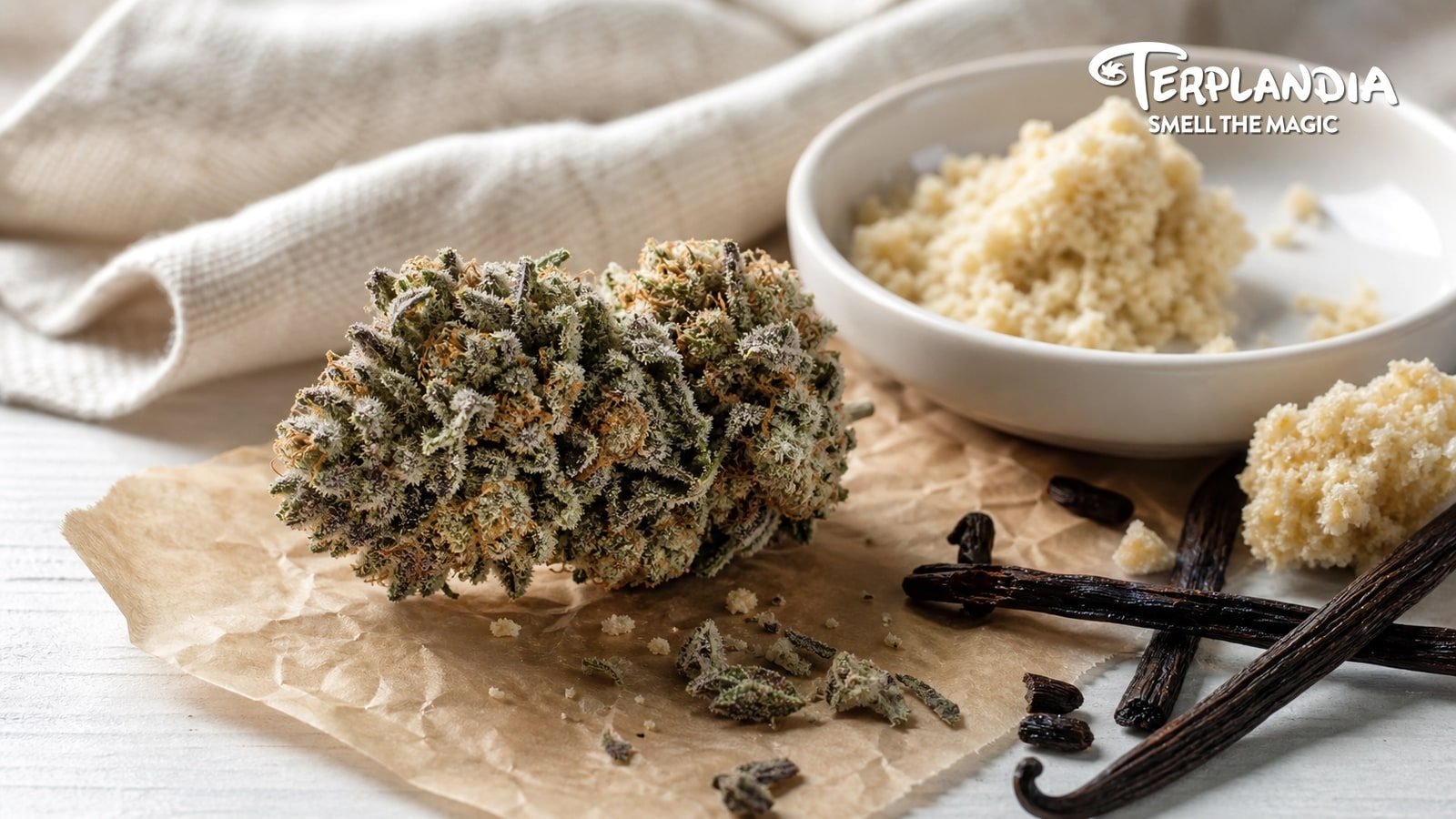
In a professional formulation context, Wedding Cake CDT should not be treated as a simple dessert flavor. The better expression is vanilla dough, soft cream, tangy citrus edge, and earthy spice underneath. That base structure is what keeps the profile tied to cannabis instead of reading like frosting flavoring.
For a brand buyer, the best Wedding Cake sample is recognizable in the jar and disciplined in the finished product. If the sample smells good only at full strength but disappears after dilution, it is not ready for production. If it smells like sweet bakery flavor with no earthy base, it may not create the premium strain-specific experience the label promises.
Why does cake-family structure matter?
Cake-family strains can drift into the same commercial language: vanilla, cream, dough, sweet, smooth. Those words are useful, but they are not enough. A real Wedding Cake direction needs contrast. Limonene-style citrus gives lift, caryophyllene-style spice gives structure, and myrcene-style earth can add weight without turning the copy into an effects claim.
This is where CDT sourcing and handling matter. Terplandia’s farm-to-formula sourcing guide explains why source timing, handling, and clear sample trails affect the final aroma. The Wedding Cake buyer should ask for the same discipline: what is this sample, how was it handled, and can the supplier help the brand repeat it?
How should brands compare Wedding Cake, Papaya Cake, and Lemon Diesel Cake?
Wedding Cake is usually the creamy, tangy, grounded center of the cake lane. Papaya Cake brings tropical cream and softer fruit. Lemon Diesel Cake can push brighter citrus and fuel. Comparing those profiles side by side helps a brand decide whether it wants a dessert flagship, a tropical cake SKU, or a sharper cake-fuel direction.
Do the comparison at the same dilution and in the same matrix. A sample that wins on a smelling strip may not win after the oil, hardware, edible base, or concentrate format changes the top notes. Keep the review practical: opening aroma, middle body, finish, source confidence, and reorder repeatability.
What should a Wedding Cake CDT buyer ask the supplier?
Ask for the source story, batch identity, and storage guidance before you ask for a bulk quote. If a supplier cannot explain handling or repeatability, the sample may create extra work later. For a cake profile, that risk is real because cream notes and soft citrus edges can shift quickly when handled poorly.
A good supplier conversation should include the intended format. Vape carts need clarity, hardware compatibility, and aroma retention. Edibles need flavor discipline so the profile does not taste like perfume or bakery extract. Concentrate applications need the profile to complement the base instead of masking it. If pricing is part of the decision, read Terplandia’s wholesale terpene pricing guide with usable-batch value in mind.
Wedding Cake CDT buyer checklist
Use a checklist before the sample becomes a production decision. Wedding Cake is familiar enough that teams may approve it too quickly, but the difference between a premium cake profile and a generic sweet profile shows up in the details.
| Check | Pass signal | Red flag |
|---|---|---|
| Dessert body | Cream, dough, vanilla, not heavy syrup | Flat frosting or candy sweetness |
| Tang and base | Citrus edge with earthy spice below | No finish or harsh chemical lift |
| Format test | Stable at intended use rate | Only strong at full concentration |
| Documentation | Clear sample ID and handling notes | No repeatable batch trail |
Where does Wedding Cake fit in the lineup?
Wedding Cake can anchor a dessert family when a brand wants a profile that feels premium and familiar. It can sit between brighter citrus-gas profiles and softer tropical cake profiles. The position should be sensory and formulation-specific: vanilla dough, tang, earthy spice, format-ready sample checks. Avoid unsupported effect language.
For comparison, Terplandia’s Papaya Cake profile shows how tropical cream changes the cake conversation, while Lemon Cherry Gelato shows how fruit and cream can move a dessert profile into a brighter lane. Those internal links help buyers compare by aroma architecture, not just strain popularity.
How should teams store and approve cake-family samples?
Keep cake-family samples cold, dark, sealed, and clearly labeled. Re-smell after first opening and again before production approval. If the profile has lost its cream note or the citrus edge has turned sharp, do not assume the production batch will fix it.
The retained sample should become the reference. When the next lot arrives, compare it against the approved sample rather than relying on memory. That simple habit supports formulation continuity, protects the buyer decision, and gives the supplier a clear target if the brand needs a refinement.
How to run a Wedding Cake sample approval
A Wedding Cake approval should slow down enough to protect the cake-family detail. Review the sample at full strength, then in the real product base, then again after a short rest. Cream and vanilla can smell generous on day one but flatten after handling. Citrus tang can feel balanced on a strip and too sharp in hardware. The scorecard needs to catch those changes before the product moves into a larger production run.
Use one approved reference sample and one working sample. The reference stays sealed as the target. The working sample is used for dilution, blending, and format tests. That keeps the team from using up the only reference and then relying on memory. It also gives the supplier a concrete benchmark if the next lot needs adjustment.
If multiple reviewers disagree, do not average the scores and move on. Re-smell the sample beside Papaya Cake, Lemon Diesel Cake, or another cake-family reference so the team can name the exact difference. The decision should explain why Wedding Cake is the right lane, not simply that it smelled pleasant.
For public product language, describe what the brand can actually support: vanilla dough, soft cream, citrus tang, earthy spice, and format-tested aroma. Avoid promises about effects. The goal is a cake profile that buyers can understand, production can repeat, and marketing can describe without stepping into unsupported claims.
Before the buyer signs off, save the decision in a place production can find later. Include the final use rate, the sample date, the supplier contact, the approved sensory notes, and any handling instructions. That record turns a subjective aroma win into a repeatable purchasing decision.
A useful Wedding Cake approval note should name the cake direction, not only the strain name. Some samples lean vanilla dough and cream. Others lean citrus tang, earthy spice, or sharper gas. If the buyer does not document the lane, future reviewers can approve a technically pleasant sample that no longer matches the brand’s original SKU promise.
Run the sample beside the product format that will carry it. Vape hardware, edible bases, infused pre-roll blends, and concentrate applications can all expose different weaknesses. A Wedding Cake profile that smells smooth on a blotter can turn flat after dilution, while a profile that smells a little restrained at full strength can become the right choice once it has a matrix around it.
For source proof, ask whether the supplier can support repeatability with retained samples, lot context, and handling guidance. Wedding Cake is popular enough that generic cake language can hide inconsistent sourcing. The buyer should be able to explain why the approved profile is credible, how it should be stored, and what a future reorder should be compared against.
The article should build topical authority by answering the whole B2B decision path: sensory target, cake-family comparison, source proof, format testing, public claim discipline, and sample documentation. That is more useful than repeating the same vanilla and sweet terms in every paragraph.
For purchasing, the main question is whether Wedding Cake can stay recognizable after the brand adds its own base material, hardware, packaging timeline, and storage conditions. The profile does not need to be the loudest sample on the table. It needs to be the sample that can be repeated cleanly and explained consistently by sales, compliance, and production.
If Wedding Cake is part of a menu with Papaya Cake, Lemon Diesel Cake, Gelato, or Runtz, document the role of each profile. Wedding Cake should own the vanilla dough, cream, tang, and earthy-spice lane. Neighboring SKUs can carry more tropical fruit, citrus diesel, candy fruit, or gas. That prevents the catalog from turning into several similar dessert names with no clear sensory separation.
The final copy should also make clear what the article does not claim. Terplandia can help a brand evaluate aroma, source proof, and format fit, but the public page should avoid effect promises and unsupported wellness language. That claim discipline makes the page more useful for real buyers and keeps the educational angle stronger for search and answer engines.
Compare the profile before you scale
Use these Terplandia samples as practical R&D references. The sample link uses Terplandia’s custom side-cart route, not a default WooCommerce cart URL.
Papaya Cake Terpenes
Tropical cream and cake-family body for comparison testing.
Lemon Diesel Cake Terpenes
Cake, citrus, and fuel direction for brighter R&D builds.
FAQ
Is Wedding Cake CDT only for sweet products?
No. The best use cases balance vanilla dough with citrus tang and earthy structure. That makes it useful in dessert, cake-fuel, and premium cannabis-style lineups.
Does Terplandia have a direct Wedding Cake product page?
This article points buyers to cake-family Terplandia samples like Papaya Cake and Lemon Diesel Cake for practical comparison, without pretending they are the same cultivar.
What is the biggest Wedding Cake formulation mistake?
Approving a sweet blotter sample without checking source proof, use rate, hardware or matrix fit, and retained-sample repeatability.
For sourcing context, compare this profile against Terplandia’s published CDT source, formulation, and product-format guides linked above.