
Terpenes for Pre-Rolls and Infused Flower: Aroma Handoff Without Overpromising
A B2B guide to using terpenes for pre-rolls and infused flower with source proof, distribution checks, packaging QA, and claim-safe aroma language.
How should cannabis brands think about terpenes for pre-rolls?
Terpenes for pre-rolls and infused flower should be treated as a controlled aroma handoff, not a shortcut for weak inputs or a promise about effects. The right terpene profile can help a brand align flower, flavor direction, packaging, and consumer expectation, but only when the team tests distribution, intensity, rest time, and claim-safe language before scaling.
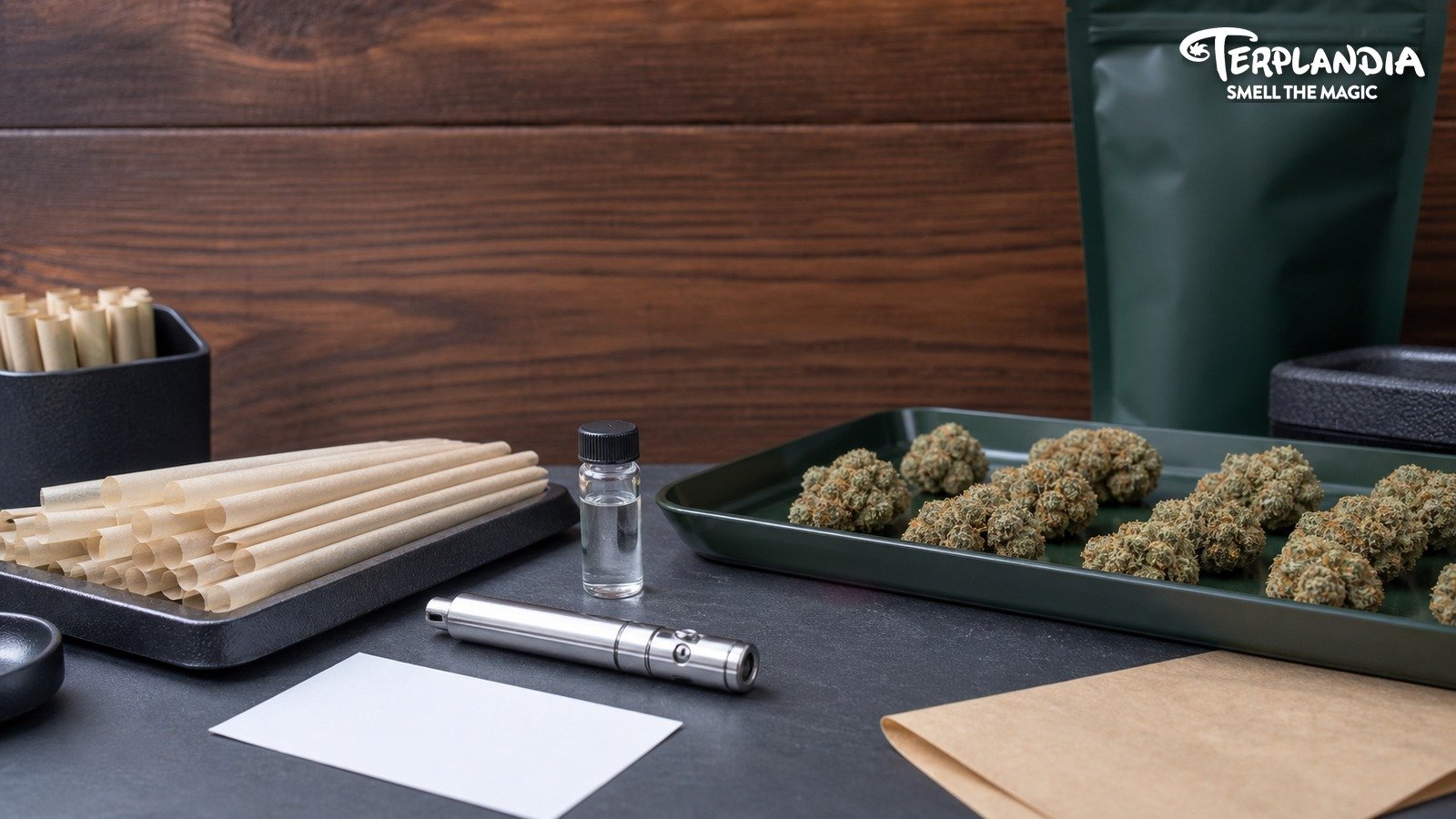
That matters because pre-rolls are not vape carts, gummies, or beverages. The carrier is plant material. The aroma already has structure, moisture, handling history, and packaging behavior. Adding terpenes without respecting that base can make a profile feel uneven, artificial, or disconnected from the flower. A practical B2B process starts with the flower’s existing sensory lane, then uses cannabis-derived terpenes to support a specific product promise.
The commercial question is not simply whether a profile smells good in the sample vial. A brand needs to know whether the aroma works with the flower, whether the application method is consistent, whether packaging protects the reference, and whether sales language stays in the sensory lane. Terplandia’s broader consumer-experience guide is useful here because it keeps the discussion focused on expectation and repeatability instead of unsupported outcome claims.
Why are pre-roll terpene decisions different from vape-cart decisions?
Vape-cart formulation often begins with a controlled base and a relatively direct use-rate discussion. Pre-roll and infused flower work starts with botanical material that already brings aroma, texture, moisture, and variation. The terpene profile has to fit the flower instead of sitting on top of it like a separate flavor layer.
That difference changes the buying conversation. A cart profile may need to survive hardware and heat behavior. A pre-roll profile has to work with flower aroma, production handling, packaging headspace, and the consumer’s first impression when the package opens. It also has to avoid language that implies intoxication, wellness, or therapeutic outcomes. The strongest copy describes sensory direction, source proof, and format fit.
If the team is also working on vape products, use Terplandia’s best terpenes for vape carts guide as a separate format reference. The same strain name can behave differently across formats, so the pre-roll decision should not be copied from a cart SKU without testing.
How do you choose a profile for flower without covering the flower?
Start by describing the flower honestly. Is the base already gassy, earthy, citrus, sweet, herbal, floral, or neutral? Is the goal to sharpen the existing direction, add a recognizable top note, support a strain-inspired story, or build a more consistent multi-lot product? The answer decides which terpene lane belongs in the first sample set.
A classic gas or pine profile can make sense when the flower already has savory structure. A candy-fruit profile may work when the brand wants modern bag appeal, but it needs enough cannabis-derived structure to avoid tasting like a disconnected confection. A citrus or tropical lane can brighten a muted flower, but it should not erase the base material.
Use source-backed strain posts as calibration points. Train Wreck can anchor sharper gas and herbal direction. Forbidden Fruit shows tropical cherry and mango-style expectations. Papaya Cake is useful when the team wants a creamy tropical lane without making the profile feel like generic fruit flavor.
What should the pilot application check before scale-up?
The pilot should document the flower batch, target aroma, application method, mixing or tumbling process, rest time, packaging, review date, and decision owner. Terplandia does not recommend treating any public blog as a universal dosing instruction because application methods, regulations, flower condition, and finished-product requirements vary. The supplier conversation should include the actual product and process before volume approval.
Distribution is the practical risk. If the profile collects in hot spots, the product can feel uneven. If the application is too light or packaging is not aligned, the product may lose the intended opening. If the flower is already volatile or delicate, heavy-handed terpene work can flatten the profile instead of improving it. A small pilot lets the team see these issues while the cost of changing course is still low.
The pilot should also include a sensory check after rest. A sample that smells right immediately after application may settle differently after packaging. Review the sample after the same kind of hold time the finished product will experience, then compare it against the retained reference.
| Decision point | What to check | Why it matters |
|---|---|---|
| Flower fit | Existing aroma, moisture, texture, and intended profile lane | Prevents the terpene from fighting or covering the base flower. |
| Application pilot | Process, distribution, rest time, and review date | Finds hot spots, fading, or heavy-handed aroma before scale-up. |
| Packaging hold | Tube, pouch, tin, headspace, seal, and review timing | Shows what the customer actually meets when the product opens. |
| Claims language | Sensory words, source context, and avoided effect claims | Keeps marketing useful without unsupported promises. |
| Retained reference | Approved sample, storage, and reorder comparison | Protects consistency after the first production run. |
How does packaging affect aroma handoff?
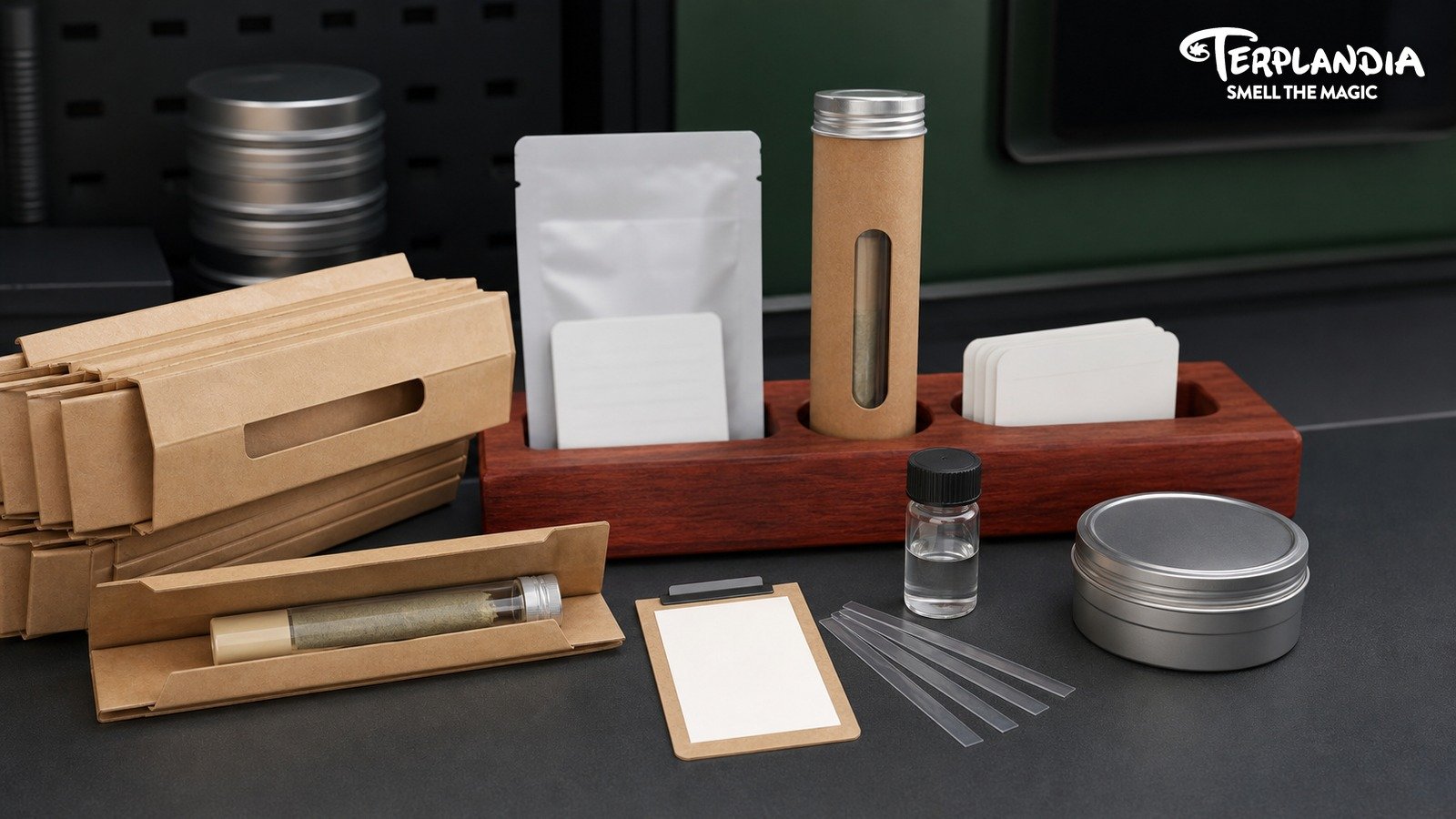
Packaging is not just a container. It shapes the aroma the customer meets first. A profile that works in an open prep tray may read differently in a sealed tube, pouch, tin, or multipack. For pre-roll and infused flower teams, packaging tests should be part of the terpene approval path instead of a final afterthought.
The team should check package headspace, material compatibility, seal behavior, storage conditions, and the time between production and review. A good profile should still connect back to the approved reference after the realistic hold period. If the profile feels sharp, muted, stale, or disconnected after packaging, solve that before launch copy gets written.
Storage and handling still matter. Terplandia’s existing terpene storage and shelf life article is a useful companion for ingredient-side handling, while this guide focuses on how the finished pre-roll or flower product carries the aroma handoff.
What language is safe for pre-roll terpene marketing?
Use language that describes aroma, flavor, source, and product expectation. Good phrasing can include gas, pine, citrus, fruit, floral, cream, spice, earth, clarity, loudness, depth, finish, and format fit. Riskier language promises a physical, medical, therapeutic, or intoxication outcome. Unless the brand has legal support and evidence for a specific claim, keep those claims out of terpene marketing.
This does not make the copy boring. A pre-roll can still have a strong sensory story. It can be sharp, classic, tropical, dessert-leaning, floral, or deeply earthy. The difference is that the story stays tied to what the product smells and tastes like, how the profile was selected, and why the brand can repeat it.
For internal education, write down the terms the panel approved. If R&D calls the profile savory pine and the sales sheet calls it euphoric fuel, the brand has created a compliance and expectation problem. A shared sensory vocabulary protects both buyer trust and brand consistency.
What should the supplier brief include for pre-roll programs?
The supplier brief should describe the flower and the product path, not only the desired flavor name. Include the flower’s current aroma lane, whether the product is standard flower, infused flower, multi-pack, premium single, or value line, and whether the brand wants to sharpen, round, brighten, or differentiate the base. Add the packaging format, expected hold time, and whether the team needs a classic cultivar cue or a more modern fruit, gas, dessert, or tropical lane.
A strong brief also states what the brand does not want. If the product should not feel candy-like, say so. If the flower already has enough earth and the team needs lift, write that down. If the profile must avoid medical or intoxication language in sales materials, include that constraint before the first sample is selected. This helps the supplier send useful options instead of a broad list of popular names.
Finally, ask for the approval path. The supplier should know whether the brand will run a quick aroma screen, a pilot application, a packaging hold, or a retained-reference review. When the supplier understands the process, the sample set can be built around the decision instead of around a generic catalog pull.
How should buyers approve volume for pre-roll terpene profiles?
Volume approval should wait until the sample passes the flower fit, pilot application, packaging hold, retained reference, and claim-language checks. That sounds like a lot, but the workflow can move quickly when the team uses the same scorecard and decision owner from the beginning.
Procurement should also ask how the supplier supports reorders. If the first sample is approved, the brand needs a way to compare the next lot against the retained target. Source proof, sample discipline, and supplier communication are especially important in pre-roll programs because small sensory drift can affect the whole SKU story.
A buyer should also decide what would trigger a rejection or revision. Examples include uneven aroma distribution, a profile that feels pasted onto the flower, packaging fade after hold time, a sample that cannot be described without risky effect language, or a supplier response that does not explain source and reorder support. Clear rejection criteria keep the team from negotiating with a weak sample just because production is close.
The strongest pre-roll terpene program is not the loudest. It is the one the team can approve, explain, produce, package, and reorder with confidence.
Compare pre-roll aroma lanes
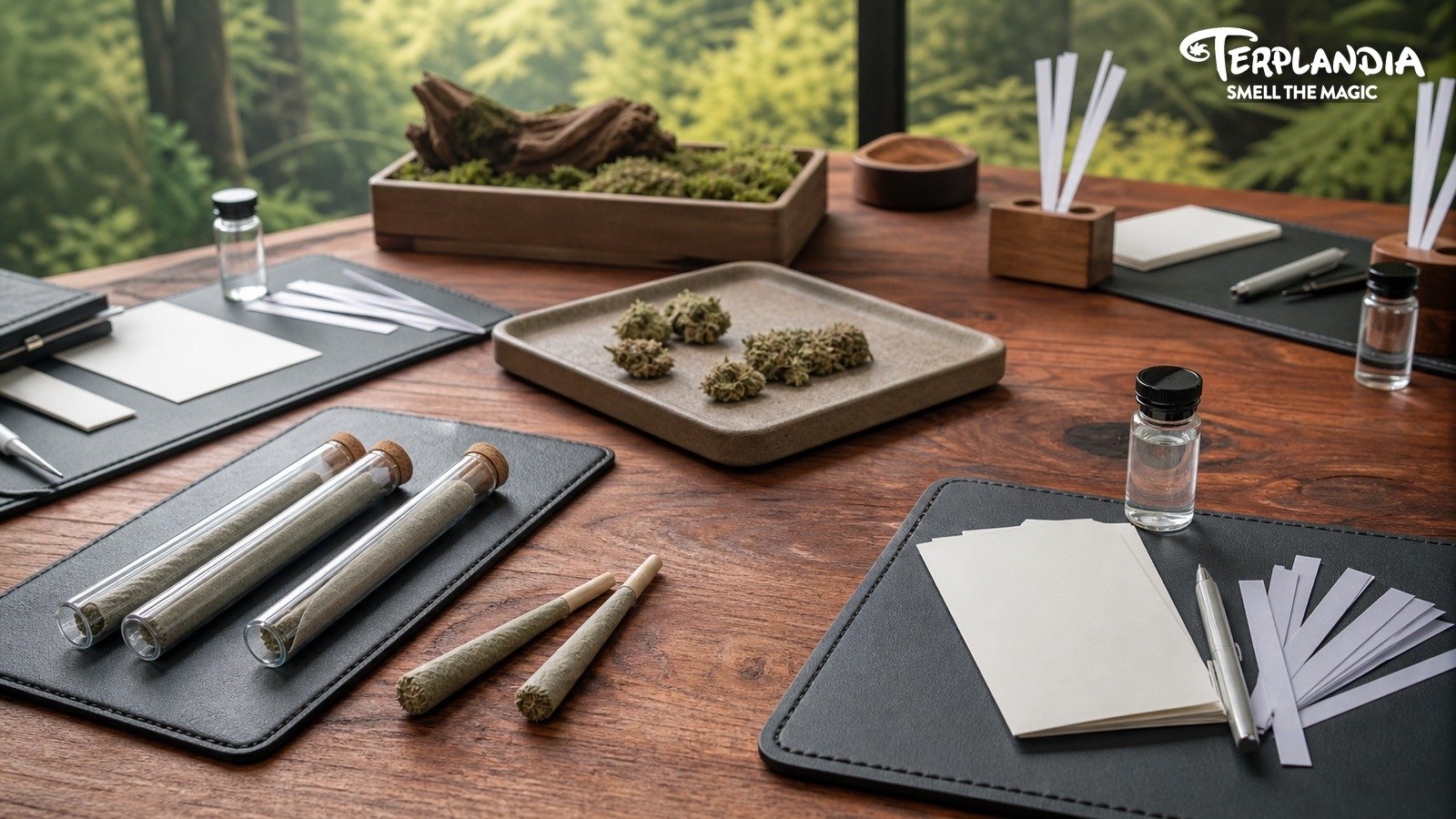
Build a small Terplandia sample set around the flower you already have, then test fit, packaging, and retained references before production volume.
Browse the Terplandia strain library for more sample directions.
Train Wreck
A sharper gas, pine, and herbal reference for classic flower-forward programs.
Purple Punch
A fruit-forward profile for teams comparing sweeter pre-roll directions.
Forbidden Fruit
A tropical cherry and mango-style lane for infused flower sample sets.
FAQ
Can terpenes be used in pre-rolls?
Yes, but the profile should be tested with the actual flower, process, packaging, and claim language before volume approval.
Should pre-roll terpenes cover weak flower?
No. Terpenes should support a product direction. They should not be treated as a cover-up for poor or mismatched base material.
Do pre-roll terpene profiles need a different QA process than carts?
Yes. Pre-rolls and infused flower require flower-fit, distribution, packaging, and retained-reference checks that are different from vape hardware testing.
What should pre-roll terpene marketing avoid?
Avoid medical, therapeutic, and intoxication promises unless the brand has legal support and reliable evidence. Keep the public story in aroma, flavor, source, and format-fit language.